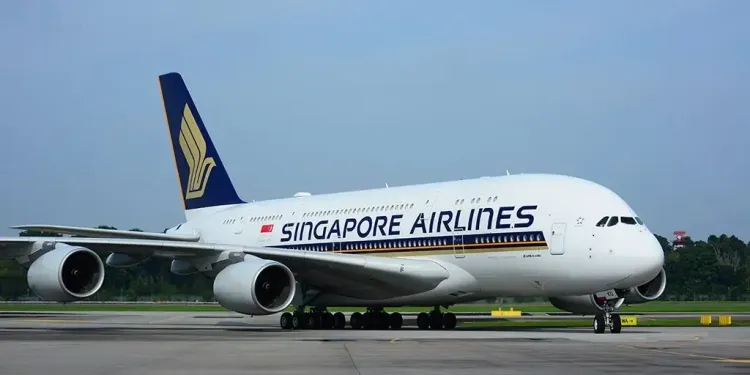
Singapore Airlines fined ₹50,000 for denying food, milk to infant on 15-hr flight
Synopsis
A family flying Delhi to Melbourne on Singapore Airlines — including an 11-month-old — was denied food and milk for 15 hours. Punjab's consumer commission has now ruled that no pre-booking of special meals doesn't exempt an airline from its basic duty of care, and ordered ₹50,000 in compensation. It's a pointed reminder that infants on long-haul flights carry their own claim to minimum service standards.
Key Takeaways
The Punjab State Consumer Disputes Redressal Commission directed Singapore Airlines to pay ₹50,000 as composite compensation for in-flight food denial.
Complainant Jaspreet Singh's family — including an 11-month-old daughter — was not provided food or milk on a 15–16-hour Delhi–Melbourne flight on 4 March 2020 .
The Commission held that failure to pre-book a special meal does not absolve an airline of its basic duty to serve food on a long-haul journey.
An earlier District Commission order directing a full ₹1.25 lakh ticket refund was reduced, as the passengers did complete the journey.
Singapore Airlines must comply within 45 days of receiving the certified copy of the order.
A deposited amount of ₹1,03,040 (plus interest) is to be remitted to the District Commission for appropriate release.
The Punjab State Consumer Disputes Redressal Commission has directed Singapore Airlines to pay ₹50,000 as composite compensation to a passenger whose family — including an 11-month-old infant — was denied adequate food during a 15–16-hour flight from Delhi to Melbourne on 4 March 2020. The ruling, which partly modifies an earlier district-level order, underscores an airline's duty of care even when passengers do not pre-book special meals.
Background: What the Family Alleged
The complaint was filed by Jaspreet Singh, who had purchased three tickets through travel agency Bipasha Aviation for his wife, minor daughter, and mother-in-law to travel from Delhi to Melbourne. According to the complaint, when the passengers asked airline staff about their meals mid-flight, they were told their food had not been confirmed and that served meals would be prioritised for passengers with pre-confirmed bookings.
Singh alleged his wife and mother-in-law were eventually forced to share a single meal, while his 11-month-old daughter was not provided even milk throughout the long-haul journey. He lodged a formal complaint with the airline via email on 9 March 2020, but the airline subsequently responded that no request for vegetarian or special meals had been made at the time of booking.
What the District Commission Had Ordered
The District Consumer Disputes Redressal Commission, Ropar, in its January 2023 order, had directed Singapore Airlines and Bipasha Aviation to refund ₹1.25 lakh towards air tickets along with interest, pay ₹25,000 as compensation, and an additional ₹11,000 towards litigation expenses. Singapore Airlines challenged this order before the State Commission, arguing that no specific meal requests had been raised during booking and that food had been served in accordance with its standard menu.
The airline also contended that since the tickets were booked through a travel agent, the grievance did not directly involve its contractual obligation to the complainant.
Commission's Ruling: Duty of Care Cannot Be Waived
The Additional Bench comprising Judicial Member H.P.S. Mahal and Member Kiran Sibal rejected the airline's arguments. The Commission held that an airline is responsible for providing contracted travel services with reasonable care, regardless of whether tickets were booked directly or through an agent.
'It is pertinent to mention here that the fact that a passenger may not have opted for a special meal does not mean that the airline is absolved of its basic duty to provide the ordinary meal service forming part of the air journey, particularly when the journey was of 15–16 hours,' the Commission observed.
The bench further noted that the presence of an 11-month-old child on such a prolonged journey called for reasonable care and consideration, and that the airline had failed to place sufficient material on record to disprove the complainant's allegations.
Why the Full Refund Was Reduced
While upholding the finding of deficiency in service, the Commission held that ordering a full ticket-fare refund was disproportionate, given that the passengers had completed the journey and received the core air-transportation service. It clarified that the deficiency related to in-flight service quality, not a total failure to transport.
'The inconvenience and hardship caused during a journey of approximately 15–16 hours, particularly in the case of a passenger travelling with an 11-month-old child, cannot be brushed aside,' the Commission said, partly allowing the airline's appeal and substituting the earlier award with a ₹50,000 composite payment covering mental agony, harassment, and litigation costs.
Compliance Deadline and Deposited Funds
Singapore Airlines has been directed to comply with the order within 45 days of receiving its certified copy. The Commission also ordered that the ₹1,03,040 deposited by the airline while filing the appeal, along with any accrued interest, be remitted to the District Commission for appropriate release orders in accordance with law.
The ruling sets a notable precedent on airlines' baseline food-service obligations during long-haul flights, particularly when infants and elderly passengers are travelling — a point consumer rights advocates are likely to highlight going forward.
Point of View
And the Commission has now squarely rejected that argument for long-haul flights. What is notable is the bench's specific attention to the infant: it signals that carrying a child imposes an elevated duty of care on carriers, a principle that Indian consumer jurisprudence has not always applied consistently. The reduction of the full-fare refund to a composite ₹50,000 award is pragmatic but modest — critics may argue it does little to deter a major international carrier from similar lapses in future.
NationPress
22 Oct 2026
Frequently Asked Questions
What did the Punjab consumer commission order Singapore Airlines to pay?
The Punjab State Consumer Disputes Redressal Commission directed Singapore Airlines to pay ₹50,000 as a composite amount covering compensation for mental agony, harassment, and litigation expenses. The airline has 45 days from receipt of the certified order copy to comply.
Why was the family denied food on the Singapore Airlines flight?
According to the complaint filed by Jaspreet Singh, airline staff told his family mid-flight that their food had not been confirmed and that meals would be served first to passengers with pre-confirmed bookings. The airline later stated no special meal request had been made at the time of booking.
Why did the Commission reduce the earlier refund order?
The State Commission found that ordering a full ticket-fare refund of ₹1.25 lakh was disproportionate because the passengers had actually completed the journey and received the core air-transportation service. The deficiency was deemed to relate to in-flight service quality, not a wholesale failure to transport.
Does an airline have to provide food even if no special meal was pre-booked?
The Commission ruled that the absence of a special-meal pre-booking does not absolve an airline of its basic duty to provide ordinary meal service, especially on a journey of 15–16 hours. It held this obligation is part of the contracted service, irrespective of whether tickets were bought directly or through an agent.
What happens to the ₹1,03,040 deposited by Singapore Airlines?
The Commission ordered that the ₹1,03,040 deposited by Singapore Airlines while filing its appeal, along with any accrued interest, be remitted to the District Commission, which will pass an appropriate order for its release in accordance with law.