SIR row: Supreme Court must rule on ECI unanimity, says ex-Law Minister Ashwani Kumar
Synopsis
The Supreme Court now faces a pointed constitutional question: if the Election Commission says all SIR decisions were unanimous, what happened to the objections the other two Election Commissioners reportedly raised earlier? Ex-Law Minister Ashwani Kumar's intervention sharpens the legal dilemma — and a ruling could reshape how India conducts electoral roll revisions.
Key Takeaways
Former Law Minister Ashwani Kumar on 27 October 2026 called on the Supreme Court to rule on whether ECI decisions during the SIR exercise were truly unanimous.
The Election Commission filed a counter-affidavit stating Form 6 was not amended, and that all decisions were ultimately taken unanimously.
The ECI said its SIR orders dated 24 June 2025 , 27 October 2025 , and 14 May 2026 introduced a separate declaration form , not a change to Form 6.
The central allegation is that Chief Election Commissioner Gyanesh Kumar took decisions independently rather than in consultation with fellow commissioners.
The Supreme Court must now determine whether earlier objections by the two Election Commissioners were withdrawn or overruled — and whether a supplementary declaration effectively amends the statutory voter-registration form.
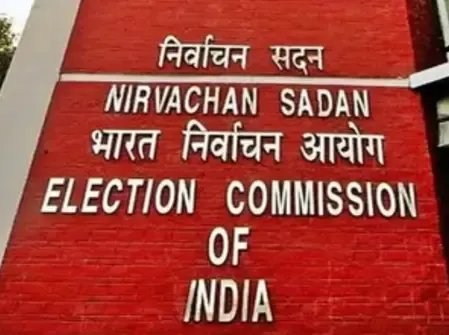
Former Union Law Minister Ashwani Kumar on Tuesday, 27 October 2026, said the Supreme Court must now determine whether the Election Commission of India (ECI) took its decisions unanimously during the Special Intensive Revision (SIR) exercise — a question that goes to the heart of the ongoing constitutional dispute over electoral roll procedures. His remarks followed the ECI's submission of a counter-affidavit before the apex court clarifying its internal decision-making process.
What the ECI's Affidavit Says
The Election Commission told the Supreme Court that Form 6 — the statutory document prescribed for inclusion of names in electoral rolls — had not been amended. The poll body, in its counter-affidavit, rejected as misleading allegations that it had altered the form through its SIR orders dated 24 June 2025, 27 October 2025, and 14 May 2026.
The ECI clarified that the declaration required under the SIR orders is a separate document and does not form part of Form 6, which can be amended only by the Central Government. The affidavit also stated that all decisions were ultimately taken unanimously by the Commission.
The Core Controversy: Was the CEC Acting Unilaterally?
According to Kumar, the central grievance underlying the ongoing agitation is whether Chief Election Commissioner Gyanesh Kumar had been taking decisions independently, without adequate consultation with the other Election Commissioners. The ECI's affidavit now asserts unanimity — but Kumar argued this creates a fresh legal question.
'The Election Commission's affidavit is very important because the main issue over which the agitation is taking place is that the Chief Election Commissioner used to take decisions on his own and not in consultation with others. Regarding this, the affidavit filed in the Supreme Court now clearly states that all decisions were ultimately taken unanimously,' Kumar said.
Key Legal Question Before the Supreme Court
Kumar said the Supreme Court must now examine the implications of the unanimity claim in light of objections reportedly raised by the two Election Commissioners at an earlier stage of the process. If decisions were indeed unanimous, the court will need to decide whether those earlier objections were subsequently withdrawn or deemed invalid.
'The Supreme Court now has to decide whether, if the decisions were unanimous, it should be understood that the objections raised by both Election Commissioners at one stage were withdrawn by them or were not considered valid. The Supreme Court is yet to decide this,' he said.
The Form 6 and Additional Declaration Debate
Kumar also addressed the controversy over whether the SIR exercise effectively changed the information demanded of applicants, even if the statutory Form 6 itself was left untouched. He acknowledged the ECI's position that no changes were made to Form 6, while noting that a separate declaration form was introduced to seek additional information from prospective voters.
'As far as Form 6 is concerned, the Election Commission's affidavit states that, according to the report, no changes were made. However, it is also true that additional information was sought in a declaration form by the CEC or an Election Commissioner, apart from Form 6. The Supreme Court will now have to decide whether the additional information sought actually changes Form 6 in the true sense,' Kumar added.
What Happens Next
The matter now rests with the Supreme Court, which must rule on two intertwined questions: whether the ECI's internal process satisfied the legal requirement of collective decision-making, and whether the introduction of a supplementary declaration form amounts to a de facto amendment of the statutory voter-registration process. A ruling could have significant implications for how electoral roll revisions are conducted ahead of upcoming state and national elections.
Point of View
But it may have opened a new front rather than closed one. If all decisions were unanimous, the reported dissent by two Election Commissioners earlier in the process demands a clear judicial explanation — were those objections formally withdrawn, or quietly set aside? The Form 6 question is equally loaded: the distinction between a 'separate declaration' and an amendment to the statutory form may be legally defensible, but it tests the spirit of electoral law. Courts have previously held that additional burdens on voters — however labelled — can functionally alter the registration process. The Supreme Court's ruling here will define the boundaries of the CEC's authority and the collective accountability of the full commission.
NationPress
27 Oct 2026
Frequently Asked Questions
What is the SIR controversy before the Supreme Court?
The Special Intensive Revision (SIR) row concerns allegations that Chief Election Commissioner Gyanesh Kumar took decisions on electoral roll revisions independently, without proper consultation with the other two Election Commissioners. Critics also allege that the SIR orders effectively changed the statutory Form 6 voter-registration document without legal authority.
What did the Election Commission say in its affidavit?
The ECI filed a counter-affidavit before the Supreme Court stating that Form 6 was not amended by its SIR orders of 24 June 2025, 27 October 2025, and 14 May 2026. It said the declaration introduced was a separate document, and that all decisions were ultimately taken unanimously by the Commission.
Why does Ashwani Kumar say the Supreme Court must now intervene?
Kumar argues that the ECI's claim of unanimity raises a fresh legal question: if decisions were unanimous, what happened to the objections reportedly raised by the two Election Commissioners at an earlier stage? He says the Supreme Court must clarify whether those objections were withdrawn or considered invalid.
Does the supplementary declaration form change Form 6?
The ECI maintains it does not, as Form 6 can only be amended by the Central Government. However, former Law Minister Ashwani Kumar has asked the Supreme Court to decide whether the additional information sought through the separate declaration form amounts to a substantive change in the voter-registration process.
What are the broader implications of this case?
A Supreme Court ruling could redefine the boundaries of the Chief Election Commissioner's authority and the requirement for collective decision-making within the ECI. It could also set a precedent for how supplementary voter-documentation requirements are evaluated against statutory electoral roll procedures ahead of future elections.