Sitharaman to Rahul: Stop Criminalising Business, End 'License Raj' Politics
Synopsis
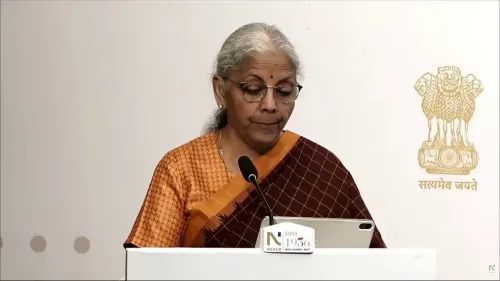
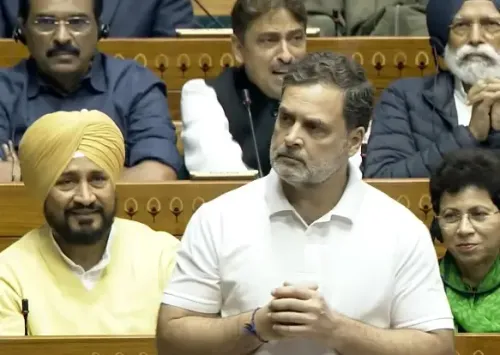
Finance Minister Nirmala Sitharaman publicly challenged Rahul Gandhi on October 28, 2026, accusing the Opposition leader of criminalising commerce, denigrating Indian entrepreneurs, and undermining the judiciary — invoking the License Raj era to contrast Congress and BJP economic philosophies.
Key Takeaways
Finance Minister Nirmala Sitharaman directly addressed Rahul Gandhi on X on October 28, 2026 , calling on him to stop politicising business and legal matters.
She accused Gandhi of repeatedly condemning Indian industry and potentially trying to recruit industrialists into a campaign of 'distrust and negativity.' Sitharaman invoked the License Raj era, arguing that Congress governance crushed entrepreneurial spirit and imposed poverty on crores of Indians for decades.
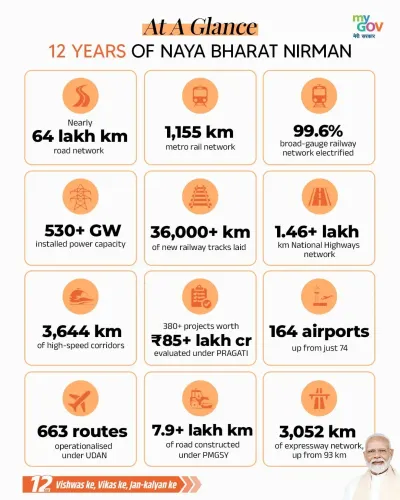
She credited the Modi government with reorienting policy around industry as an engine of employment and growth, citing initiatives like Make in India and Startup India .
The Finance Minister accused Gandhi and the Congress of historically demeaning the judiciary and called on him to 'stop seeing conspiracies everywhere.' No specific Gandhi remarks are named in the post; industry bodies and opposition have not yet issued a formal public response.
A sharp political volley landed on Wednesday, October 28, 2026, when Union Finance Minister Nirmala Sitharaman addressed Leader of the Opposition Rahul Gandhi directly on X, demanding he stop 'politicising every issue' and calling his pattern of labelling commercial and legal disputes as criminal matters 'unacceptable.'
The Charge: Criminalising Commerce, Inciting Distrust
Sitharaman's post, written in Hindi, opens with a pointed advisory: 'नेता प्रतिपक्ष होने के नाते' ('In your capacity as Leader of the Opposition'), she expects Gandhi to know better. Her core accusation is two-fold — that he repeatedly condemns the achievements of Indian industry and entrepreneurs, and that he may now be trying to recruit industrialists into a campaign of 'distrust and negativity.' The language is blunt and deliberate, designed to frame the opposition leader not as a watchdog but as a destabiliser.
The 'License-Quota Raj' Indictment
The Finance Minister then pivots to history, invoking the License Raj — the pre-1991 labyrinth of industrial licensing, quotas, and state controls widely credited with suppressing private enterprise and, in her words, 'crushing the spirit of Indian entrepreneurs for decades and imposing poverty on crores of Indians.' This is a recurring BJP rhetorical anchor: tie the Congress to a discredited economic era to delegitimise its current criticism. The 1991 liberalisation that formally began dismantling that system was, in fact, executed under a Congress government — but Sitharaman's framing targets the ideological DNA she attributes to the party, not the reform moment itself.
Against that backdrop, she positions the Modi government's record — Make in India (2014), the Insolvency and Bankruptcy Code (2016), and Startup India (2016) — as evidence of a structural shift that treats industry as a 'creator of employment and primary driver of economic growth,' not a suspect to be surveilled.
A Shared Obligation — and a Judiciary Warning
Sitharaman broadens the frame: supporting industry, empowering farmers, and securing the futures of India's youth are responsibilities held 'equally by political parties, leaders, governments, and institutions.' It is a call for constructive opposition — but also a rebuke. She urges Gandhi to 'adopt a constructive approach rather than levelling baseless allegations to serve narrow political interests.'
The sharpest line, however, is reserved for the judiciary. Sitharaman invokes the Constitution's guarantee of justice to all citizens and then turns the accountability lens back on Gandhi: 'इतिहास इस बात का गवाह है' — 'history is witness' — to the 'disgraceful manner' in which Gandhi, his party, and its Prime Ministers have 'demeaned the judiciary.' She closes with a direct address: 'Rahul ji, stop seeing conspiracies everywhere without reason.'
BJP vs Congress: The Cronyism Debate Resurfaces
This exchange sits within a well-worn but genuinely consequential argument in Indian political economy. When opposition figures highlight alleged cronyism or use parliamentary platforms to question corporate conduct, the government's standard counter-move is to question the opposition's own economic credentials and motives. What makes this iteration notable is Sitharaman's explicit invocation of the judiciary — suggesting that whatever specific Gandhi remarks triggered this response, they may have touched on legal proceedings involving business figures.
Industry associations and business chambers have not yet responded publicly. The next Union Budget and any forthcoming parliamentary session will serve as pressure tests for whether the government's pro-industry framing translates into additional regulatory or fiscal signals — or remains, for now, a political argument rather than a policy one.
India's two largest political blocs have staked out their positions clearly: one sees scrutiny of corporate power as accountability, the other sees it as sabotage. That debate will not end here.
Point of View
The BJP revives its most durable economic contrast — regulatory strangulation under Congress versus liberalisation under successive reform governments — even though the 1991 opening itself happened under a Congress prime minister. The judiciary reference is the most pointed element; it suggests the trigger for this exchange likely involved Gandhi questioning legal proceedings around a business figure, which the government is treating as an assault on institutional integrity. Ahead of what could be a contentious Budget cycle, this exchange signals that the government will aggressively police any opposition move to link industrial policy with accountability for corporate misconduct.
NationPress
28 Oct 2026
Frequently Asked Questions
Why did Nirmala Sitharaman attack Rahul Gandhi on October 28 2026?
Sitharaman posted on X accusing Gandhi of repeatedly denigrating Indian entrepreneurs, criminalising commercial and legal matters without basis, and potentially inciting distrust among industrialists — calling his approach unacceptable for a Leader of the Opposition.
What is the License Raj that Sitharaman mentioned?
The License Raj was a pre-1991 regulatory system requiring businesses to obtain government licences and work within production quotas. It is widely considered to have constrained private enterprise and economic growth. It was substantially dismantled by the 1991 liberalisation.
What did Sitharaman say about the judiciary in her post?
She stated that the Indian Constitution guarantees justice to all citizens and that the courts are entrusted to uphold it. She then accused Gandhi, the Congress party, and its Prime Ministers of historically demeaning the judiciary in a 'disgraceful manner.'
What BJP government schemes did Sitharaman reference in her defence?
Sitharaman referenced policies designed to 'enable enterprise, support industry, and encourage investment,' consistent with the government's flagship programmes — Make in India (2014), the Insolvency and Bankruptcy Code (2016), and Startup India (2016).
Has Rahul Gandhi responded to Sitharaman's post?
As of the time of reporting, no formal public response from Rahul Gandhi or the Indian National Congress to this specific post had been recorded. Industry bodies had also not issued a statement.