Sitharaman marks 9 years of GST, highlights digital gains
Synopsis
Union Finance Minister Nirmala Sitharaman marked GST's ninth anniversary on 1 July 2026, highlighting unified taxation, fully digital administration, e-invoicing, faster refunds and lower compliance costs for MSMEs as the reform's defining achievements over nine years.
Key Takeaways
GST completed nine years on 1 July 2026 , having been launched on 1 July 2017 .
Union Finance Minister Nirmala Sitharaman cited a unified tax framework and fully digital administration as core achievements.
E-invoicing and e-way bills have progressively replaced manual, paper-based compliance processes since the tax's rollout.
MSMEs have been a specific focus of relief measures, including higher exemption thresholds and simplified return-filing options.
The GST Council is expected to consider rate rationalisation and further compliance reforms at its next meeting.
GST subsumed multiple central and state levies, including central excise duty , service tax , and VAT , into a single destination-based structure.
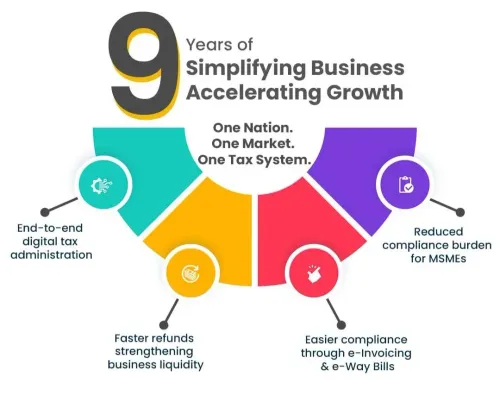
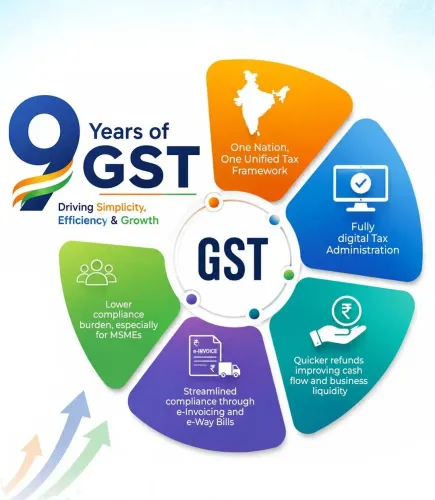
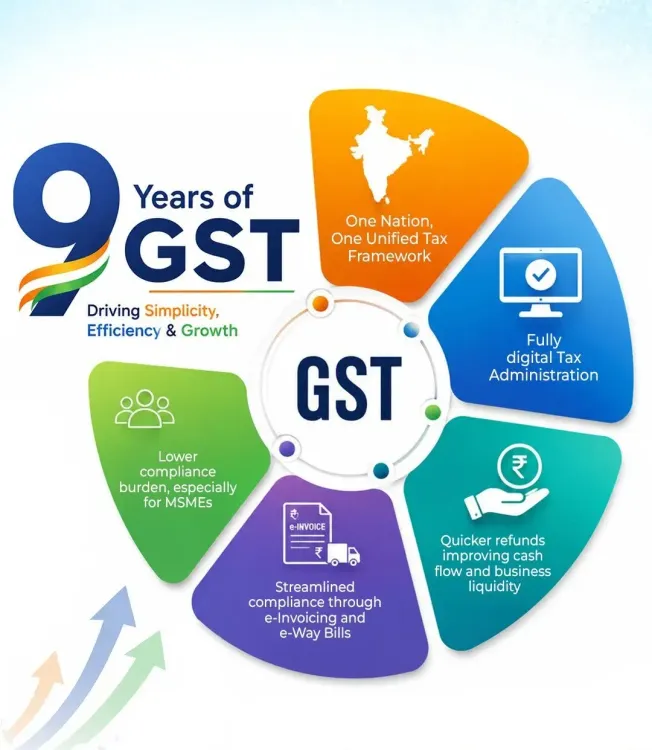
Union Finance Minister Nirmala Sitharaman on Tuesday, 1 July 2026 marked the ninth anniversary of the Goods and Services Tax, crediting the unified indirect tax regime with delivering digital administration, streamlined e-invoicing, faster refunds, and reduced compliance burden for MSMEs.
Context
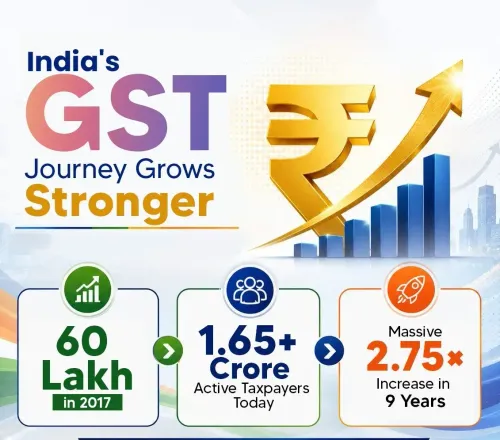
GST was rolled out across India on 1 July 2017, subsuming a complex web of central and state indirect levies — including central excise duty, service tax, and value-added tax — into a single destination-based framework. The reform was billed as the most significant overhaul of India's indirect tax architecture since independence. Wednesday's post by the Finance Minister marks the tax's ninth year in operation.
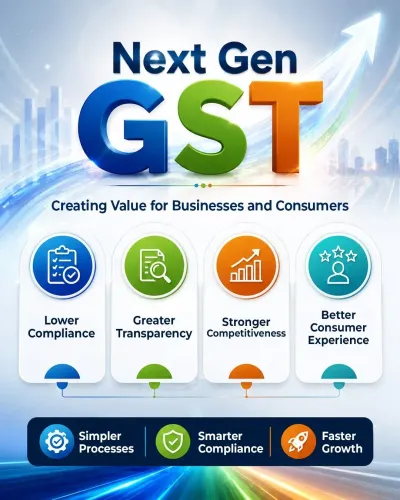
Sitharaman wrote: 'From a unified tax framework to fully digital administration, streamlined e-invoicing, quicker refunds and lower compliance burden for MSMEs, GST continues to make taxation more transparent, business-friendly and growth-oriented.' The message underscores the government's position that GST has matured from a disruptive transition into a stable, reform-oriented system.
Policy Backdrop
Since its launch, GST has evolved through successive phases of administrative modernisation. The introduction of e-invoicing for large businesses, later extended progressively to smaller firms, was designed to reduce manual interface between taxpayers and authorities and curb invoice fraud. E-way bills replaced physical transit documentation, easing movement of goods across state borders.
Simplified return-filing mechanisms and a push toward real-time data matching have been recurring themes in GST Council decisions over the nine years. The emphasis on MSME relief — through higher threshold exemptions and composition scheme adjustments — reflects the sector's centrality to India's manufacturing and services base. These changes form part of the broader Ease of Doing Business agenda pursued through successive Union Budgets.
Stakeholders and Impact
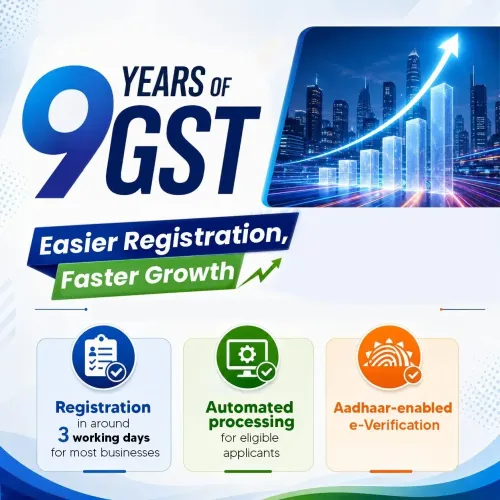
MSMEs, which constitute the backbone of India's economy in terms of employment and output, have been a focal point of GST rationalisation efforts. Lower compliance thresholds, quarterly return options, and simplified registration processes have been among the measures directed at this segment. The Finance Ministry's framing positions these as concrete gains rather than aspirational targets.
Ordinary taxpayers and larger enterprises have also been affected by the shift to a fully digital ecosystem, where invoices, returns, and refund claims are processed online. The move has reduced physical visits to tax offices and, in principle, shortened the time between refund claims and disbursements — though the pace of improvement has varied across sectors and firm sizes.
What's Next
The next GST Council meeting is expected to take up questions of rate rationalisation — a long-pending exercise to consolidate the four-tier rate structure — as well as potential changes to compliance thresholds and refund-processing timelines. Any decisions on these fronts would directly affect the MSME sector and the wider taxpayer base. The ninth anniversary provides the government with a political moment to set the agenda for the reform's next phase.
Point of View
The Finance Ministry signals that the reform's next chapter will be framed around ease of compliance rather than structural overhaul. The emphasis on transparency and business-friendliness also serves as a pre-emptive counter to criticism that the multi-rate structure still imposes complexity on smaller firms. Taken together, the messaging positions the government as a steward of incremental, technocratic improvement rather than radical revision — a stance likely to define the GST Council's agenda in the months ahead.
NationPress
1 Jul 2026
Frequently Asked Questions
When did GST complete 9 years in India?
GST completed nine years on 1 July 2026 , having been introduced on 1 July 2017 to replace multiple central and state indirect taxes.
What did Nirmala Sitharaman say about GST on its 9th anniversary?
Finance Minister Nirmala Sitharaman said GST has delivered a unified tax framework, fully digital administration, streamlined e-invoicing, quicker refunds, and a lower compliance burden for MSMEs, making taxation more transparent and business-friendly.
How has GST helped MSMEs in India?
MSMEs have benefited from higher exemption thresholds, quarterly return-filing options, composition scheme adjustments, and simplified registration processes introduced through successive GST Council decisions since 2017.
What is e-invoicing under GST?
E-invoicing under GST requires businesses above specified turnover thresholds to generate invoices on a government portal in real time, reducing manual errors, curbing fraud, and enabling faster input tax credit matching.
What changes are expected in GST next?
The next GST Council meeting is expected to discuss rate rationalisation — consolidating the four-tier rate structure — along with possible revisions to compliance thresholds and refund-processing timelines.