CM Yogi Calls 'School Chalo Abhiyan' a Mass Movement
Synopsis
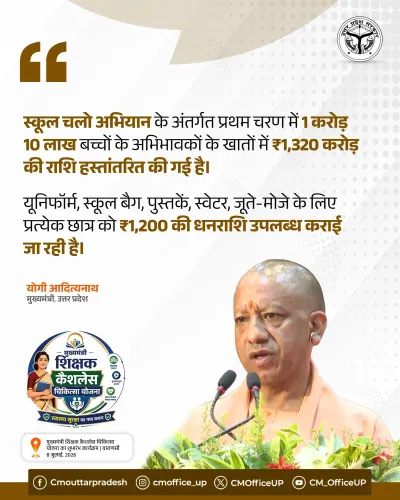
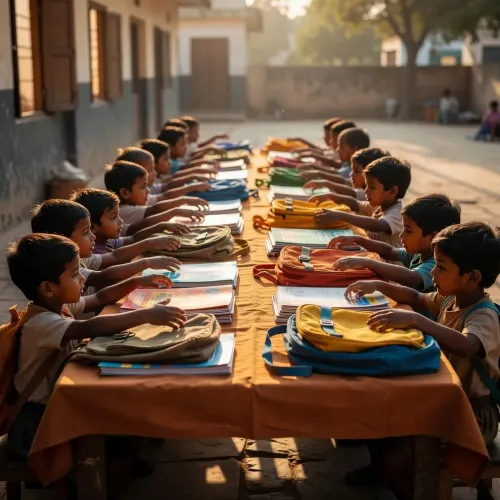
Uttar Pradesh Chief Minister Yogi Adityanath has appealed to citizens to convert the School Chalo Abhiyan into a mass movement, urging that every child be brought to school as the new academic session begins across the state.
Key Takeaways
CM Yogi Adityanath issued the appeal on 1 July 2026 via his official X account.
He called for the School Chalo Abhiyan to be made a jan andolan (people's movement), not just a government scheme.
The campaign targets enrollment and retention of school-age children in Uttar Pradesh , India's most populous state.
The drive is anchored in the Right to Education Act, 2009 and aligns with National Education Policy 2020 goals.
The Yogi administration has run periodic enrollment drives since 2017 to address dropout rates and improve education indicators.
Enrollment figures for the new academic year and any new budget provisions will be key indicators of the campaign's impact.
Uttar Pradesh Chief Minister Yogi Adityanath on Wednesday, 1 July 2026, issued a public appeal urging every citizen to transform the School Chalo Abhiyan into a mass movement and ensure that every child reaches school. The call, posted on his official X account, comes as the new academic session gets underway across Uttar Pradesh, India's most populous state.
Context
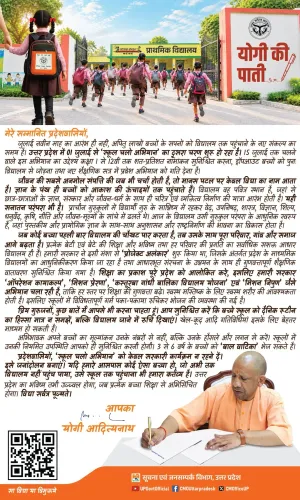
In his post, the Chief Minister wrote: 'मेरी सभी से अपील है- स्कूल चलो अभियान को जन-आंदोलन बनाएं, हर बच्चे को स्कूल पहुंचाएं' — 'My appeal to everyone: make the School Chalo Abhiyan a people's movement, get every child to school.' The appeal is directed at parents, community leaders, and citizens at large, framing school enrollment not merely as a government programme but as a shared social responsibility.
The School Chalo Abhiyan is a state-level enrollment campaign that the Uttar Pradesh government has run periodically to encourage families — particularly in rural and semi-urban areas — to enrol children in school and reduce dropout rates. The campaign typically coincides with the start of the academic year.
Policy Backdrop
The drive sits within a layered national framework. The Right to Education Act, 2009 mandates free and compulsory education for all children between the ages of 6 and 14. The Sarva Shiksha Abhiyan, launched in 2001, established the national scaffolding for universal elementary education that state campaigns like School Chalo Abhiyan build upon.
The National Education Policy 2020 further reinforced the emphasis on foundational literacy and universal access, setting targets that high-population states such as Uttar Pradesh are under particular pressure to meet. Post-pandemic learning disruptions elevated dropout risks across the country, making fresh enrollment pushes at the start of each academic cycle especially significant.
Since 2017, the Yogi Adityanath administration has run successive enrollment drives aimed at improving the state's education indicators, which have historically lagged national averages in rural districts.
Stakeholders and Impact
The primary beneficiaries of the campaign are school-age children, particularly those from economically weaker sections and remote rural households where enrollment gaps remain widest. Rural parents are a key audience for the appeal, as economic pressures and distance from schools remain common barriers to regular attendance.
Community institutions, local government bodies, and school management committees are implicitly called upon to act as on-ground mobilisers. By invoking the language of a jan andolan (people's movement), the Chief Minister's appeal seeks to shift ownership of the enrollment challenge from the state apparatus to civil society at large.
Uttar Pradesh's sheer demographic scale — with tens of millions of school-age children — means that even marginal improvements in enrollment and retention rates can translate into significant absolute numbers of additional children in classrooms.
What's Next
Attention will now turn to whether the appeal is backed by supplementary measures such as additional budget provisions for school infrastructure, teacher recruitment drives, or expanded mid-day meal coverage to incentivise attendance. The release of enrollment figures for the new academic year will serve as the most concrete measure of the campaign's reach. Observers will also watch for district-level implementation reports and whether the 'mass movement' framing translates into organised community outreach beyond the digital appeal.
Point of View
Where education access gaps remain acute in rural belts, the political stakes of visibly improving enrollment numbers ahead of future electoral cycles are considerable. Whether the social-media appeal is followed by structural interventions — teacher hiring, infrastructure spending — will determine if it moves the needle on actual attendance.
NationPress
30 Sept 2026
Frequently Asked Questions
What is the School Chalo Abhiyan in Uttar Pradesh?
The School Chalo Abhiyan is a state-level enrollment campaign run by the Uttar Pradesh government to encourage parents and communities to enrol children in school and reduce dropout rates, typically launched at the start of each academic year.
What did CM Yogi Adityanath say about School Chalo Abhiyan?
On 1 July 2026, CM Yogi Adityanath appealed to all citizens to make the School Chalo Abhiyan a mass movement and ensure that every child reaches school, posting the call on his official X account.
What is the Right to Education Act and how does it relate to this campaign?
The Right to Education Act, enacted in 2009, mandates free and compulsory education for all children aged 6 to 14 in India. The School Chalo Abhiyan is one of the state-level drives designed to give practical effect to this legal guarantee.
How does the National Education Policy 2020 connect to UP's school enrollment drives?
The National Education Policy 2020 emphasises foundational literacy and universal access to education. Uttar Pradesh's School Chalo Abhiyan is aligned with NEP 2020 targets, particularly important given the state's large school-age population.
What should we watch for after CM Yogi's School Chalo Abhiyan appeal?
Key indicators will include enrollment figures for the new academic year, any additional government budget for school infrastructure or teacher recruitment, and district-level reports on how the campaign is being implemented on the ground.