Sitharaman marks 9 years of GST, highlights MSME gains
Synopsis
Union Finance Minister Nirmala Sitharaman marked nine years of GST on 1 July 2026, crediting the unified tax regime with end-to-end digital administration, faster refunds, and eased compliance burdens — especially for MSMEs — as the government signals continued reform momentum.
Key Takeaways
GST completed nine years on 1 July 2026 , having replaced central excise, service tax, and state VAT when it launched on 1 July 2017 .
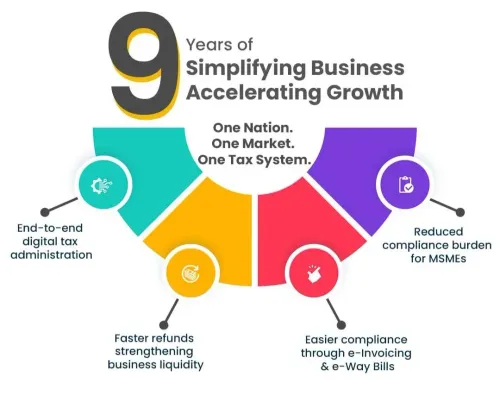
Finance Minister Nirmala Sitharaman highlighted end-to-end digital administration and faster refunds as key achievements of the GST ecosystem.
MSMEs were specifically identified as beneficiaries of simplified compliance under the GST framework.
GST was enabled by the Constitution (One Hundred and First Amendment) Act, 2016 , redistributing tax powers between the Centre and states.
Digital tools such as e-invoicing and input tax credit matching have been layered onto the original 2017 architecture over successive years.
The next GST Council meeting and the upcoming Union Budget speech are key events to watch for further reforms.
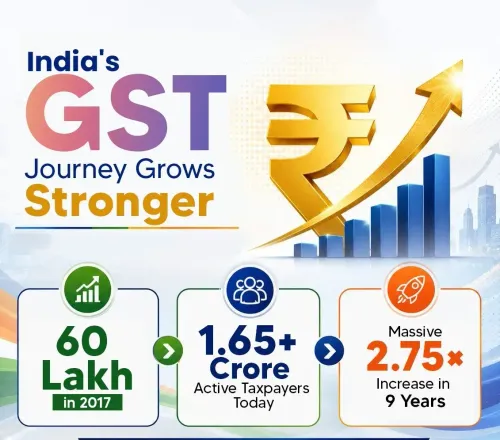
Union Finance Minister Nirmala Sitharaman on Wednesday, 1 July 2026 marked the ninth anniversary of the Goods and Services Tax (GST), crediting the unified indirect tax regime with simplifying compliance and improving the ease of doing business, particularly for micro, small and medium enterprises (MSMEs).
Context
GST came into force on 1 July 2017, replacing a fragmented web of central levies — including central excise duty and service tax — as well as state-level value-added taxes. The reform was enabled by the Constitution (One Hundred and First Amendment) Act, 2016, which redistributed taxation powers between the Centre and the states to permit a single, unified indirect tax. Nine years on, the anniversary has become an annual occasion for the government to take stock of the regime's evolution.
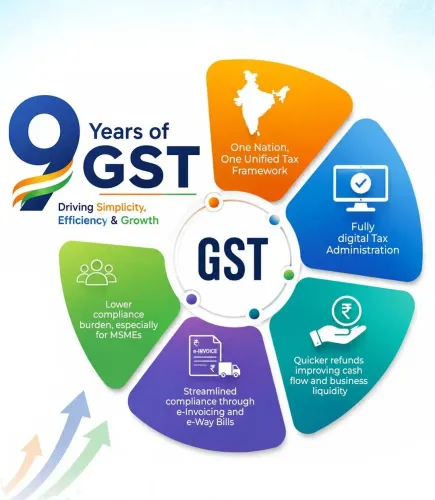
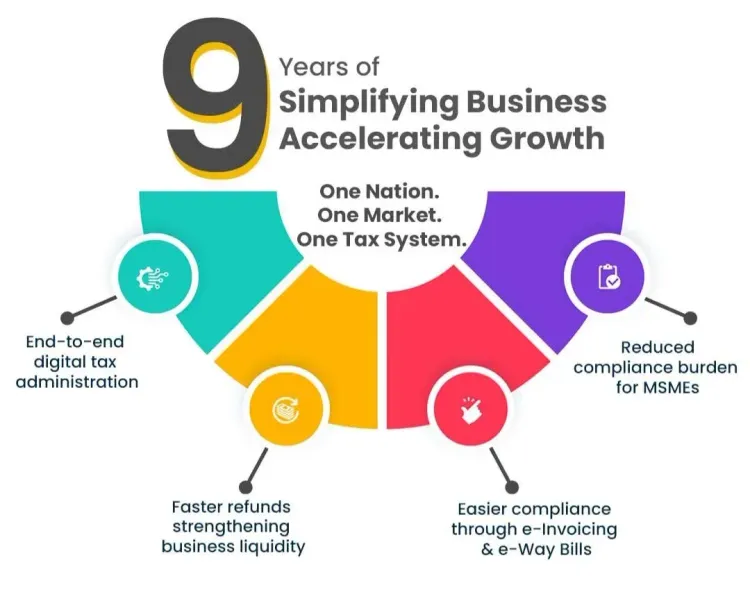
Sitharaman's post on X under the hashtag #9YearsOfGST stated: 'GST has been instrumental in simplifying tax compliance and improving the ease of doing business. From end-to-end digital administration to faster refunds, the GST ecosystem has made compliance easier, especially for MSMEs.'
Policy Backdrop
Since its launch, successive Finance Acts and GST Council decisions have layered digital tools onto the original 2017 architecture. Measures such as e-invoicing and automated input tax credit (ITC) matching were introduced to reduce manual intervention and curb tax evasion. These steps have progressively shifted the compliance burden away from paper-based processes toward a fully digital pipeline.
The emphasis on faster refunds addresses a long-standing concern among exporters and smaller businesses, for whom delayed refunds had historically locked up working capital. The government has periodically streamlined refund processing timelines through system-level upgrades on the GSTN (GST Network) portal, though specific post-2023 turnaround statistics remain subject to official disclosure.
Stakeholders and Impact
MSMEs — which form the backbone of India's employment and manufacturing landscape — have been a focal point of GST-era compliance relief. Measures such as the Composition Scheme, which allows smaller taxpayers to file quarterly returns and pay tax at a flat rate, were designed specifically to reduce the compliance load on businesses with limited administrative capacity.
The government's repeated highlighting of MSME benefits fits within a broader formalisation agenda: as businesses register under GST, they gain a verifiable tax identity that improves access to formal credit and eligibility for public procurement contracts. This linkage between tax compliance and economic opportunity has been a consistent thread in the BJP-led government's economic messaging since 2014.
What's Next
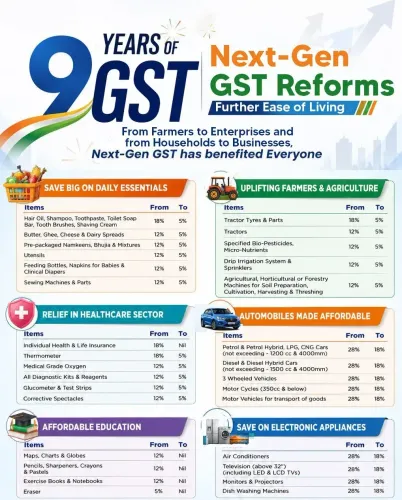
Attention will now turn to the next GST Council meeting, where further rate rationalisation or additional compliance relaxations — particularly for MSMEs — could be on the agenda. Finance Minister Sitharaman's remarks at the Union Budget presentation will also be closely watched for any structural changes to the GST framework. As the regime enters its tenth year, pressure is likely to mount for a comprehensive review of the rate structure, which critics argue remains complex despite a decade of incremental reforms.
Point of View
Using the #9YearsOfGST milestone to reinforce the government's narrative of tax modernisation ahead of what is expected to be a politically sensitive budget cycle. The explicit focus on MSMEs signals that the administration is conscious of small-business fatigue with compliance obligations — a constituency that has historically been vocal about the regime's complexity. By anchoring the message in digital infrastructure and refund efficiency rather than revenue numbers, the government sidesteps ongoing debates about rate rationalisation. The post fits a longer arc in which GST is positioned not merely as a revenue tool but as the foundation of India's formalisation drive, linking tax identity to credit access and market participation.
NationPress
1 Jul 2026
Frequently Asked Questions
When did GST complete 9 years in India?
GST completed nine years on 1 July 2026 , having been implemented across India on 1 July 2017 under the Constitution (One Hundred and First Amendment) Act, 2016.
What did Nirmala Sitharaman say about GST on its 9th anniversary?
Finance Minister Nirmala Sitharaman said GST has been 'instrumental in simplifying tax compliance and improving the ease of doing business,' pointing specifically to end-to-end digital administration, faster refunds, and benefits for MSMEs.
How has GST helped MSMEs in India?
GST has helped MSMEs through measures such as the Composition Scheme for smaller taxpayers, digital filing that reduces paperwork, and faster refund processing that eases working capital constraints.
What is the GST Composition Scheme?
The GST Composition Scheme allows eligible small businesses to pay tax at a flat rate and file simplified quarterly returns, reducing the compliance burden compared to the regular GST filing process.
What changes to GST can be expected in 2026?
Observers are watching the next GST Council meeting for potential rate rationalisation and compliance relaxations, as well as Finance Minister Sitharaman's upcoming Union Budget speech for any structural changes to the GST framework.