Sitharaman Highlights 9 Years of GST Gains, Cites Deloitte Survey
Synopsis
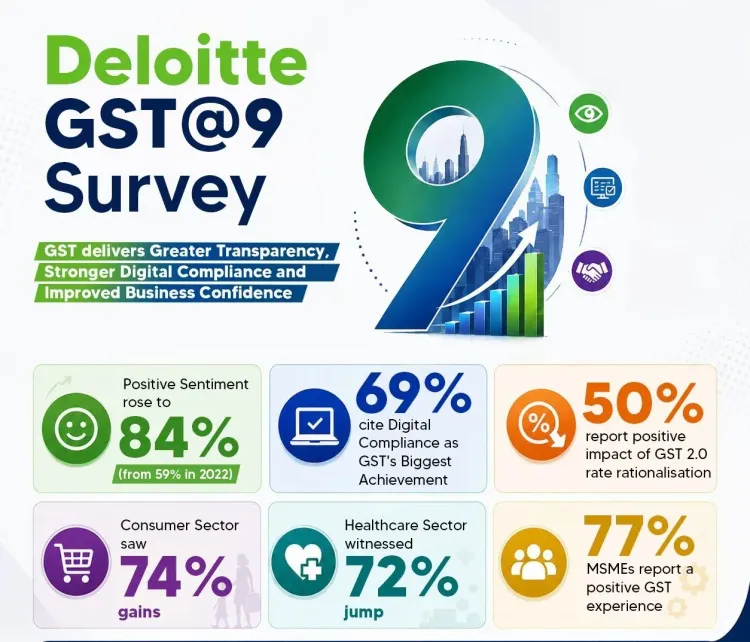
On GST's ninth anniversary, Finance Minister Nirmala Sitharaman cited Deloitte's GST@9 Survey showing strong industry confidence in transparency and digital compliance, with MSMEs reporting improved experiences and rate rationalisation under GST 2.0 expected to support consumption-facing sectors.
Key Takeaways
GST completed nine years on 1 July 2026 , marking the anniversary of its launch on 1 July 2017 .
Deloitte's GST@9 Survey shows strong industry confidence in transparency, digital compliance, and efficiency gains.
MSMEs report a more positive GST experience compared to earlier years, reflecting simplified compliance measures introduced over time.
Rate rationalisation under GST 2.0 is seen as supporting key consumption-facing sectors such as FMCG, textiles, and retail.
Finance Minister Nirmala Sitharaman has overseen the GST Council since 2019 , steering multiple rounds of rate and compliance reforms.
The next GST Council meeting is expected to advance the GST 2.0 agenda on rate simplification and sector-specific adjustments.
Union Finance Minister Nirmala Sitharaman on Wednesday, 1 July 2026 cited a major industry survey to mark the ninth anniversary of India's Goods and Services Tax, pointing to growing business confidence in the regime's transparency, digital compliance, and efficiency gains. The minister's remarks, shared on her official X account, referenced Deloitte's GST@9 Survey and highlighted positive signals from MSMEs as well as expectations around a second phase of reforms.
Context
India's GST completed nine years on 1 July 2026, having been launched on 1 July 2017 as a unified, destination-based indirect tax that subsumed dozens of central and state levies into a single framework. The anniversary, marked under the hashtag #9YearsofGST, has become an occasion for the government to take stock of implementation progress and industry feedback. Sitharaman, who has chaired the GST Council as Finance Minister since 2019, shared the Deloitte survey findings as a barometer of how businesses now perceive the system.
The Deloitte GST@9 Survey measures industry perceptions across compliance, transparency, and operational efficiency at the nine-year mark. According to Sitharaman's post, the survey reflects 'strong industry confidence' in India's GST journey, with businesses acknowledging concrete improvements in how the tax is administered and reported.
Policy Backdrop
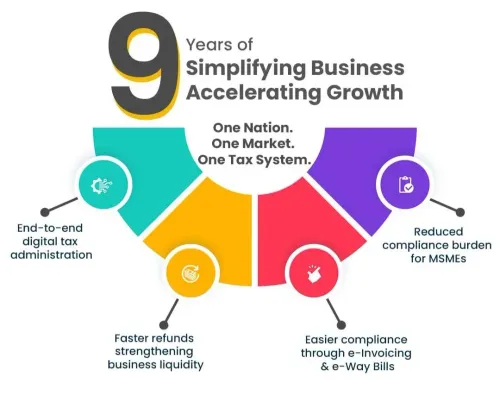
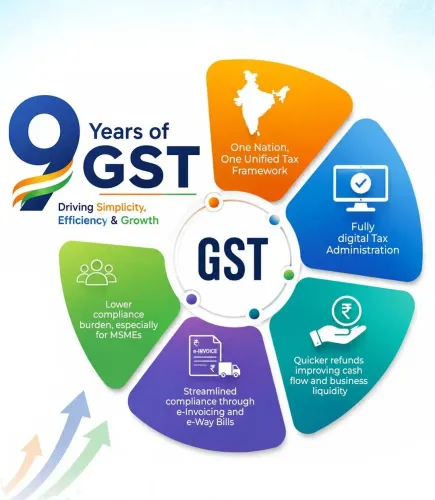
Since rollout, the government has progressively layered digital tools onto the GST architecture — including mandatory e-invoicing for larger taxpayers and an upgraded GSTN portal — to reduce manual compliance burdens and improve audit trails. The GST Council has conducted multiple rate rationalisation exercises between 2018 and 2024, trimming levies on a range of consumer goods and services to balance revenue targets with ease of doing business.
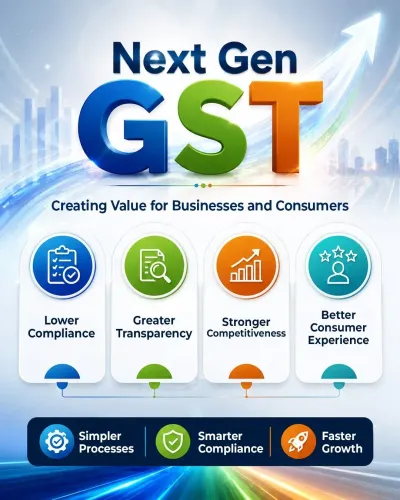
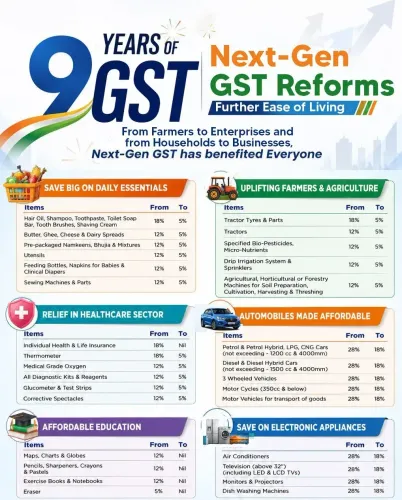
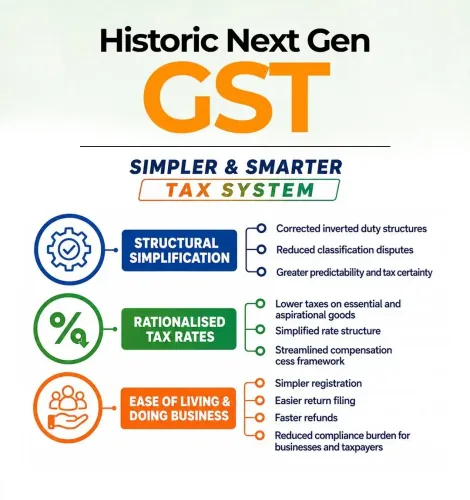
The concept of GST 2.0 has emerged as shorthand for the next phase of reforms, centred on further rate simplification, sector-specific adjustments, and streamlined return-filing. Sitharaman's post notes that rate rationalisation under this framework 'is seen supporting key consumption-facing sectors,' signalling that upcoming Council decisions may prioritise relief for sectors tied to household spending.
Stakeholders and Impact
MSMEs — long considered the most compliance-burdened segment under GST — feature prominently in the survey's findings. The minister noted that small and medium enterprises now 'report a more positive GST experience,' a shift that policy watchers attribute to simplified quarterly return schemes, composition levy options, and reduced filing frequencies introduced over the past several years.
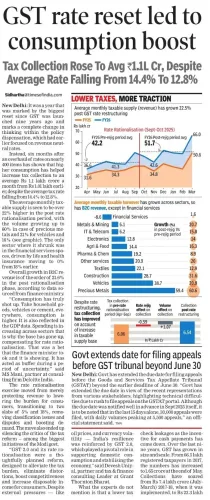
Consumption-facing sectors such as FMCG, textiles, restaurants, and retail stand to benefit most directly from any rate rationalisation moves under GST 2.0, as lower or restructured rates can translate into reduced prices for end consumers and improved demand. Industry bodies representing these sectors have consistently flagged rate rationalisation as a top ask in pre-Council submissions.
What's Next
Attention now turns to the next GST Council meeting, where members are expected to deliberate on concrete rate changes and compliance simplification measures that would give formal shape to the GST 2.0 agenda. The Deloitte survey's findings on MSME sentiment and sector-specific confidence are likely to inform the Council's deliberations and provide political cover for bolder rationalisation steps.
With the ninth anniversary serving as a policy milestone, the government appears keen to use industry data to build a narrative of maturation — moving GST from a contested reform to an entrenched, broadly accepted part of India's fiscal architecture. The direction of travel on rate rationalisation and digital compliance will determine whether the optimism captured in the survey translates into measurable relief for businesses in the year ahead.
Point of View
And a positive shift in their perception helps the BJP neutralise a long-standing opposition talking point ahead of any electoral cycle. The framing of 'GST 2.0' signals that the government is positioning the next reform phase as an evolution rather than a course correction, maintaining continuity while creating room for politically palatable rate cuts in consumption sectors. Whether the Council translates this narrative into concrete rate action will be the real test of the anniversary messaging.
NationPress
30 Sept 2026
Frequently Asked Questions
What is the Deloitte GST@9 Survey?
The Deloitte GST@9 Survey is an industry perception study measuring how Indian businesses assess GST's compliance burden, transparency, and efficiency nine years after the tax's launch in 2017. Finance Minister Nirmala Sitharaman cited its findings on 1 July 2026 to mark the anniversary.
What is GST 2.0 in India?
GST 2.0 refers to the next phase of GST reforms in India, focused on rate rationalisation, simplified compliance procedures, and sector-specific adjustments. It is expected to particularly benefit consumption-facing sectors such as FMCG, textiles, and restaurants.
How has GST affected MSMEs in India?
MSMEs initially found GST compliance burdensome due to multiple return filings and documentation requirements. Over time, the government introduced simplified quarterly schemes, composition levies, and reduced filing frequencies, and the Deloitte GST@9 Survey indicates MSMEs now report a more positive experience.
When was GST launched in India?
GST was launched in India on 1 July 2017 , replacing a complex web of central and state indirect taxes with a unified, destination-based tax framework administered through the GST Council.
What does rate rationalisation under GST mean?
Rate rationalisation under GST refers to the periodic restructuring of tax slabs and rates by the GST Council to reduce cascading effects, lower the burden on essential goods and services, and make the overall tax structure simpler for businesses and consumers.