Sitharaman Meets GJEPC Delegation at Parliament House
Synopsis
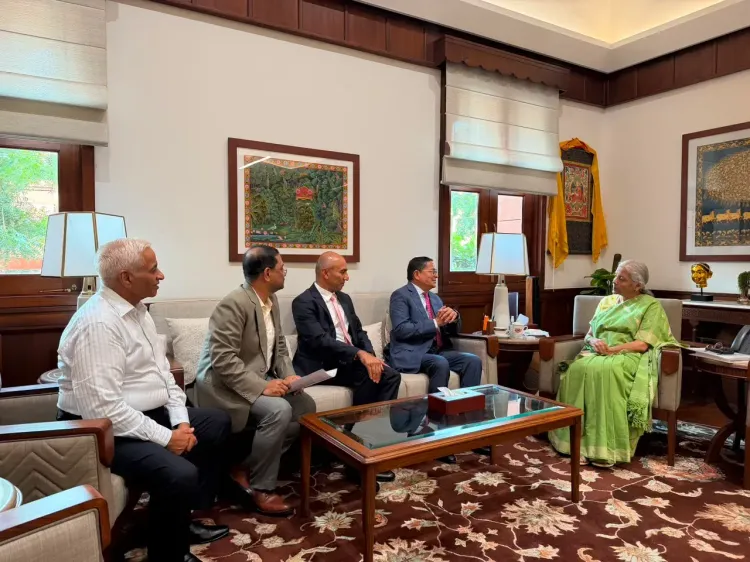
Union Finance Minister Nirmala Sitharaman met a Gem and Jewellery Export Promotion Council delegation at Parliament House on 22 July 2026. The meeting reflects the government's consultative approach to export policy for one of India's leading merchandise export sectors.
Key Takeaways
Union Finance Minister Nirmala Sitharaman received a GJEPC delegation at Parliament House, New Delhi on 22 July 2026 .
The Gem and Jewellery Export Promotion Council is the apex body representing Indian gem and jewellery exporters and regularly engages the Finance Ministry on policy matters.
India's gems and jewellery sector is a leading merchandise export earner, with policy focus on duty structures, value addition, and new market access.
The Foreign Trade Policy 2023 and the RoDTEP scheme (2021) form the current policy framework governing export incentives for the sector.
Potential outcomes to watch include revisions to RoDTEP rates and duty structures in the next Union Budget or Foreign Trade Policy update.
Union Finance Minister Nirmala Sitharaman received a delegation from the Gem and Jewellery Export Promotion Council (GJEPC) at Parliament House, New Delhi, on Wednesday, 22 July 2026, in a consultative meeting that underscores the government's ongoing engagement with one of India's most significant export sectors.
Context
The GJEPC is the apex body representing Indian exporters of gems and jewellery, and its delegations to the Finance Ministry are a recognised channel through which the sector conveys its policy priorities. Meetings at Parliament House during the Budget and inter-Budget period carry particular weight, as they feed directly into fiscal and trade policy deliberations. The council's outreach to Sitharaman reflects the sector's keenness to engage at the highest level of economic decision-making.
Policy Backdrop
India's gems and jewellery industry is a pillar of the country's merchandise export basket, making it a consistent priority in trade and fiscal planning. The Foreign Trade Policy 2023 laid out a framework of incentives and market-access measures specifically targeting labour-intensive export sectors, including gems and jewellery. The Remission of Duties and Taxes on Exported Products (RoDTEP) scheme, introduced in 2021, replaced the earlier MEIS mechanism and extended automatic export incentives to jewellery and allied products, signalling the government's intent to keep the sector competitive globally.
Duty structures on gold and precious stones, value-addition norms, and access to new international markets have been recurring agenda items in such engagements. Any revisions to these parameters — whether through Budget announcements or Foreign Trade Policy updates — can materially affect the competitiveness of Indian gem and jewellery exporters.
Stakeholders and Impact
The sector spans a wide ecosystem: large gem exporters, thousands of jewellery MSMEs, artisans, and ancillary logistics and finance providers. Decisions emerging from consultations like this one can influence export incentive rates, import duties on raw materials, and compliance requirements for small manufacturers. GJEPC members operating in hubs such as Surat, Mumbai, Jaipur, and Kolkata watch these ministerial meetings closely for signals on policy direction ahead of the next Union Budget.
Beyond domestic stakeholders, India's position in global gem and jewellery trade — competing with centres in Belgium, the UAE, and Thailand — means that policy calibration has export-market consequences as well.
What's Next
Industry observers will track whether GJEPC's representations translate into concrete measures in the next Union Budget or in amendments to the Foreign Trade Policy. Adjustments to RoDTEP rates, rationalisation of import duties on rough diamonds and gold, or enhanced market-development assistance for jewellery exporters are among the outcomes the sector typically seeks from such engagements. The Finance Minister's willingness to meet the council signals that these representations will receive formal consideration in the government's policy process.
Point of View
The industry has clear asks that align with the government's broader export-growth targets. Sitharaman's track record shows that such stakeholder engagements do feed into Budget arithmetic, making this meeting more than ceremonial. The timing — mid-year — suggests the sector may be positioning early for the next Budget cycle or seeking a course-correction on existing incentive rates.
NationPress
21 Oct 2026
Frequently Asked Questions
Why did GJEPC meet Finance Minister Nirmala Sitharaman?
The Gem and Jewellery Export Promotion Council met Finance Minister Nirmala Sitharaman at Parliament House on 22 July 2026 to represent the sector's policy priorities, likely related to export incentives, duty structures, and market access under India's Foreign Trade Policy.
What is GJEPC and what does it do?
The Gem and Jewellery Export Promotion Council (GJEPC) is the apex body representing Indian exporters of gems and jewellery. It promotes sector exports, engages with the government on trade policy, and advocates for incentives that keep Indian jewellery competitive in global markets.
What is the RoDTEP scheme for jewellery exporters?
The Remission of Duties and Taxes on Exported Products (RoDTEP) scheme, introduced in 2021, replaced the earlier MEIS mechanism and provides automatic export incentives to jewellery and allied product exporters by refunding embedded taxes and duties not otherwise rebated.
How important is gems and jewellery to India's exports?
Gems and jewellery is one of India's leading merchandise export categories, with major hubs in Surat, Mumbai, Jaipur, and Kolkata. The sector employs a large workforce of artisans and MSME units and competes internationally with centres in the UAE, Belgium, and Thailand.
What policy changes could come from this GJEPC-Finance Minister meeting?
While specific meeting outcomes are not yet known, industry stakeholders typically seek revisions to RoDTEP rates, rationalisation of import duties on raw materials like rough diamonds and gold, and enhanced market-development assistance — any of which could appear in the next Union Budget or Foreign Trade Policy update.