Sitharaman moves to bury 135-year-old banking evidence law

Synopsis
Finance Minister Nirmala Sitharaman on August 10 told Rajya Sabha the government will repeal the colonial Bankers' Books Evidence Act of 1891 under Entry 45 of the Union List and replace it with the Bankers' Books Evidence Bill, 2026, establishing a technology-neutral framework for bankers' records as legal evidence.
Key Takeaways
The Bankers' Books Evidence Act, 1891 — a 135-year-old colonial statute — is set to be repealed by Parliament.
The government is invoking Entry 45 of the Union List under the Seventh Schedule of the Constitution as the legal basis for the repeal and re-enactment.
The replacement legislation, the Bankers' Books Evidence Bill, 2026 , will introduce a technology-neutral legal framework for bankers' books.
Finance Minister Nirmala Sitharaman made the announcement while addressing the Rajya Sabha on August 10, 2026 .
The Bill must still pass both Houses of Parliament before becoming law; further debate is expected.
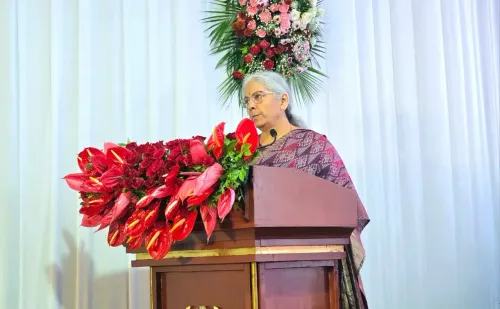
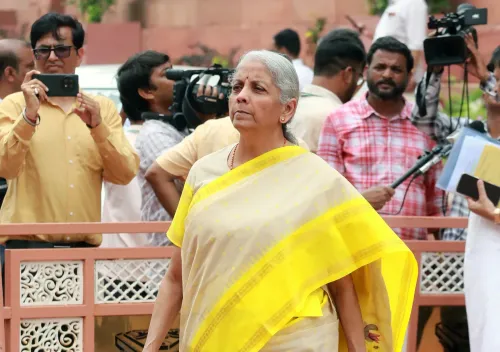
A law written when ledgers were hand-ruled and courts had never heard the word 'digital' is finally being put to rest. Union Finance Minister Nirmala Sitharaman told the Rajya Sabha on Monday, August 10, 2026, that the government is invoking Entry 45 of the Union List under the Seventh Schedule of the Constitution to repeal the Bankers' Books Evidence Act, 1891 and replace it with the Bankers' Books Evidence Bill, 2026.
A 135-year-old colonial statute gets its notice
The Bankers' Books Evidence Act of 1891 was drafted in the era of physical ledgers — its entire architecture assumed that a bank's records meant paper, ink, and a clerk's handwriting. For over a century, courts across India have relied on this law to admit bankers' books as evidence in legal proceedings. But as banking migrated to core-banking platforms, mobile apps, and cloud-based records, the 1891 Act increasingly became a legal relic that practitioners had to work around rather than with.
Sitharaman was explicit about the constitutional footing: 'Entry 45 in the Union List, which is in List I of the Seventh Schedule to the Constitution, empowers Parliament to repeal and re-enact an Act.' The government is not amending the old law — it is repealing it outright and starting fresh.
What a 'technology-neutral framework' actually means for banks and courts
The centrepiece of the 2026 Bill, as Sitharaman described it, is a technology-neutral legal framework for bankers' books. In plain terms: the new law would not privilege any specific format — paper, scanned copy, or native digital record — but would set principles that apply regardless of how a bank stores its data. That matters enormously for a financial system where the overwhelming majority of transactions exist only as electronic entries.
For the judiciary, the change closes a persistent ambiguity. Courts have long grappled with questions about the evidentiary weight of printouts, certified electronic records, and blockchain-based audit trails under a statute that predates electricity in most Indian bank branches. A technology-neutral framework would give judges — and the banks producing evidence — a single, coherent standard.
India's steady dismantling of colonial financial law
The move fits a deliberate pattern. Successive Indian governments have chipped away at Victorian-era commercial statutes — from the overhaul of insolvency law under the Insolvency and Bankruptcy Code to the digitalisation of company records under the Companies Act, 2013. Repealing the 1891 Act is, in that sense, the banking sector's version of the same long project: replacing colonial administrative architecture with legislation built for a digital economy.
The Bill is currently before the Rajya Sabha. It must pass both Houses before it becomes law, and further parliamentary debate is expected to scrutinise the specific provisions that the Finance Minister's statement, posted as the first in a thread, only begins to outline.
India's banks and its courts have waited 135 years for this update. The clock is finally running.
Point of View
Sitharaman has pre-empted any federal jurisdiction challenge, a smart piece of legislative housekeeping. The 'technology-neutral' framing is equally significant — it avoids locking the law to any current technology, giving the framework longevity as banking infrastructure continues to evolve. Politically, retiring a Victorian-era law fits the BJP's broader narrative of decolonising Indian statutes, adding a governance dimension to what is fundamentally a financial-sector reform.
NationPress
10 Aug 2026
Frequently Asked Questions
What is the Bankers' Books Evidence Bill 2026?
The Bankers' Books Evidence Bill, 2026 is a proposed Indian law that will repeal the colonial-era Bankers' Books Evidence Act of 1891 and replace it with a technology-neutral legal framework governing how bankers' records are admitted as evidence in court.
Why is the Bankers' Books Evidence Act 1891 being repealed?
The 1891 Act was drafted for paper-based ledgers and does not adequately cover digital or electronic banking records. The government is replacing it with a modern, technology-neutral framework suited to today's digital financial system.
What is Entry 45 of the Union List and why does it matter here?
Entry 45 of the Union List in the Seventh Schedule of the Constitution gives Parliament the power to legislate on banking, including repealing and re-enacting related laws. The government has cited this entry as the constitutional authority for scrapping the 1891 Act.
What does 'technology-neutral framework' mean for banks?
A technology-neutral framework means the new law sets evidentiary principles that apply regardless of whether records are on paper, scanned, or stored digitally — removing ambiguity courts and banks currently face under the outdated 1891 statute.
Has the Bankers' Books Evidence Bill 2026 been passed?
As of August 10, 2026, the Bill was introduced and explained in the Rajya Sabha by Finance Minister Nirmala Sitharaman. It must still be debated and passed by both Houses of Parliament before it becomes law.