FM Sitharaman in Doha urges Qatar businesses to deepen India trade ties
Synopsis
Finance Minister Nirmala Sitharaman's Doha trip moved well beyond pleasantries — she pitched India's record $94.53 billion FDI, a fresh credit rating upgrade, and 7.8% GDP growth to Qatar's business community, while both sides agreed to accelerate a Bilateral Investment Treaty and a $10 billion Qatari investment plan. The Strait of Hormuz reference signals India is linking Gulf commerce directly to regional maritime security.
Key Takeaways
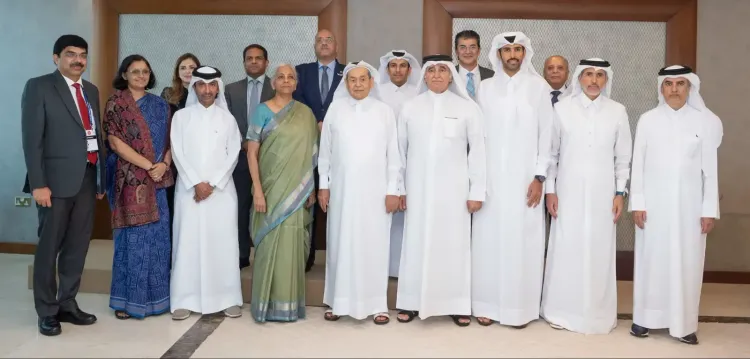
FM Nirmala Sitharaman addressed the Qatari Businessmen Association (QBA) in Doha on 30 September 2026 , urging deeper trade and investment engagement.
India recorded a record gross FDI inflow of $94.53 billion in FY26 , the highest in 15 years .
Real GDP growth stood at 7.8% in Q1 FY26, with investment growing 11.9% .
Japan Credit Rating (JCR) upgraded India's long-term issuer rating from BBB+ to A- .
Both sides agreed to accelerate a Bilateral Investment Treaty and advance FTA negotiations, and discussed the $10 billion Qatari investment commitment and a QIA office in India .
Sitharaman stressed unimpeded trade through the Strait of Hormuz as vital for India-Gulf commerce.
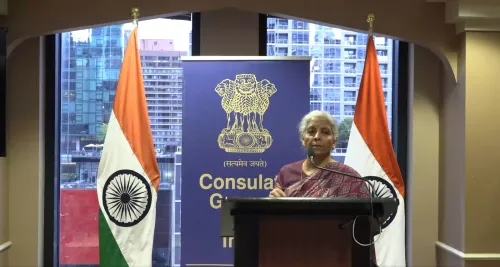
Finance Minister Nirmala Sitharaman on 30 September 2026 urged the Qatari Businessmen Association (QBA) to actively explore trade and investment partnerships with India, reaffirming New Delhi's commitment to strengthening bilateral economic ties during a visit to Doha. The appeal came at a QBA business roundtable where Sitharaman outlined India's structural growth credentials and invited Qatari capital into key sectors.
India's Economic Case to Qatar
Sitharaman highlighted India's real GDP growth of 7.8% in the first quarter of FY26 and investment growth of 11.9% amid global uncertainty, presenting these as markers of resilience. She also pointed to the recent upgrade by Japan Credit Rating (JCR) of India's long-term issuer rating from BBB+ to A-, describing it as external validation of India's ongoing structural reforms. India's gross FDI inflow of $94.53 billion in FY26 — the highest in 15 years — was cited as further evidence of investor confidence.
Meeting with Qatar's Foreign Trade Minister
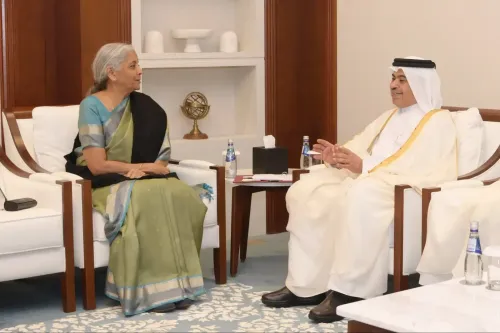
Earlier in the day, Sitharaman met Dr Ahmad bin Mohammed Al-Sayed, Qatar's Minister of State for Foreign Trade. Dr Al-Sayed, who recalled his visit to India in 2025, noted considerable scope for Qatari investment in Indian infrastructure — including ports, airports, highways, and power — while flagging opportunities for Indian companies in Qatar across food security, pharmaceuticals, petrochemicals, education, health, and start-ups.
Strategic Partnership and Key Commitments
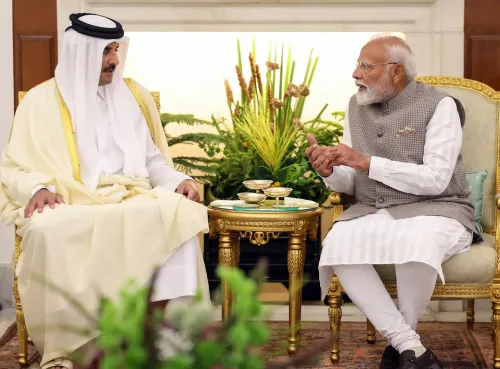
The Finance Minister conveyed that India attaches high importance to enhancing trade and investment with Qatar, 'noting the elevation of bilateral ties to a 'strategic partnership' during the State Visit of the Amir of Qatar in February 2025.' Both sides discussed the implementation of a $10 billion Qatari investment commitment and the establishment of a Qatar Investment Authority (QIA) office in India. They also agreed on accelerated engagement to complete the Bilateral Investment Treaty (BIT) and advance Free Trade Agreement (FTA) negotiations.
Strait of Hormuz and Maritime Trade
Sitharaman emphasised the importance of restoring normal trade between India, Qatar, and other Gulf countries, specifically underscoring unimpeded maritime navigation and commerce through the Strait of Hormuz, according to the official statement. This comes amid broader regional concerns about maritime security in the Gulf, making the reference strategically significant beyond bilateral trade alone.
What Comes Next
With both sides expressing intent to accelerate treaty negotiations and formalise the QIA's India presence, the Doha engagement signals a substantive push to convert a politically elevated partnership into measurable economic outcomes. Sector-level follow-ups on FDI and FTA timelines are expected in the months ahead.
Point of View
A sovereign rating upgrade, GDP momentum — as diplomatic currency in Gulf capital markets. The $10 billion Qatari investment pledge, first announced in 2025, is still in implementation mode, which means the real test of this engagement is execution, not announcement. The FTA with Gulf states has been long in the making; accelerated engagement language has appeared before without a clear timeline. The Strait of Hormuz emphasis is the most strategically loaded element of the visit — it frames India's trade interest in Gulf stability explicitly, at a time when regional tensions continue to simmer.
NationPress
30 Sept 2026
Frequently Asked Questions
What did FM Nirmala Sitharaman discuss during her Doha visit?
Sitharaman addressed the Qatari Businessmen Association and met Qatar's Minister of State for Foreign Trade Dr Ahmad bin Mohammed Al-Sayed, focusing on trade and investment partnerships, bilateral treaty negotiations, and India's economic growth credentials. Key topics included a $10 billion Qatari investment commitment and plans for a QIA office in India.
What is India's FDI record cited by Sitharaman in Qatar?
India recorded its highest-ever annual gross FDI inflow of $94.53 billion in FY26, the highest in 15 years, which Sitharaman presented as evidence of investor confidence in India's structural reforms.
What is the India-Qatar strategic partnership?
Bilateral ties were elevated to a 'strategic partnership' during the State Visit of the Amir of Qatar to India in February 2025. Sitharaman described trade and investment as important pillars for deepening this relationship.
Why did Sitharaman mention the Strait of Hormuz?
Sitharaman emphasised the importance of unimpeded maritime navigation and commerce through the Strait of Hormuz to ensure normal trade between India, Qatar, and other Gulf countries. The reference reflects India's strategic interest in Gulf maritime security given its heavy dependence on energy imports through that route.
What is the status of the India-Qatar Bilateral Investment Treaty and FTA?
Both sides expressed keen interest in completing the Bilateral Investment Treaty and advancing Free Trade Agreement negotiations, agreeing on accelerated engagement. No final timeline has been publicly confirmed.