Startup services must reach rural India: FM Sitharaman at Rajasthan Youth Conclave
Synopsis
Finance Minister Nirmala Sitharaman's push to take startups beyond cities landed in Jaipur with hard numbers to back it: Rajasthan's startup investment has quadrupled to ₹1,054 crore and jobs have more than doubled to 49,000. With a new AI-ML policy, tribal incubation centres, and 65 school-level launchpads across 33 districts, Rajasthan is making an unusually detailed — and measurable — bet on inclusive innovation.
Key Takeaways
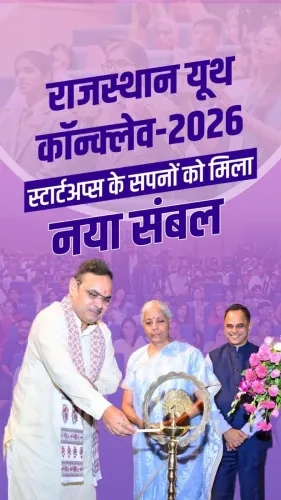
FM Nirmala Sitharaman called for startup services to reach rural and remote areas at the Rajasthan Youth Conclave in Jaipur on 13 August .
Rajasthan startup investment surged from ₹250 crore (2023) to ₹1,054 crore ; jobs rose from 22,000 to over 49,000 .
4,828 new startups registered under the Rajasthan Startup Programme in the last two and a half years. iStart programme expanded to all 33 districts with 65 Launchpad Nests and 1,29,000 students enrolled.
Rajasthan launched the AI-ML Policy 2026 ; around 4,000 officials trained under the Yuva AI for All programme.
A Tribal Incubation Centre inaugurated in Banswara takes the state's total to 10 incubation centres .
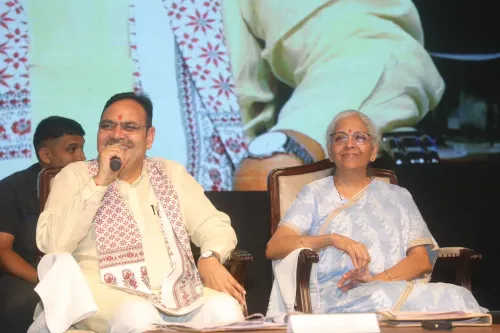
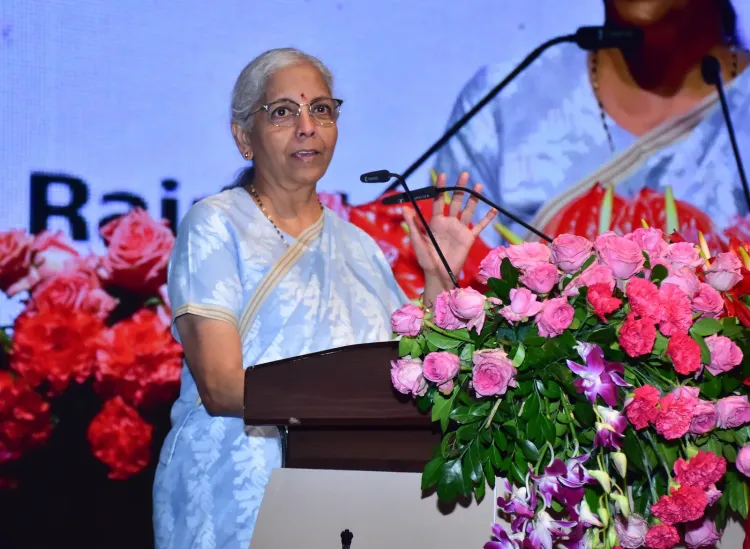
Union Finance and Corporate Affairs Minister Nirmala Sitharaman on Thursday, 13 August called for startup services to move beyond metropolitan centres and penetrate rural and remote areas across India. Speaking at the Rajasthan Youth Conclave held at the Rajasthan International Centre (RIC) in Jaipur, Sitharaman stressed that both the Centre and state governments are committed to providing the policy and financial scaffolding needed to broaden the startup ecosystem nationwide.
What Sitharaman Said
The Finance Minister urged young entrepreneurs to channel their ideas into ventures that deliver tangible benefits to ordinary citizens, not just urban consumers. She noted that startups can scale meaningfully only when backed by grants and sustained government support. Sitharaman also highlighted the role of the PM Jan Dhan Yojana, launched after 2014 under Prime Minister Narendra Modi, in driving financial inclusion — enabling credit access for millions of households through bank accounts that now facilitate everyday digital transactions.
During the conclave, Sitharaman interacted directly with startup founders from Rajasthan, appreciating ideas focused on improving citizen services. She also met with a woman entrepreneur associated with Rajeevika, the state's rural livelihood mission.
Rajasthan's Startup Surge
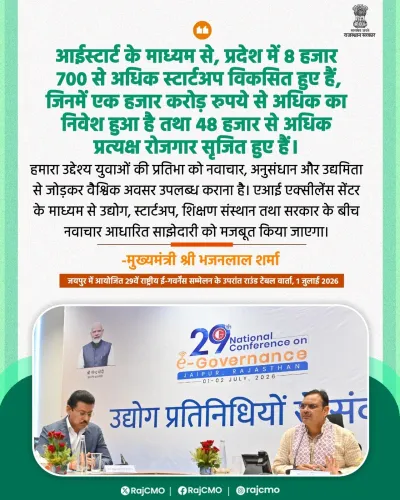
Chief Minister Bhajanlal Sharma presented a sharply improved investment picture for the state's startup ecosystem. Investment in Rajasthan startups has risen from approximately ₹250 crore in 2023 to ₹1,054 crore — a more than fourfold jump. Employment within the ecosystem has grown correspondingly, from 22,000 to over 49,000 jobs. A total of 4,828 new startups have been registered under the Rajasthan Startup Programme over the last two and a half years.
Notably, a Tribal Incubation Centre has been inaugurated in Banswara, taking the state's total incubation centre count to 10. The move is aimed at connecting youth from tribal communities with innovation and entrepreneurship pathways — an explicit acknowledgement that the startup wave has not yet reached India's most marginalised geographies.
iStart and Grassroots Outreach
The iStart programme has been expanded across all 33 districts of Rajasthan to cultivate an entrepreneurial mindset among school students and rural youth. Under the initiative, 65 iStart Launchpad Nests have been set up in schools and colleges, with 1,29,000 students registered. More than 4,000 outreach sessions have been conducted across over 3,000 educational institutions.
The Rajasthan Innovation Challenge is providing grant assistance of up to ₹7.5 crore for technology-driven solutions in sectors including agriculture, healthcare, water conservation, tourism, mining and public services.
AI, AVGC-XR and Emerging Tech Push
Rajasthan has launched the Rajasthan AI-ML Policy 2026 to position the state as a leader in artificial intelligence and machine learning. Approximately 4,000 government officials have already received AI training under the Yuva AI for All programme. Citizens can currently access 51 services across 27 e-Mitra categories via WhatsApp, with another 58 services to be added in phases.
The state has also implemented the AVGC-XR Policy to tap into animation, visual effects, gaming, comics and extended reality. An Atal Innovation Studio and Accelerator Hub is being developed in Jaipur, with regional centres planned in Bikaner, Bharatpur and Udaipur. The Brahmagupta Centre for Information Technology in Jaipur hosts three Centres of Excellence covering data analytics, cybersecurity and blockchain.
What Comes Next
With the Centre signalling continued financial and policy support, and Rajasthan demonstrating measurable gains in startup investment and employment, the focus now shifts to execution — particularly on whether the rural outreach commitments translate into verifiable outcomes for communities beyond state capitals. The trajectory of Rajasthan's startup ecosystem will be closely watched as a benchmark for other states seeking to replicate inclusive innovation models.
Point of View
But the structural gap between urban and rural innovation ecosystems is not closed by policy rhetoric alone. Rajasthan's numbers — investment quadrupling, jobs doubling — are impressive on their face, yet the baseline was low and the timeframe conveniently selective. The real test is whether the 65 school-level launchpads and the Banswara tribal centre produce founders, not just registered participants. India has a long history of startup schemes that excel at registration counts while struggling to generate revenue-generating ventures in Tier-3 and rural geographies. Sitharaman's framing ties this to Jan Dhan's financial inclusion legacy — a smart rhetorical move, but one that demands a similarly rigorous outcome-tracking mechanism.
NationPress
28 Sept 2026
Frequently Asked Questions
What did FM Nirmala Sitharaman say at the Rajasthan Youth Conclave?
Sitharaman emphasised that startup services must not remain confined to major cities and should reach rural and remote areas. She called on youth to convert startup ideas into ventures that benefit ordinary citizens, and noted that both the Centre and states are providing policy and financial support to expand the startup ecosystem.
How has Rajasthan's startup ecosystem grown in recent years?
Startup investment in Rajasthan has grown from approximately ₹250 crore in 2023 to ₹1,054 crore, while employment in the ecosystem has risen from 22,000 to more than 49,000. A total of 4,828 new startups have been registered under the Rajasthan Startup Programme over the last two and a half years.
What is the iStart programme and how far has it expanded?
iStart is Rajasthan's flagship entrepreneurship initiative, now expanded across all 33 districts of the state. It has established 65 Launchpad Nests in schools and colleges, enrolled 1,29,000 students, and conducted more than 4,000 outreach sessions across over 3,000 educational institutions.
What is the Rajasthan AI-ML Policy 2026?
The Rajasthan AI-ML Policy 2026 is a state-level framework aimed at positioning Rajasthan as a leader in artificial intelligence and machine learning. It is designed to promote innovation, investment, skill development and employment in AI and ML sectors across the state.
What support is available for startups under the Rajasthan Innovation Challenge?
The Rajasthan Innovation Challenge offers grant assistance of up to ₹7.5 crore for technology-driven solutions addressing real-world problems in sectors such as agriculture, healthcare, water conservation, tourism, mining and public services.