Sitharaman tells PMIS interns: internship bridges education-to-work gap
Synopsis
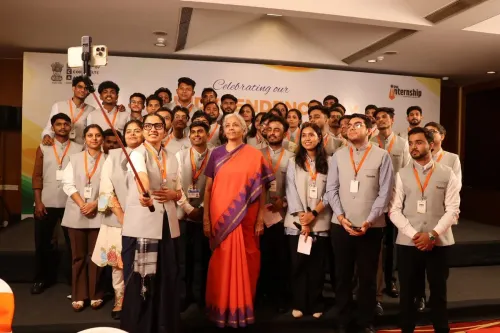
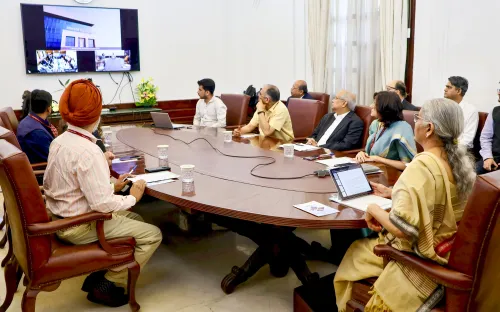
Union Finance Minister Nirmala Sitharaman met Prime Minister's Internship Scheme participants in New Delhi on 14 August 2026, saying the programme is fulfilling its core goal of bridging the gap between academic training and industry expectations, with some interns landing jobs at the same companies.
Key Takeaways
Nirmala Sitharaman interacted with PMIS interns in New Delhi on 14 August 2026 .
She said the scheme's core objective — bridging the education-to-industry skills gap — is being fulfilled.
The Prime Minister's Internship Scheme was announced in Union Budget 2024-25 to place one crore youth in one-year internships over five years.
Sitharaman highlighted that internships can convert into direct employment at the same company.
The scheme aligns with broader government employability initiatives including Skill India and NEP 2020 .
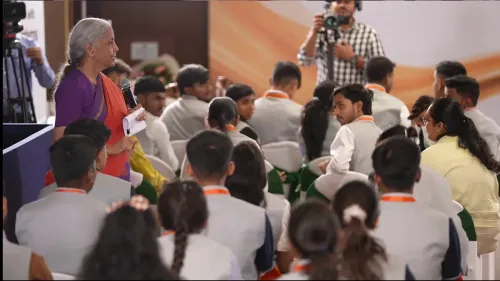
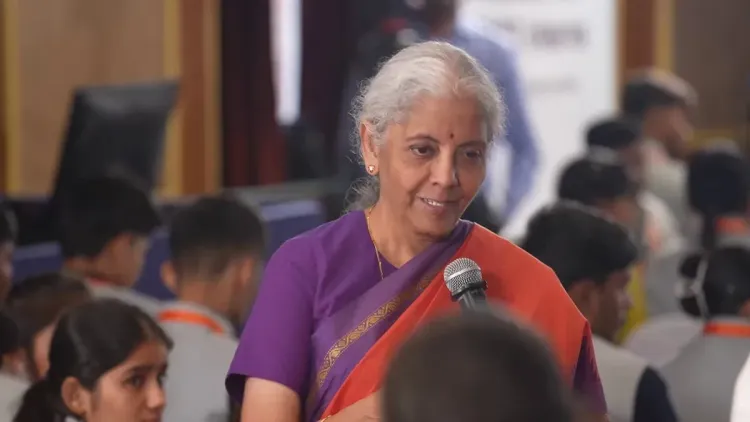
A room full of interns, a Finance Minister speaking without a script — and a message that cut straight to the point. Union Finance Minister Nirmala Sitharaman met with participants of the Prime Minister's Internship Scheme (PMIS) in New Delhi on 14 August 2026, telling them that bridging the gap between what industry expects and what education delivers is the scheme's founding purpose — and that they, the interns in the room, are proof it is working.
What Sitharaman told the interns
Speaking directly to the participants, Sitharaman said the scheme is designed to give young people hands-on exposure to workplace expectations — 'communication, etiquette, responsibility and the practical skills needed to succeed.' She noted that in some cases, the internship itself opens doors to employment within the same company. 'This is the original objective of our internship and it is being fulfilled with students like you,' she said.
The scheme behind the interaction
The Prime Minister's Internship Scheme was announced in the Union Budget 2024-25 with an ambition to place one crore youth in one-year internships across Indian companies over five years. The programme pairs students with industry partners to compress the learning curve that typically stretches across a graduate's first few years in the workforce. The Finance Ministry, which Sitharaman heads, is the scheme's nodal authority.
The interaction sits within a broader government push on employability — one that also includes Skill India and the principles embedded in the National Education Policy 2020. Each of these programmes targets the same structural problem: academic curricula that produce graduates who are qualified on paper but underprepared for the floor, the desk, or the boardroom.
Why the education-employment mismatch matters
India's youth employment challenge is not simply about jobs not existing — it is about a persistent mismatch between the skills employers demand and the skills graduates arrive with. PMIS is the government's most direct legislative answer to that mismatch, embedding young people inside companies for a full year rather than offering short workshops or classroom modules. The conversion angle Sitharaman flagged — interns getting hired by the same company — is the scheme's most consequential promise. Whether that promise scales is the question the next enrolment and placement data will have to answer.
Point of View
Not just enrolment numbers. By invoking the scheme's 'original objective' and pointing to job conversions, she is pre-empting scrutiny about whether the programme delivers beyond placement statistics. The interaction also reinforces the Finance Ministry's ownership of the employability agenda ahead of what will inevitably be a Budget-season audit of the scheme's five-year targets. Whether PMIS can sustain industry participation at the scale needed for one crore placements remains the central test.
NationPress
14 Aug 2026
Frequently Asked Questions
What is the Prime Minister's Internship Scheme (PMIS)?
The Prime Minister's Internship Scheme is a government programme announced in Union Budget 2024-25 that aims to place one crore Indian youth in one-year internships with companies over five years, giving them practical workplace exposure to improve employability.
What did Nirmala Sitharaman say to PMIS interns?
Sitharaman told interns that PMIS is designed to bridge the gap between what industry expects and what education provides, covering skills like communication, workplace etiquette, and responsibility — and that the scheme is fulfilling its original objective.
Can a PMIS internship lead to a full-time job?
Yes. Sitharaman specifically noted that in some cases the internship opens doors to employment within the same company where the intern completes their placement.
When was the PM Internship Scheme launched?
The scheme was announced in the Union Budget 2024-25, with the goal of providing internships to one crore youth over five years in partnership with Indian industry.
How does PMIS relate to Skill India and NEP 2020?
PMIS is part of a broader government push on employability that includes Skill India and the National Education Policy 2020, all of which aim to reduce the mismatch between academic training and the practical skills employers require.