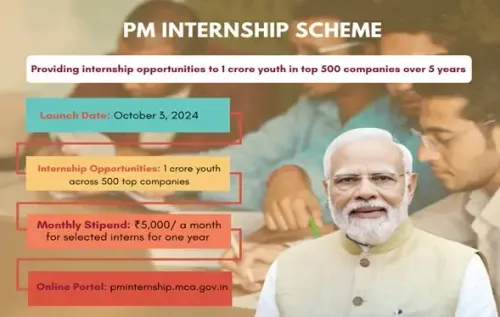
PM Internship Scheme drives workforce growth, say top officials at CII Summit

Synopsis
At the CII Annual Business Summit, senior officials revealed that the PM Internship Scheme funds 90% of stipends and gives industry unmatched flexibility — and TCS reported absorbing nearly 80% of its interns. The scheme is quietly becoming one of India's most practical skilling interventions, with MSMEs now emerging as a key beneficiary.
Key Takeaways
The PM Internship Scheme was discussed at the CII Annual Business Summit in New Delhi on 13 May 2025 .
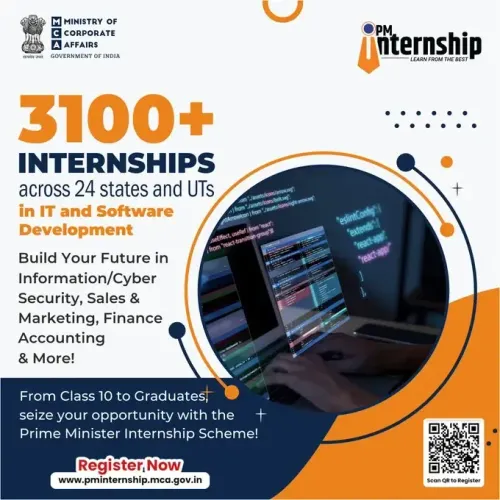
The government funds 90 per cent of intern stipends and provides one-time assistance and insurance under the programme.
Tata Consultancy Services reported that nearly 80 per cent of scheme participants were absorbed into the organisation.
The scheme gives industries complete flexibility over roles, sectors, duration, qualifications, and training formats, according to Ministry of Corporate Affairs officials.
The programme is being positioned as a key enabler for MSMEs and supplier networks that lack structured training infrastructure.
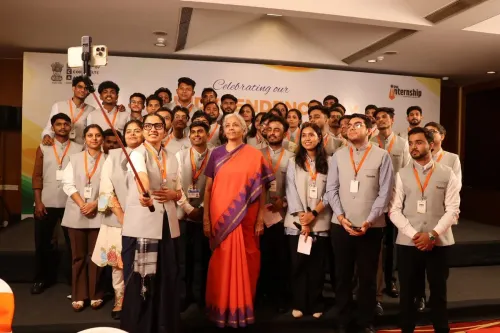
The PM Internship Scheme is emerging as a powerful catalyst for workforce development, with senior government and industry officials praising its flexibility and reach at the CII Annual Business Summit in New Delhi on Tuesday, 13 May 2025. Officials highlighted the scheme's ability to bridge the gap between industry demand and the skilling ecosystem while providing youth — particularly from tier-2 and tier-3 cities — with meaningful professional exposure.
What the Scheme Offers
Deepti Gaur Mukerjee, Secretary, Ministry of Corporate Affairs, said the scheme was conceptualised to bridge the gap between industry demand and the skilling ecosystem, and to contribute to the emotional, professional, and personal development of youth. She noted that "talent lies across the entire spectrum of the country," with young people from smaller cities actively seeking opportunities to learn from leading companies.
Balamurugan, Joint Secretary, Ministry of Corporate Affairs, underscored the scheme's unique design: it gives industries complete flexibility in determining roles, sectors, duration, qualifications, and training formats. "No other programme, no other scheme in the country or maybe even in the world will give you this kind of flexibility," Balamurugan said.
Government Funding and Support Structure
Under the programme, the government funds 90 per cent of stipends and also provides one-time financial assistance and insurance coverage to interns. This structure significantly lowers the cost barrier for companies — especially smaller firms — to onboard and train fresh talent.
MSME and Industry Perspectives
Sunil Chordia, Chairman, CII National MSME Council and Chairman and Managing Director of Rajratan Group, highlighted that the scheme is emerging as a strong enabler for MSMEs and supplier networks, which often face constraints in building structured training and talent development mechanisms.
R. Mukundan, President Designate, CII, emphasised that internships provide young people with critical practical exposure, helping build future-ready capabilities that go beyond classroom learning. Amitav Mukherji, Group CHRO of ITC Limited, stressed the importance of structured onboarding, mentorship, and continuous professional development in ensuring the long-term success of young professionals entering the workforce.
Sector-Specific Insights and Absorption Rates
Anil Bahuguna, Chief of Skill Development at ONGC, stressed that industry-linked internship programmes must be structured around the technical strengths and workforce requirements of each sector to create a sustainable talent pipeline.
In a notable data point, Dr. K M Suceendran, Head of Academic Alliance Group at Tata Consultancy Services (TCS), shared that nearly 80 per cent of interns who participated in the programme were subsequently absorbed into his organisation — a figure that underscores the scheme's potential as a direct hiring pipeline.
What This Means Going Forward
The convergence of government funding, industry flexibility, and high absorption rates positions the PM Internship Scheme as one of the more substantive skilling interventions in recent years. With MSMEs, large corporates, and public sector undertakings all signalling intent to scale participation, the scheme's next phase will test whether its early momentum can be institutionalised at a national level.
Point of View
While striking, is a data point from one large company and should not be extrapolated nationally without broader evidence. The harder question is whether MSMEs, which lack HR infrastructure, can operationalise the scheme's flexibility or whether the burden of design will default back to larger corporates. If the scheme is to be a genuine equaliser for tier-2 and tier-3 talent, the government will need to publish disaggregated absorption and completion data — not just headline participation numbers.
NationPress
28 Sept 2026
Frequently Asked Questions
What is the PM Internship Scheme?
The PM Internship Scheme is a government-backed programme designed to bridge the gap between industry demand and the skilling ecosystem by placing final-year graduates and postgraduates with companies across sectors. The government funds 90 per cent of intern stipends and provides one-time assistance and insurance.
How flexible is the PM Internship Scheme for companies?
The scheme gives industries complete flexibility to design roles, sectors, duration, qualifications, and training formats. According to Ministry of Corporate Affairs Joint Secretary Balamurugan, no other programme in India — or possibly the world — offers this level of flexibility.
What absorption rate has TCS reported under the scheme?
Dr. K M Suceendran of Tata Consultancy Services stated that nearly 80 per cent of interns who participated in the programme were absorbed into the organisation, highlighting the scheme's potential as a direct hiring pipeline.
How does the PM Internship Scheme benefit MSMEs?
The scheme is seen as a strong enabler for MSMEs and supplier networks, which often lack the resources to build structured training and talent development mechanisms. The government's 90% stipend funding significantly reduces the cost barrier for smaller firms.
Who spoke at the CII Annual Business Summit session on the PM Internship Scheme?
Senior officials including Deepti Gaur Mukerjee and Balamurugan from the Ministry of Corporate Affairs, along with industry leaders from CII, ITC Limited, ONGC, TCS, and Rajratan Group, addressed the session on 13 May 2025 in New Delhi.