SLBC tunnel project clears major shear zone, targets June 2028 water delivery
Synopsis
Telangana's long-troubled SLBC tunnel has cleared its most dangerous geological obstacle — the shear zone that claimed eight lives in early 2025 and stalled a tunnel-boring machine. With 79% of the 43.968-km tunnel done, a German locomotive arriving this month, and a June 2028 deadline in view, the project is at a make-or-break inflection point.
Key Takeaways
Telangana's SLBC tunnel has cleared the major shear zone, a critical geological obstacle that had slowed progress and contributed to past accidents.
The 43.968-km main tunnel is approximately 79% complete , with roughly 9.1 km of excavation remaining.
Combined daily advance stands at about eight metres ; the construction cycle has been cut from 48 hours to 20–24 hours , with a target of ten hours .
A German locomotive is expected by end of October to ease the critical bottleneck of hauling material up to 21 km inside the tunnel.
Eight workers were killed during excavation in February 2025 ; Minister Uttam Kumar Reddy has directed stringent safety monitoring for crews working more than 20 km underground.
The project aims to deliver over 30 TMC of water to drought-prone upland areas of erstwhile Nalgonda by June 2028 .
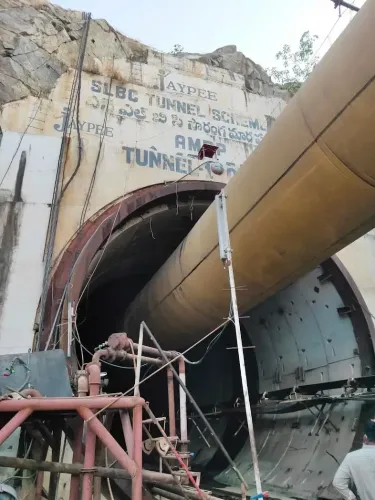
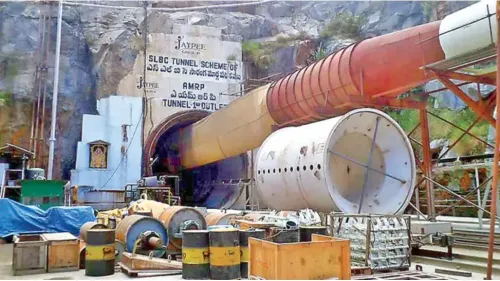
Telangana's Srisailam Left Bank Canal (SLBC) tunnel project has moved past a critical geological obstacle, with excavation clearing the formidable shear zone and setting the stage for faster progress, state Irrigation and Civil Supplies Minister N. Uttam Kumar Reddy announced on Sunday, 4 October 2026. The breakthrough is expected to accelerate construction on the 43.968-km main tunnel, which remains the lifeline for over 30 TMC of water supply to the drought-prone upland areas of the erstwhile Nalgonda region.
Key Developments at the Tunnel Face
The 43.968-km main tunnel is approximately 79% complete, with roughly 9.1 km of excavation still remaining. The project team recorded a combined daily advance of about eight metres, with a sustained rate of seven to seven-and-a-half metres per day — peaking at ten metres on select days. Over the preceding five to six months, the tunnel advanced approximately 700 metres in total, comprising around 450 metres from the outlet and 250 metres from the inlet, which included the carefully negotiated passage through the major shear zone.
A construction cycle that previously took roughly 48 hours has been cut to 20–24 hours. With improved equipment and faster material removal, the team anticipates reducing that cycle further to approximately ten hours, with accelerated progress expected from late October or early November.
Engineering Solutions to Geological Challenges
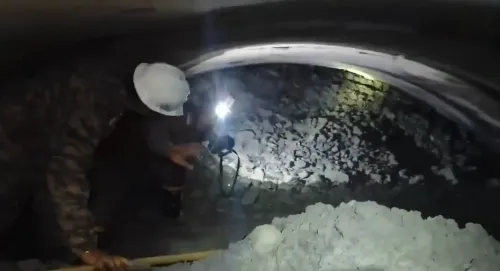
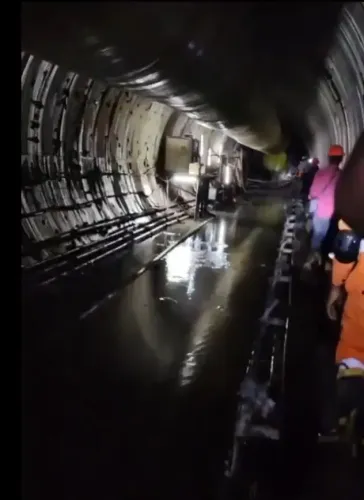
Col. Parikshit Mehra, an Indian Army tunnel expert leading operations, explained that excavation at the inlet was deliberately slowed during initial months due to weak ground, rock bursts, and the need to prevent a repeat of past accidents. To negotiate the unstable stretch, the team installed 140-mm seamless pipes to form an umbrella canopy ahead of the excavation face. Reinforced ribs, staged excavation, probe drilling, and additional structural support measures were employed to control risks as crews worked more than 20 km inside the tunnel.
The diversion around the point where the tunnel-boring machine had become stuck required passage through particularly challenging geological conditions. Improving rock quality is now enabling a gradual return to normal working conditions deep within the tunnel.
Equipment Deployment and Logistics Constraints
A three-arm drilling boomer is already operational at the outlet, where progress is reported to be near the required pace. A second three-arm boomer is expected at the inlet in October. Electric loaders and advanced excavators are also supporting construction. A locomotive ordered from Germany is expected by the end of October; its deployment is anticipated to significantly improve the removal of excavated material and shorten the construction cycle.
Hauling excavated material over distances of up to 21 km remains a critical bottleneck. When removal falls behind, material accumulates inside the tunnel, eventually forcing work at the face to halt until the backlog is cleared — a constraint that the incoming locomotive is specifically designed to address.
Safety and the Road to June 2028
The safety focus at the project has been heightened since eight workers were killed during tunnel excavation in February 2025 — a tragedy that prompted a more cautious and methodical approach to geological risk management. Minister Uttam Kumar Reddy directed officials and the contractor to build on the progress made through the difficult geological stretch while maintaining rigorous safety protocols for crews working deep underground.
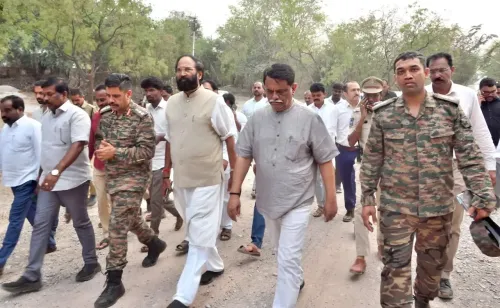
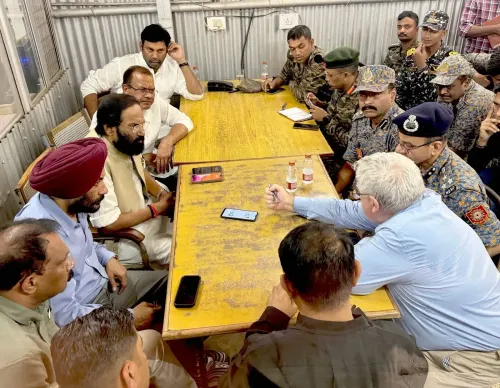
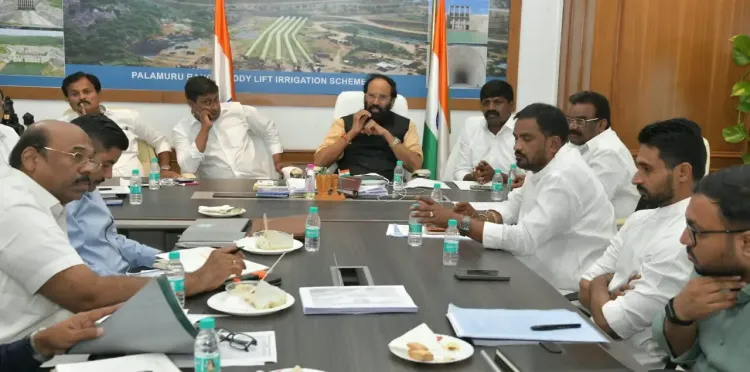
The minister held a marathon review with elected representatives and senior officials from the three districts of erstwhile Nalgonda, pressing for a credible, closely monitored programme to achieve the June 2028 water-delivery goal. The meeting was attended by MPs K. Raghuveer Reddy and Chamala Kiran Kumar Reddy, several MLAs, MLC Shankar Naik, Irrigation Secretary E. Sridhar, Engineer-in-Chief O. V. Ramesh Babu, and collectors from Suryapet, Nalgonda, Yadadri-Bhongir, and Mahabubabad.
With the geological barrier behind it and fresh equipment en route, the project's ability to hit its June 2028 deadline will hinge on whether the supply chain, logistics, and safety management can sustain the accelerated pace through the remaining 9.1 km.
Point of View
But the SLBC project's history — a stalled boring machine, eight fatalities, and years of delay — demands scepticism about timelines. The June 2028 target is achievable only if logistics keep pace with the geology; hauling excavated rock over 21 km remains the project's soft underbelly, and the arrival of a single German locomotive, while necessary, is not sufficient on its own. More telling will be whether the construction cycle actually drops from 20–24 hours to the targeted ten hours once October equipment deployments are complete. The minister's review-style oversight is visible, but accountability will need to extend to the contractor's delivery milestones, not just the geological narrative.
NationPress
4 Oct 2026
Frequently Asked Questions
What is the SLBC tunnel project in Telangana?
The Srisailam Left Bank Canal (SLBC) tunnel is a 43.968-km irrigation tunnel in Telangana, designed to deliver over 30 TMC of water to drought-prone upland areas of the erstwhile Nalgonda district. It is one of the longest irrigation tunnels under construction in India and has faced significant geological and safety challenges since work began.
What is the current status of the SLBC tunnel project?
As of 4 October 2026, the SLBC tunnel is approximately 79% complete, with about 9.1 km of excavation remaining. Excavation has cleared the major shear zone, and the combined daily advance stands at around eight metres, with plans to accelerate from late October or early November.
When is the SLBC tunnel expected to deliver water?
Minister Uttam Kumar Reddy has set a target of June 2028 for water delivery to the region. Achieving this deadline will depend on sustained excavation progress, timely equipment deployment — including a German locomotive arriving by end of October — and uninterrupted logistics inside the tunnel.
What happened to workers at the SLBC tunnel project?
Eight workers were killed during tunnel excavation in February 2025, prompting a more cautious approach to geological risk management. Army tunnel expert Col. Parikshit Mehra subsequently led operations with heightened safety protocols, including deliberate slowdowns in sections with weak ground and rock bursts.
What was the geological challenge at the SLBC tunnel, and how was it overcome?
The main geological obstacle was a major shear zone — a stretch of unstable, fractured rock that had caused a tunnel-boring machine to become stuck and required a diversion. The team overcame it by installing 140-mm seamless pipes as an umbrella canopy, using reinforced ribs, staged excavation, and probe drilling to control risks as the working face advanced through the weakest ground.