Smriti Irani Hails India Women's Football SAFF 2026 Win
Synopsis
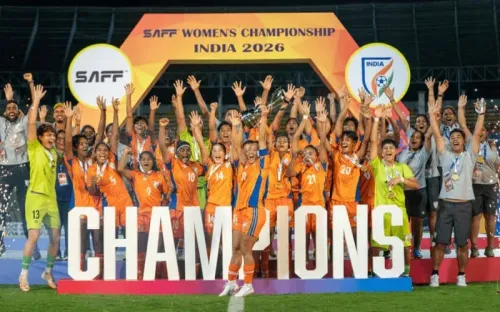
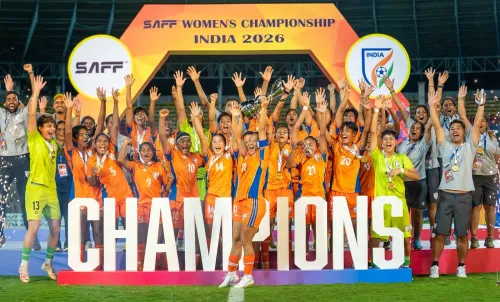
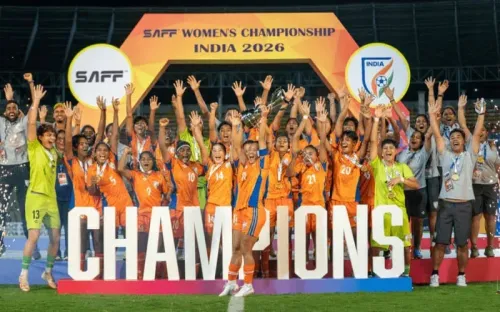
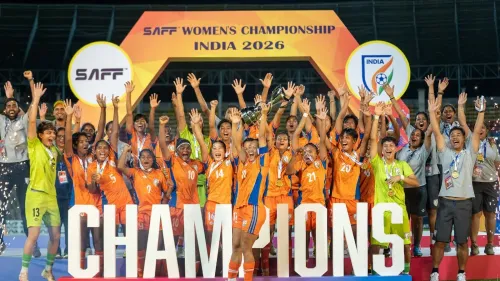
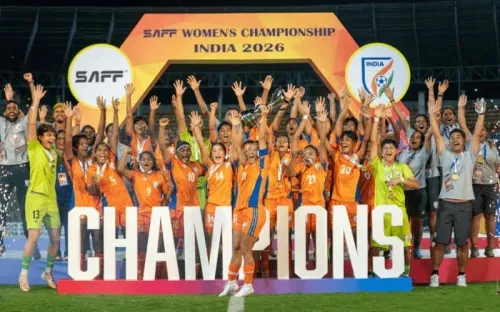
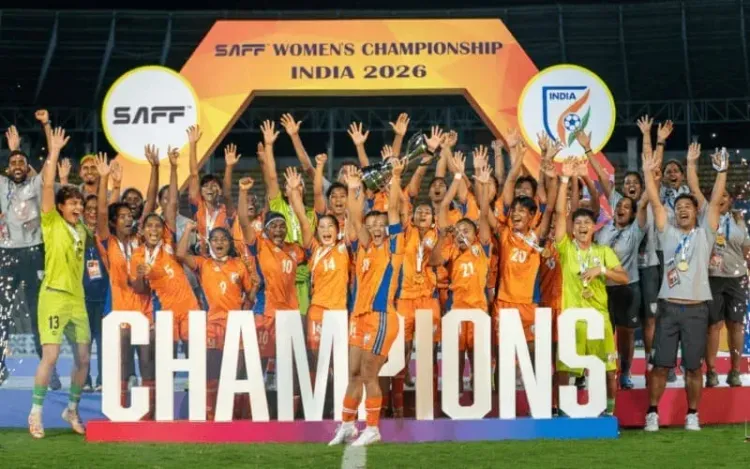
BJP leader Smriti Irani on June 7, 2026 hailed the Indian Women's Football Team's SAFF Women's Championship 2026 triumph, invoking Nari Shakti and spotlighting years of grassroots investment under Khelo India and TOPS in women's competitive sport.
Key Takeaways
BJP leader Smriti Irani congratulated the Indian Women's Football Team on winning the SAFF Women's Championship 2026 on June 7, 2026 .
Irani described the team's run as 'phenomenal' and used the phrase Nari Shakti to frame the win as a symbol of women's empowerment.
The SAFF Women's Championship is a biennial regional tournament organised by the South Asian Football Federation .
Government programmes including Khelo India (2017) and TOPS (2014) have provided the policy and funding infrastructure supporting women athletes.
The team's next major test is expected in the AFC Women's Asian Cup qualifiers .
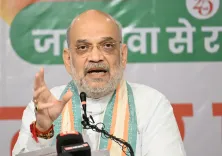
BJP leader Smriti Irani, former Union Minister of Women & Child Development, on Sunday, June 7, 2026, congratulated the Indian Women's Football Team on winning the SAFF Women's Championship 2026, calling the victory a demonstration that 'Nari Shakti knows no bounds.'
Context
Irani took to social media to celebrate the Indian women's team's triumph at the SAFF Women's Championship 2026, describing their run as 'phenomenal' and crediting the squad for 'bringing the trophy home.' Her post, which carried the tricolour and football emojis, invoked the phrase Nari Shakti — a widely used term in Indian political discourse meaning 'women's power' — to frame the sporting achievement within a broader narrative of female empowerment.
The South Asian Football Federation (SAFF) Women's Championship is a biennial tournament contested by women's national teams from South Asian nations. It remains one of the most prominent regional competitions available to Indian women footballers and has historically served as a key benchmark for the national side's progress.
Policy Backdrop
The congratulatory message arrives against the backdrop of two flagship government programmes designed to advance women's participation in competitive sport. The Khelo India programme, launched in 2017, expanded grassroots sports infrastructure and talent identification pipelines across the country, with a specific focus on including women athletes at the district and state level.
Separately, the Target Olympic Podium Scheme (TOPS), introduced in 2014, has provided financial and high-performance training support to elite athletes, including women footballers identified as medal prospects at continental and global competitions. Together, these schemes represent a sustained policy effort to convert grassroots participation into international results.
Stakeholders and Impact
The victory carries direct significance for women footballers across the country, state sports bodies, and the broader ecosystem of coaches, academies, and federations that feed talent into the national squad. Regional tournament wins of this nature have historically translated into increased visibility, sponsorship interest, and institutional support for women's football programmes at the state level.
Indian political figures across the spectrum have made it a pattern since the mid-2010s to publicly amplify regional sporting successes, tying athletic results to policy messaging on gender inclusion in physical education and competitive sport. Irani's post follows this established pattern, using the SAFF title to reinforce a narrative of measurable progress in women's sport.
What's Next
Attention will now turn to the Indian Women's Football Team's performance in upcoming AFC Women's Asian Cup qualifiers, where the squad will look to translate their regional dominance into continental momentum. Any revision to targets under the National Sports Policy in light of such results will also be closely watched by sports administrators and athlete welfare advocates alike.
Point of View
Linking an on-field result directly to the 'Nari Shakti' rhetoric that has anchored BJP's women-centric messaging for over a decade. The invocation of women's football, a sport that has historically received far less institutional attention than cricket, signals a deliberate broadening of that narrative to include non-mainstream disciplines. Coming on the heels of sustained investment through Khelo India and TOPS, the post implicitly credits state-backed infrastructure for the result, framing the trophy as a policy dividend rather than a purely athletic one. Whether this translates into concrete resource enhancement for women's football — beyond social media visibility — will be the real measure of political commitment.
NationPress
14 Sept 2026
Frequently Asked Questions
Did India win the SAFF Women's Championship 2026?
BJP leader Smriti Irani's post on June 7, 2026 congratulated the Indian Women's Football Team for winning the SAFF Women's Championship 2026 and bringing the trophy home, though official tournament details are subject to confirmation from the South Asian Football Federation.
What is the SAFF Women's Championship?
The SAFF Women's Championship is a biennial international football tournament organised by the South Asian Football Federation, contested by women's national teams from South Asian countries including India, Bangladesh, Nepal, Sri Lanka, and others.
What is Nari Shakti and why did Smriti Irani use it?
'Nari Shakti' translates to 'women's power' in Hindi and is a phrase frequently used in Indian political and policy discourse to celebrate women's achievements. Irani used it to connect the football victory to a broader narrative of female empowerment.
What government schemes support women footballers in India?
The Khelo India programme, launched in 2017, supports grassroots sports infrastructure and talent identification for women athletes, while the Target Olympic Podium Scheme (TOPS), introduced in 2014, provides financial and training support to elite women athletes including footballers.
What is next for the Indian Women's Football Team after the SAFF 2026 win?
The Indian Women's Football Team is expected to participate in the AFC Women's Asian Cup qualifiers, where their SAFF title form will be tested against continental competition.