Smriti Irani: Indians reject Kashmir Azadi calls, attacks on forces
Synopsis
BJP leader Smriti Irani on 2 August 2026 declared that Indians will never back calls for Kashmir's azadi or violence against police and paramilitary forces, reinforcing the party's long-standing national-consensus framing on Kashmir integration and internal security.
Key Takeaways
Smriti Irani , senior BJP leader and former Union Minister, posted on 2 August 2026 rejecting calls for Kashmir's azadi and attacks on security forces.
The statement invokes national sentiment, framing opposition to separatism as an 'Indians' position rather than a party stance.
The post comes against the backdrop of the August 2019 abrogation of Article 370 , which ended Jammu and Kashmir's special constitutional status.
Central Armed Police Forces under the Ministry of Home Affairs have been deployed extensively in Jammu and Kashmir since the region's reorganisation.
BJP leaders have consistently framed support for security forces and rejection of azadi as a matter of national consensus across successive governments.
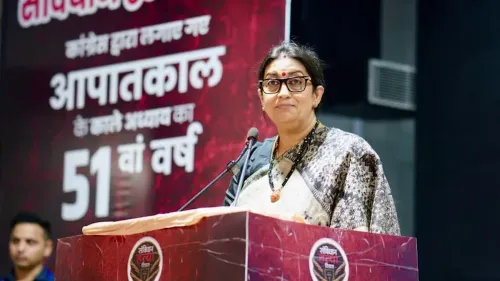
A sharp assertion on Kashmir landed on social media on Sunday, 2 August 2026, when BJP leader and former Union Minister Smriti Irani declared that Indians will never back separatist demands for the region's independence or tolerate violence against the country's police and paramilitary personnel.
The statement and what it signals
Irani's post was direct and unambiguous: 'Indians will NEVER support calls for the Azadi of Kashmir or attacks on our police and paramilitary forces.' The capitalised 'NEVER' underscores the absolutism of the claim — framing national sentiment, not just party position. It places civilian solidarity with security forces at the centre of the message.
The azadi (freedom) slogan has long been a flashpoint in Indian political discourse. For decades, separatist voices in Jammu and Kashmir have invoked the word; successive Indian governments have treated it as a direct challenge to territorial integrity and constitutional order.
Post-Article 370 Kashmir and the politics of integration
The backdrop to any such statement is the landmark decision of August 2019, when the government abrogated Article 370, stripping Jammu and Kashmir of its special constitutional status and bringing it under full central administration. That move was billed as a step toward normalisation — tighter integration, uniform laws, and an end to what the ruling dispensation called a 'temporary' provision that had lasted seven decades.
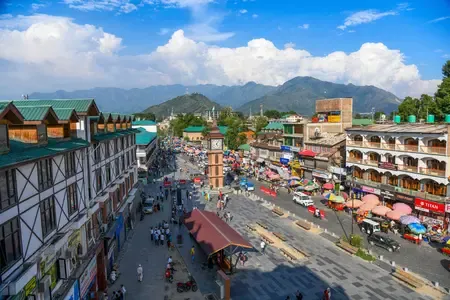
Since then, Central Armed Police Forces under the Ministry of Home Affairs have maintained a significant security presence across the region. Attacks on these personnel — whether by militants or in the context of unrest — have consistently drawn strong political responses from the BJP and the broader government machinery. Irani's post fits squarely within that pattern.
BJP's long-running national-consensus framing
BJP leaders have routinely cast support for security forces and opposition to separatism not as a partisan stance but as a matter of national consensus — a framing Irani deploys here by speaking in the name of 'Indians' rather than 'BJP supporters.' It is a rhetorical move with a clear purpose: to deny political legitimacy to any domestic constituency that might be seen as sympathetic to azadi demands.
Whether the post was prompted by a specific incident, a political debate, or a broader security development in the region is not established — the trigger remains unconfirmed. What is clear is that the message is aimed at reinforcing a political and moral line that the party has held consistently since well before 2019.
With parliamentary sessions periodically revisiting internal security and the security situation in Jammu and Kashmir remaining a live issue, statements of this kind from senior BJP figures are unlikely to be the last word on the matter.
Point of View
Making periodic reassertions of this kind politically useful for the ruling dispensation. The explicit mention of attacks on paramilitary forces adds a security-solidarity dimension that broadens the appeal beyond core BJP voters. Watch whether the Ministry of Home Affairs or other senior leaders amplify the message, which would suggest it is coordinated rather than spontaneous.
NationPress
2 Aug 2026
Frequently Asked Questions
What did Smriti Irani say about Kashmir azadi?
On 2 August 2026 , Smriti Irani posted on X stating that 'Indians will NEVER support calls for the Azadi of Kashmir or attacks on our police and paramilitary forces,' firmly rejecting separatist demands and violence against security personnel.
What does azadi mean in the context of Kashmir?
Azadi means 'freedom' in Hindi and Urdu. In the Kashmir context, it has been a rallying slogan for separatist groups seeking independence or merger with Pakistan, and Indian governments have consistently treated it as a challenge to the country's territorial integrity.
What happened to Article 370 and how does it relate to this statement?
Article 370 was abrogated in August 2019 , ending Jammu and Kashmir's special constitutional status and placing it under full central government control. BJP leaders like Irani have since framed the region's integration as settled policy and regularly push back against any revival of separatist discourse.
Which forces are deployed in Jammu and Kashmir?
Central Armed Police Forces under the Ministry of Home Affairs — including the CRPF, BSF, and other paramilitary units — have been deployed extensively in Jammu and Kashmir for internal security and counter-insurgency duties.
Is Smriti Irani's Kashmir stance unique to her or a broader BJP position?
It reflects a broader, long-standing BJP position. Senior party leaders across successive governments have routinely framed rejection of the azadi slogan and support for security forces as a matter of national consensus, not just party ideology.