Smriti Irani Rejects Kashmir Azadi Calls, Backs Security Forces
Synopsis
BJP leader Smriti Irani pinned a firm declaration on X rejecting calls for Kashmir's Azadi and threats to India's security forces, reiterating the party's post-Article 370 stance on full constitutional integration of Jammu and Kashmir.
Key Takeaways
BJP leader Smriti Irani pinned a post on X declaring Indians will 'NEVER' support calls for the Azadi of Kashmir.
The post also explicitly rejects threats against India's police and paramilitary forces .
The statement aligns with the BJP's position since the abrogation of Article 370 in August 2019 .
Jammu and Kashmir was reorganised into two Union Territories following the 2019 abrogation, removing its special constitutional status.
Pinning the post signals a deliberate, sustained political stance rather than a one-off reaction.
A line drawn in the sand — and pinned to the top of her profile. BJP leader Smriti Irani, former Union Minister of Women & Child Development and Minority Affairs, posted a pointed declaration on X on Saturday, August 1, 2026: 'Indians will NEVER support calls for the Azadi of Kashmir or threats to our police and paramilitary forces.'
A Statement Rooted in Post-2019 Constitutional Reality
Irani's assertion is not made in a vacuum. It lands squarely within the ideological and legal framework the BJP-led government cemented in August 2019, when it abrogated Article 370 — the constitutional provision that had granted Jammu and Kashmir special status for over seven decades. That single legislative act reorganised the region into two Union Territories and, in the BJP's framing, settled the question of Kashmir's constitutional belonging once and for all.
Since then, any resurgence of separatist rhetoric or threats against security personnel has been met with swift political rejection from the ruling establishment. Irani's pinned post is consistent with that posture — a standing declaration rather than a reactive one.
Why 'Pinned' Matters Here
The choice to pin this message — making it the first thing any visitor to her profile sees — signals this is not a passing comment but a deliberate, sustained political statement. It speaks directly to two audiences: those within India who might be sympathetic to azadi narratives, and external actors who periodically amplify such demands. The explicit mention of threats to police and paramilitary forces broadens the message beyond political separatism into the domain of security — a reminder that personnel on the ground bear the human cost of such rhetoric.
Security Forces at the Centre of the Message
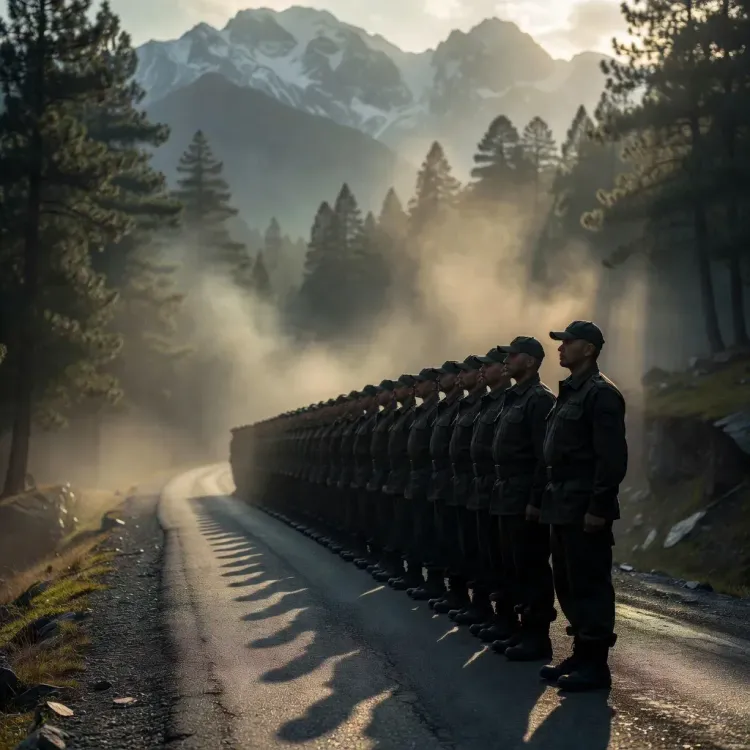
By coupling the rejection of azadi calls with a defence of India's police and paramilitary personnel, Irani frames the issue as one of both national integrity and the safety of those who enforce it. Security forces deployed in Jammu and Kashmir have long operated in one of India's most sensitive theatres, and any political statement that raises the stakes of threats against them carries weight beyond the social media feed it appears on.
The BJP's position — full constitutional integration, zero tolerance for separatism, unwavering support for security operations — has not shifted since 2019. What Irani's pinned post does is keep that position visible and unambiguous, day after day, to every follower who lands on her page. In Indian politics, that kind of persistent, deliberate signalling is a message in itself.
Point of View
The statement also pre-empts any attempt to frame threats against personnel as a separate, localised issue. In the broader arc of Indian politics, pinning such a message is a form of permanent campaigning — a signal to both domestic audiences and external observers that the ideological settlement of 2019 is, in the BJP's view, non-negotiable.
NationPress
16 Sept 2026
Frequently Asked Questions
What did Smriti Irani say about Kashmir Azadi?
Smriti Irani stated that Indians will 'NEVER' support calls for the Azadi of Kashmir or threats to India's police and paramilitary forces, in a post she pinned to the top of her X profile.
Why did Smriti Irani pin this post on X?
Pinning the post makes it the first thing visitors see on her profile, signalling a deliberate, sustained political stance rather than a passing comment — consistent with the BJP's long-standing position on Kashmir.
What is the BJP's position on Kashmir Azadi?
The BJP firmly rejects any separatist demands for Kashmir's independence, a position reinforced since the abrogation of Article 370 in August 2019, which removed Jammu and Kashmir's special status.
What happened to Article 370 and how does it relate to this statement?
Article 370 was abrogated in August 2019, removing Jammu and Kashmir's special constitutional status and reorganising it into two Union Territories. Irani's statement reaffirms the BJP's position that Kashmir's constitutional integration is settled and non-negotiable.
Why does Irani mention threats to police and paramilitary forces?
By including threats to security forces alongside azadi calls, Irani frames separatist rhetoric as directly endangering the personnel deployed in Jammu and Kashmir, broadening the message from politics into national security.