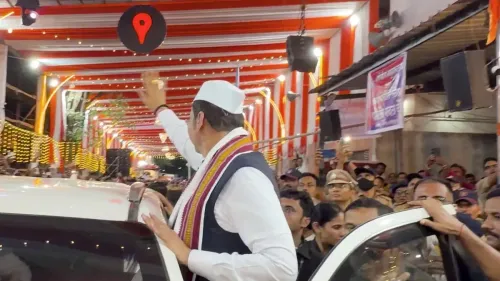
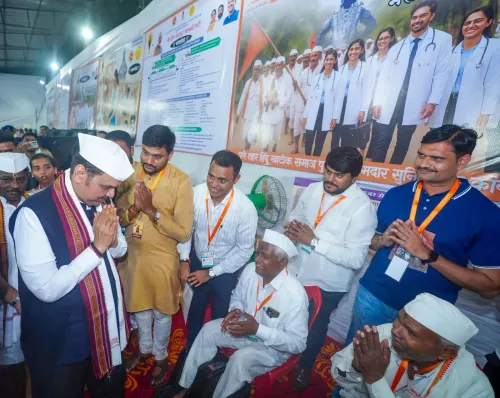
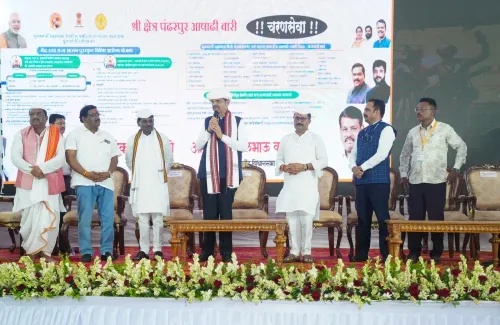
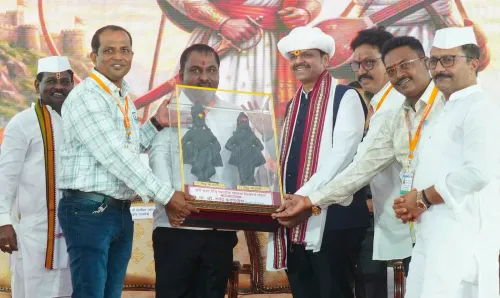
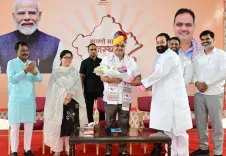
Smriti Irani joins Warkari Palkhi Procession in Pune

Synopsis
Senior BJP leader Smriti Irani joined the Warkaris' Palkhi Procession in Pune on 12 July 2026 during the Ashadhi Wari, posting a message of faith and service. The annual pilgrimage carries palkhis of saints Dnyaneshwar and Tukaram to Pandharpur and draws lakhs of devotees across Maharashtra.
Key Takeaways
Smriti Irani , former Union Minister and senior BJP leader, joined the Warkaris' Palkhi Procession in Pune on 12 July 2026 .
She shared the message: 'Faith finds its highest expression in the service of humanity.' The Ashadhi Wari pilgrimage carries the palkhis of saints Dnyaneshwar and Tukaram from Alandi and Dehu to Pandharpur .
Pune is a key assembly and transit point for the processions, attracting lakhs of Warkari devotees.
BJP leaders' participation in the Warkari circuit reflects the party's sustained outreach to devotional communities in western Maharashtra .
The processions are set to culminate at Pandharpur on Ashadhi Ekadashi .
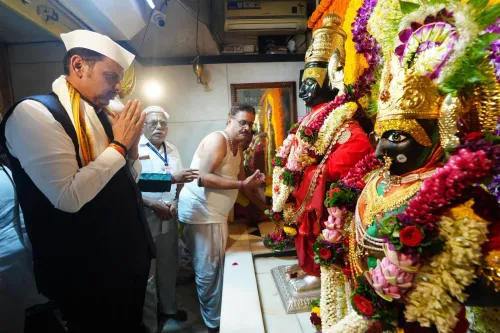
BJP leader Smriti Irani on Sunday, 12 July 2026, joined the Warkaris' Palkhi Procession in Pune, sharing a message of devotion and service as the annual Ashadhi Wari pilgrimage made its way toward Pandharpur. Posting on X, Irani — former Union Minister of Women and Child Development and Minority Affairs — reflected on the spiritual significance of the occasion, writing: 'Faith finds its highest expression in the service of humanity.'
Context
The Warkari Palkhi Procession is one of Maharashtra's most revered annual traditions, drawing lakhs of devotees who walk hundreds of kilometres carrying the palkhis (palanquins) of saints Dnyaneshwar and Tukaram from their respective towns of Alandi and Dehu to the temple town of Pandharpur. The procession, held during the Ashadhi Ekadashi period, is a living expression of the Varkari sect's philosophy — one rooted in devotion, egalitarianism, and community service. Pune serves as a major assembly and transit point for the processions, attracting pilgrims from across Maharashtra and beyond.
Irani's presence at the event aligns with a broader pattern of BJP leaders participating in Maharashtra's devotional circuits, particularly during the Ashadhi Wari season. Such engagement reflects the party's sustained outreach to Warkari communities, which represent a significant devotional and social constituency in western India.
Policy Backdrop
The Warkari tradition has historically transcended caste and class boundaries, and successive state and central governments have invested in pilgrim infrastructure — from road improvements along palkhi routes to medical camps and security arrangements. The Maharashtra government typically coordinates extensive logistical support for the Ashadhi Wari, given the scale of participation that can run into several lakh pilgrims on the roads simultaneously.
Irani's framing — that 'faith finds its highest expression in the service of humanity' — echoes a longstanding rhetorical bridge between religious devotion and public welfare that has featured prominently in BJP's outreach to devotional communities. It also resonates with the Warkari tradition's own emphasis on seva (selfless service) as an act of worship.
Stakeholders and Impact
The Warkari community spans Maharashtra's rural and semi-urban heartland, encompassing farmers, artisans, and working-class pilgrims who undertake the annual walk as an act of collective faith. Political leaders' participation in the procession is closely watched by this constituency, as it signals respect for a tradition that predates modern political formations by centuries.
For Smriti Irani, the visit represents an opportunity to strengthen ties with Maharashtra's devotional networks at a time when the state remains electorally significant for the BJP. Statements by other Maharashtra BJP leaders during the same Ashadhi Wari season will likely be watched for the party's broader messaging around the pilgrimage.
What's Next
The Palkhi processions are expected to culminate at Pandharpur on the occasion of Ashadhi Ekadashi, when lakhs of Varkaris gather at the Vitthal-Rukmini temple for the main festival. State government arrangements for pilgrim facilities — including water, medical aid, and crowd management — will be closely monitored as the processions approach their destination. Any further engagement by central or state BJP leaders during this period is likely to draw attention given the community's electoral weight in Maharashtra.
Point of View
Cross-caste footprint makes it a constituency that no major party can afford to ignore, and BJP leaders have increasingly made the pilgrimage circuit a fixture of their Maharashtra calendar. Her choice of words — linking faith to the service of humanity — deliberately mirrors the Warkari tradition's own seva-centric theology, lending the gesture an air of philosophical alignment rather than mere photo-opportunity. This visit should be read alongside the broader pattern of BJP's devotional diplomacy in western India, where cultural presence is treated as an extension of governance credibility.
NationPress
12 Jul 2026
Frequently Asked Questions
What is the Warkari Palkhi Procession?
The Warkari Palkhi Procession is an annual pilgrimage in Maharashtra in which Warkari devotees carry the palanquins of saints Dnyaneshwar and Tukaram from Alandi and Dehu respectively to the temple town of Pandharpur, culminating on Ashadhi Ekadashi. It draws lakhs of pilgrims every year and is one of India's largest walking pilgrimages.
Why did Smriti Irani attend the Palkhi Procession in Pune?
Smriti Irani joined the Warkaris' Palkhi Procession in Pune on 12 July 2026 as part of the Ashadhi Wari, sharing a message about faith and service. BJP leaders have regularly participated in Maharashtra's devotional events as part of the party's outreach to Warkari and Hindu devotional communities.
What is Ashadhi Wari?
Ashadhi Wari is the annual pilgrimage to Pandharpur held during the Hindu month of Ashadha, centred on Ashadhi Ekadashi. It is one of the most significant religious events in Maharashtra, with lakhs of Warkari devotees walking to the Vitthal-Rukmini temple in Pandharpur.
Where does the Palkhi Procession start and end?
The two main Palkhi processions begin at Alandi (carrying the palkhi of Saint Dnyaneshwar) and Dehu (carrying the palkhi of Saint Tukaram) and both converge toward Pandharpur. Pune is a major assembly and transit halt along the route.
What did Smriti Irani say at the Palkhi Procession?
Posting on X on 12 July 2026, Smriti Irani wrote: 'Faith finds its highest expression in the service of humanity,' marking her presence at the Warkaris' Palkhi Procession in Pune during the Ashadhi Wari.