Sonowal launches E-Samudra portal for seafarer services in Mumbai
Synopsis
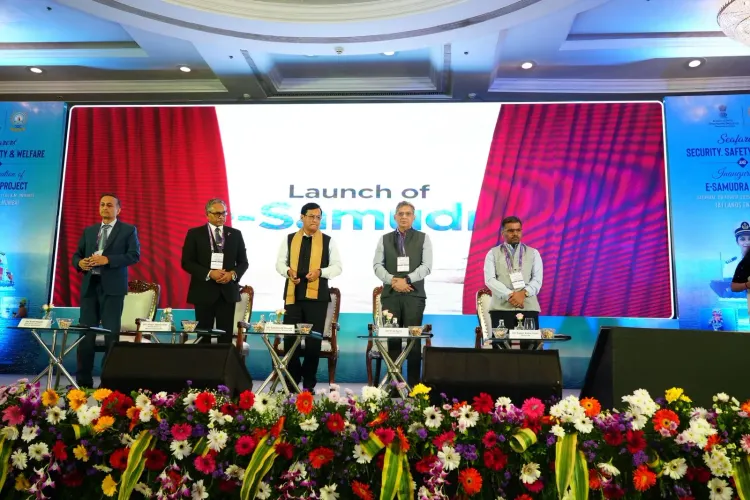
Union Minister Sarbananda Sonowal inaugurated the E-Samudra portal in Mumbai on 8 August 2026, launching a single-window digital platform to integrate services for India's seafarers and ports under the Digital India programme, promising simpler, transparent, and time-bound maritime governance.
Key Takeaways
E-Samudra portal was inaugurated by Union Minister Sarbananda Sonowal in Mumbai on 8 August 2026 .
The platform is a single-window digital interface integrating services for both seafarers and port authorities.
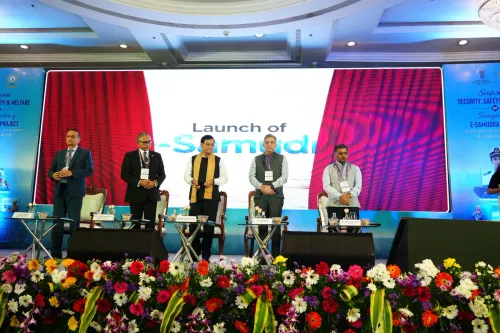
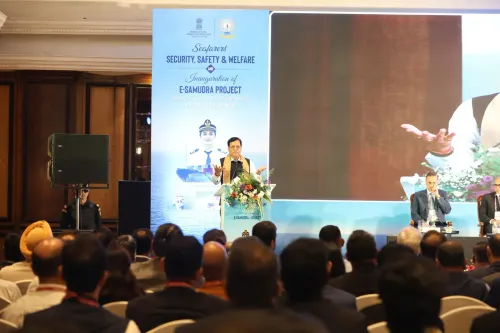
The launch took place at the National Stakeholder Interaction on Seafarer Security, Safety and Welfare .
E-Samudra is positioned as part of the Digital India programme, launched in 2015 , extending e-governance to the maritime sector.
The portal aims to make maritime governance simpler, transparent, and time-bound , reducing multi-agency paperwork burdens on seafarers.
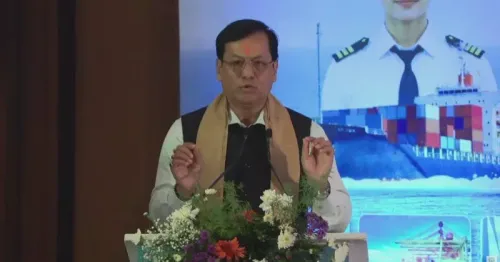
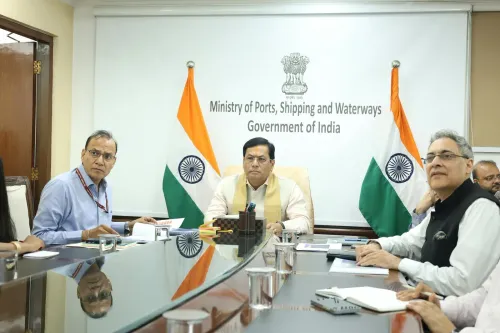
India's maritime workforce got a long-overdue digital upgrade on Saturday, 8 August 2026, as Union Minister of Ports, Shipping and Waterways Sarbananda Sonowal inaugurated the E-Samudra portal in Mumbai — a single-window platform designed to bring India's sprawling seafarer administration firmly into the digital age.
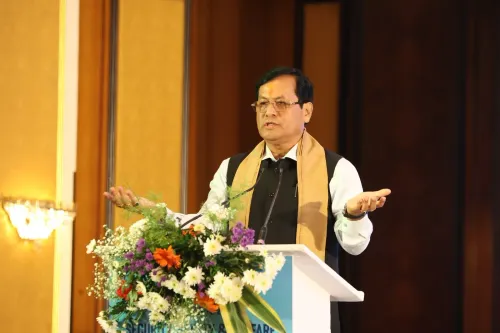
Speaking at the National Stakeholder Interaction on Seafarer Security, Safety and Welfare, Sonowal described the launch as 'empowering Bharat's maritime heroes with Digital India,' framing the platform as a convergence of governance reform and workforce welfare. The portal integrates services for both seafarers and ports, promising transactions that are simpler, transparent, and time-bound — three words that have historically been strangers to maritime paperwork.
What E-Samudra actually changes for seafarers
India's seafaring community has long navigated a maze of disconnected offices, physical documentation, and multi-agency clearances just to access basic services — from credential verification to welfare entitlements. The E-Samudra portal consolidates these touchpoints into a single digital interface, reducing the friction that costs seafarers time and money at every career milestone. For port authorities, the integration promises faster, auditable processing — the kind of transparency that also deters procedural bottlenecks. The platform sits squarely within the Digital India programme, the 2015 flagship initiative to embed e-governance across India's public service architecture. Transport and infrastructure were always logical frontiers for that push; the maritime sector, despite anchoring a significant share of India's trade, has been slower than most to digitise its workforce-facing services.Mumbai as the stage — and what it signals
Choosing Mumbai — India's premier port city and the administrative nerve-centre of its shipping industry — for the launch was deliberate. The national stakeholder interaction format brought together seafarers, port operators, and maritime administrators, signalling that this is not a back-office IT upgrade but a policy statement about how the government intends to govern the sector going forward. Sonowal's presence as the minister who inaugurated the portal underscores the political weight being attached to maritime modernisation. The broader pattern is clear: India has systematically extended Digital India's reach into sectors where legacy processes created the most friction — taxation, land records, health, and now maritime governance. Each extension follows the same logic: a single window, a time-bound commitment, a reduction in human discretion at the point of service delivery. The real test, as always, will be adoption. A portal is only as powerful as the ecosystem that uses it — and that means watching how quickly seafarers and port users migrate from legacy workflows, and whether the promised time-bound commitments hold under operational load. India's maritime workforce deserves to find out fast.Point of View
Shipping and Waterways staking a visible governance claim over a workforce that has historically been under-served by public digital infrastructure. For Sonowal, it is a tangible deliverable that ties maritime modernisation to the broader Digital India narrative — useful political currency for a ministry that rarely generates headline moments. The single-window model, if it delivers on its time-bound promise, could set a benchmark for how India governs other specialised labour-intensive sectors. The harder question is whether backend integration across agencies matches the front-end ambition of the portal.
NationPress
8 Aug 2026
Frequently Asked Questions
What is the E-Samudra portal?
E-Samudra is a single-window digital platform launched by the Indian Ministry of Ports, Shipping and Waterways to integrate services for seafarers and port authorities, making maritime governance simpler, transparent, and time-bound.
Who launched the E-Samudra portal?
Union Minister of Ports, Shipping and Waterways Sarbananda Sonowal inaugurated the E-Samudra portal on 8 August 2026 in Mumbai .
What services does E-Samudra offer to seafarers?
The portal consolidates multiple seafarer-facing services — including credential processing and welfare access — into a single digital interface, reducing dependence on physical documentation and multi-agency clearances. Specific service integrations have not been officially detailed yet.
How does E-Samudra relate to Digital India?
E-Samudra is an extension of the Digital India programme launched in 2015 , which aims to embed e-governance across public services. The maritime sector portal follows the same model applied to taxation, land records, and health services.
Where was the E-Samudra portal launched?
The portal was launched in Mumbai during the National Stakeholder Interaction on Seafarer Security, Safety and Welfare, a national-level event bringing together seafarers, port operators, and maritime administrators.