CM Bhajanlal Engages District Grievance Panels on Last-Mile Delivery
Synopsis
Rajasthan CM Bhajan Lal Sharma met district and virtual sub-division grievance committee members on 8 August 2026, calling for booth-level problem resolution and guaranteed last-mile delivery of government schemes to every eligible citizen.
Key Takeaways
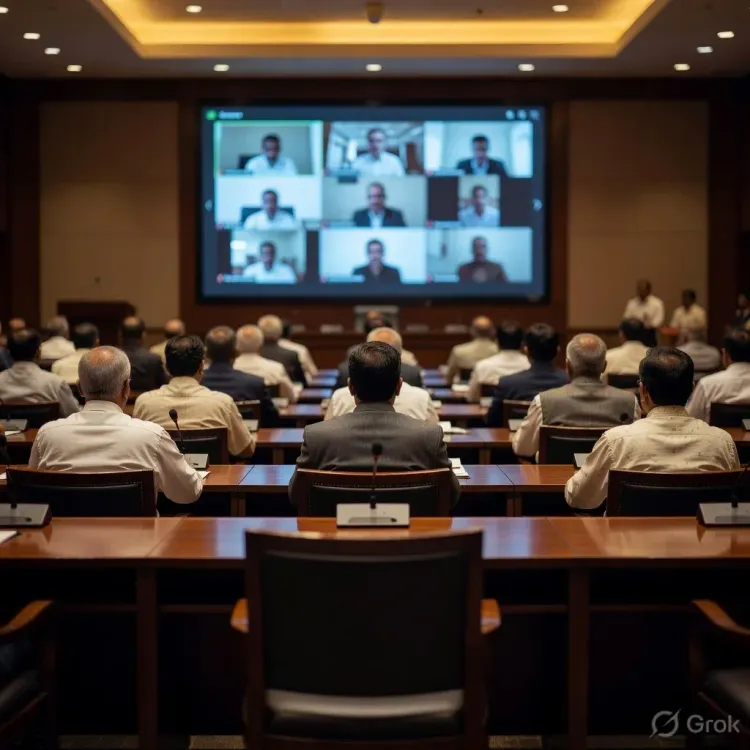
CM Bhajan Lal Sharma addressed district and sub-division grievance committee members on 8 August 2026 , both in person and via virtual link.
He outlined three government priorities: booth-level problem understanding, swift resolution, and last-mile scheme delivery to every eligible citizen.
BJP Rajasthan state president Madan Rathore and Law Minister Jogaram Patel were present at the programme.
The BJP government has maintained multi-tier grievance redressal structures since taking office in December 2023 , blending official machinery with party worker networks.
The virtual format for sub-division committees signals a possible move toward broader digital integration of the grievance infrastructure.
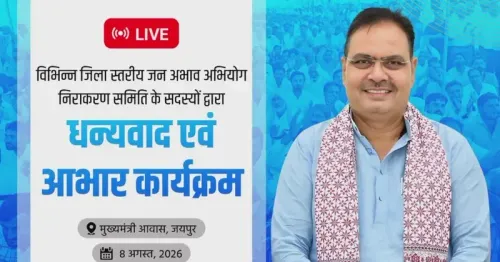
Every complaint filed at a booth, every scheme benefit that never reached its rightful claimant — these are the gaps Rajasthan Chief Minister Bhajan Lal Sharma says his government is determined to close. On Saturday, 8 August 2026, he addressed members of the district-level and virtual sub-division-level public grievance redressal committees, framing the meeting as a direct accountability exercise for the state's welfare machinery.
What CM Sharma Said at the Meeting
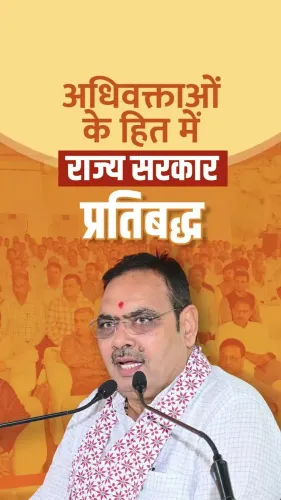
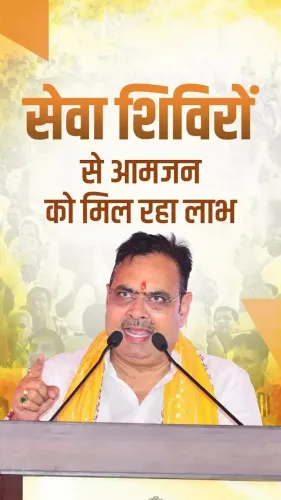
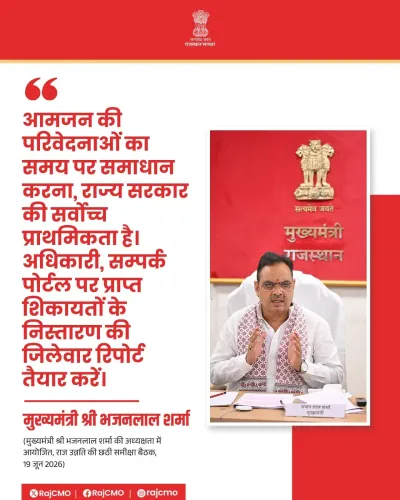
Speaking to committee members connected both in person and via virtual link, Sharma laid out a three-point mandate: understand citizens' problems down to the booth level, ensure swift resolution, and guarantee that every eligible person receives the benefits of government schemes. 'हर जरूरतमंद को न्याय, हर पात्र को उसका अधिकार' ('justice for every person in need, every eligible person their right') — that was the phrase he used to crystallise the government's stated commitment.
He praised committee members for their 'dedicated efforts' and underlined the role of party workers as essential to translating this resolve into ground-level action. BJP Rajasthan state president Madan Rathore and Law and Legal Affairs Minister Jogaram Patel were present at the programme alongside other dignitaries.
The Grievance Structure Behind the Event
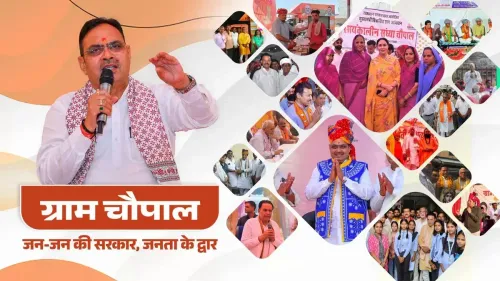
The District Level Public Grievance Redressal Committee is part of a multi-tier mechanism the BJP government has leaned on since taking office in December 2023. The structure is designed to catch complaints that slip through at the sub-division and district levels before they escalate — or simply go unaddressed. Saturday's meeting extended that reach by looping in sub-division committees virtually, a format that allows wider geographic participation without requiring travel.
State governments across India maintain similar structures, but the BJP's approach in Rajasthan has notably blended official administrative channels with party organisational networks — a model that puts workers like those Sharma praised at the centre of scheme delivery, not just electoral mobilisation.
Last-Mile Delivery as a Political Benchmark
For a government now past its two-and-a-half-year mark, the emphasis on last-mile connectivity is as much a performance signal as it is administrative policy. Welfare scheme leakage and delayed grievance resolution have historically been among the sharpest criticisms levelled at state governments in Rajasthan. By convening this kind of committee-level dialogue publicly — and posting about it — the CM is putting the accountability framework on the record.
Whether these committees are being tracked against resolution timelines or case-clearance targets remains to be detailed publicly, but the direction of travel is clear: the Sharma government wants its grassroots machinery visible, active, and held to a standard.
Frequently Asked Questions
What is the District Level Public Grievance Redressal Committee in Rajasthan?
It is a state-level body designed to receive, process, and resolve public complaints at the district and sub-division level, ensuring citizens' grievances do not go unaddressed and that welfare scheme benefits reach eligible recipients.
What did Rajasthan CM Bhajan Lal Sharma say at the grievance committee meeting?
CM Sharma stressed three priorities: understanding citizens' problems down to the booth level, ensuring swift resolution, and guaranteeing that every eligible person receives government scheme benefits. He also praised committee members for their dedicated efforts.
Who else attended the grievance redressal programme on 8 August 2026?
BJP Rajasthan state president Madan Rathore and Law and Legal Affairs Minister Jogaram Patel were present, along with other dignitaries. Sub-division level committee members joined virtually.
When did the BJP government in Rajasthan take office?
The BJP government led by Bhajan Lal Sharma assumed office in December 2023 following the Rajasthan assembly elections.
How does Rajasthan's grievance redressal system work at the booth level?
The system operates through a multi-tier structure — from booth level up through sub-division and district committees — aimed at catching unresolved complaints early and ensuring welfare scheme benefits reach the last eligible beneficiary.