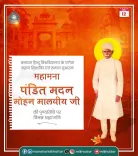
Sonowal pays tribute to Madan Mohan Malaviya on Punya Tithi
Synopsis
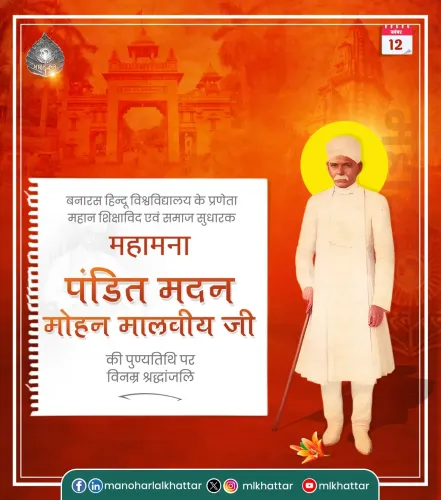
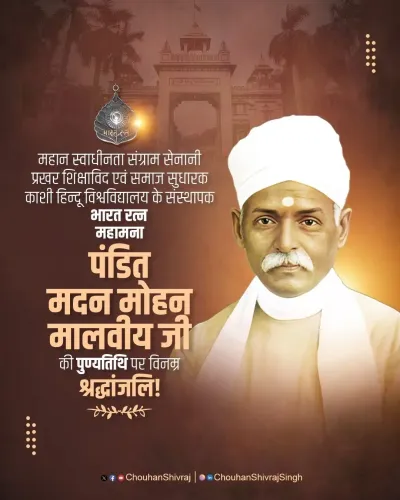
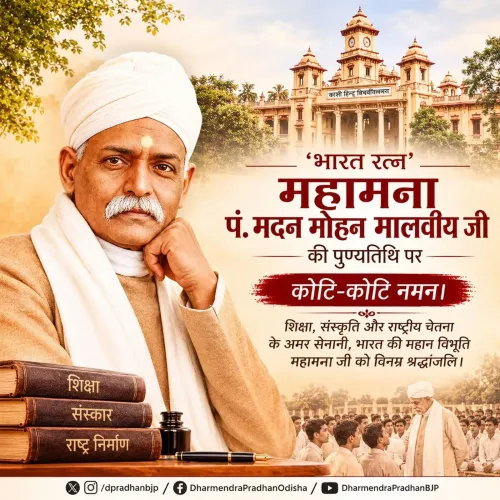
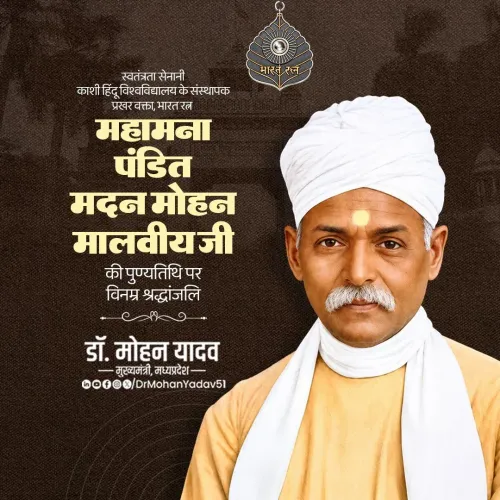
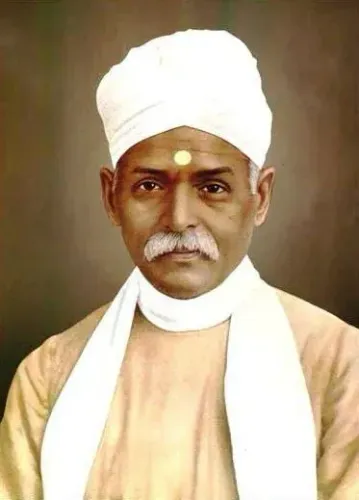
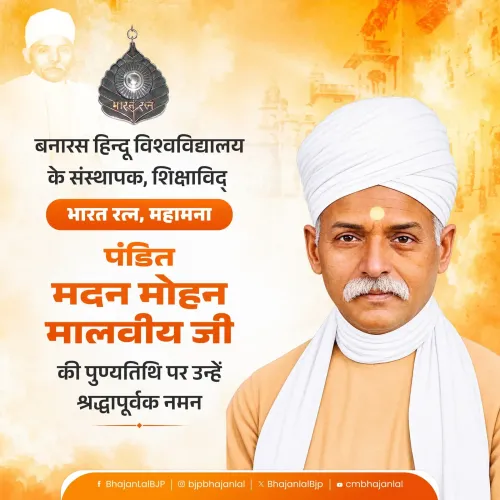
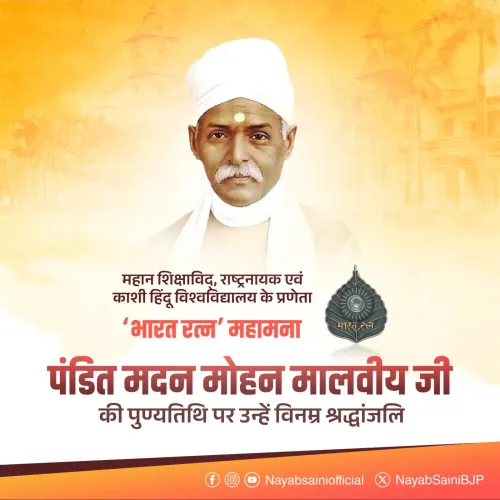
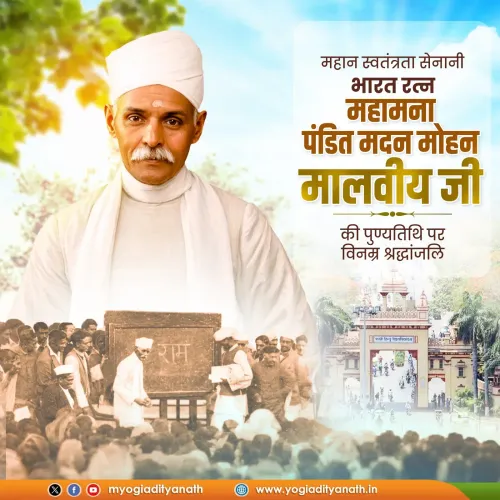
Union Minister Sarbananda Sonowal marked the Punya Tithi of Pandit Madan Mohan Malaviya on November 12, honouring the freedom fighter and educationist who founded Banaras Hindu University in 1916 — an institution he built as a pillar of national renewal.
Key Takeaways
Pandit Madan Mohan Malaviya passed away on 12 November 1946 ; his death anniversary is observed annually as his Punya Tithi.
Union Minister Sarbananda Sonowal paid public tribute on X, calling Malaviya 'a devoted son of Maa Bharati'.
Malaviya founded Banaras Hindu University (BHU) in Varanasi in 1916 , making it one of Asia's largest residential universities.
His legacy spans both the Indian freedom struggle and the development of modern higher education in India.
Indian political leaders across parties routinely mark the anniversaries of independence-era figures to keep foundational legacies in public discourse.
On the death anniversary of one of India's most consequential educationist-patriots, Union Ports and Shipping Minister Sarbananda Sonowal on Thursday, November 12 paid tribute to Pandit Madan Mohan Malaviya, remembering him as 'a devoted son of Maa Bharati' whose vision continues to shape generations of Indians.
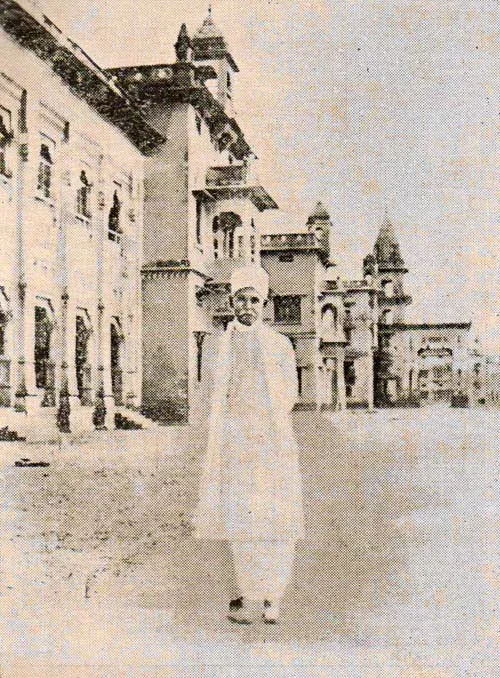
Malaviya, who passed away on 12 November 1946, occupies a singular place in India's national memory — not merely as a freedom fighter who stood alongside towering figures of the independence movement, but as the architect of an institution that outlasted the struggle itself. The founding of Banaras Hindu University (BHU) in Varanasi in 1916 was his most enduring act, a deliberate effort to anchor modern scientific and humanistic education in Indian civilisational soil.
BHU: a university born from a movement
Malaviya's vision for BHU was inseparable from his politics. He believed that a free India needed an educated citizenry before — and alongside — political sovereignty. The university he built in Varanasi became both a seat of learning and a crucible of nationalist thought, drawing students and scholars who would go on to shape independent India's institutions.
Today, BHU stands as one of Asia's largest residential universities, a living monument to Malaviya's conviction that education and national identity could and must reinforce each other.
A Punya Tithi observed across the political spectrum
Indian political leaders routinely mark the Punya Tithi — death anniversary — of independence-era figures with public tributes, keeping foundational legacies visible in civic discourse. Malaviya, often addressed by the honorific 'Mahamana', holds particular resonance for leaders with roots in Uttar Pradesh and the broader Gangetic belt, where his name and BHU remain deeply woven into public life.
Minister Sonowal's tribute underscores a consistent pattern of acknowledging the dual legacy of India's freedom generation: their sacrifice in the political arena and their parallel investment in institutions designed to carry a nation forward.
Eighty years on, the university Malaviya founded continues its annual intake of thousands of students — a quietly remarkable answer to the question every generation of leaders must face: what do you build that lasts?
Point of View
Founded in Varanasi — a city central to both Hindutva symbolism and Prime Minister Modi's own constituency — serves as a natural touchpoint for a party seeking to claim the civilisational-nationalist strand of India's freedom movement. Sonowal's tribute fits a broader BJP pattern of amplifying figures who combined cultural rootedness with institution-building, positioning the party as the inheritor of that dual legacy. The choice to invoke education as Malaviya's crowning contribution, rather than purely his political activism, also reflects a consistent governmental messaging frame that links the freedom generation's work to contemporary ambitions in education reform.
NationPress
12 Nov 2026
Frequently Asked Questions
Who was Pandit Madan Mohan Malaviya?
Pandit Madan Mohan Malaviya was an Indian independence activist and educationist, widely known by the honorific 'Mahamana.' He is best remembered for founding Banaras Hindu University in Varanasi in 1916 and for his active role in India's freedom struggle. He passed away on 12 November 1946 .
Why is November 12 significant for Madan Mohan Malaviya?
November 12 is the death anniversary — or Punya Tithi — of Pandit Madan Mohan Malaviya, who died on this date in 1946 . Indian leaders and institutions annually mark the day with tributes to his contributions to education and the national movement.
What is Banaras Hindu University and who founded it?
Banaras Hindu University (BHU) , located in Varanasi , was founded by Pandit Madan Mohan Malaviya in 1916 . It is a central university and one of Asia's largest residential universities, established with the vision of combining modern education with Indian cultural values.
What did Sarbananda Sonowal say about Madan Mohan Malaviya?
Union Ports and Shipping Minister Sarbananda Sonowal posted a tribute on X, describing Malaviya as 'a devoted son of Maa Bharati' and stating that his contributions to the freedom struggle and education — especially the founding of BHU — 'will always inspire the coming generations.'
What was Madan Mohan Malaviya's role in India's freedom struggle?
Malaviya was a prominent figure in the Indian independence movement, known for his oratory and organisational work. He served multiple terms as president of the Indian National Congress and was a persistent advocate for Indian rights under British rule, while simultaneously building institutions like BHU to strengthen the nation's social and intellectual foundations.