CM Soren Flags Anganwadi Gaps, Seeks More PM SHRI Schools
Synopsis
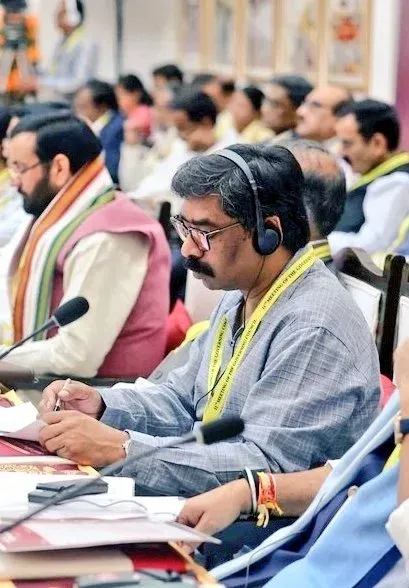
Chief Minister Hemant Soren on 11 June 2026 disclosed that 15,000 of Jharkhand's 38,000 anganwadi centres lack buildings, reported nutrition gains under Poshan Abhiyan and SAAMAR, and urged the Centre to add PM SHRI schools, expand Kendriya Vidyalayas, and integrate school-education funds to give states more implementation flexibility.
Key Takeaways
15,000 of Jharkhand's 38,000 anganwadi centres still lack their own buildings, CM Soren disclosed on 11 June 2026 .
The state reports notable reduction in malnutrition and stunting through Poshan Abhiyan and the state-run SAAMAR programme; every child is being given an egg daily.
Jharkhand is building 5,000 new anganwadi centres using its own resources and has appealed for central co-funding to speed up construction.
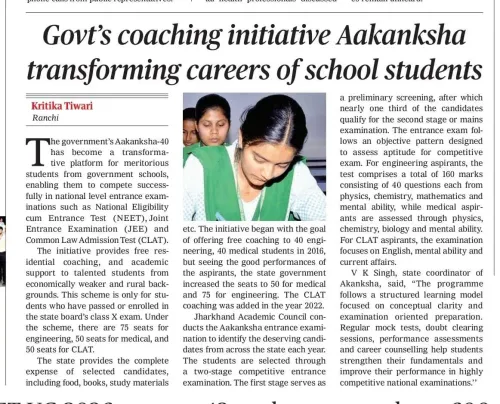
Students from CM Schools of Excellence have secured admission to IITs , medical colleges, and other premier institutions; the state targets 5,000 such schools.
CM Soren urged the Centre to increase PM SHRI schools and Kendriya Vidyalayas in Jharkhand.
The Chief Minister called for integration of school-education schemes and funds to give states greater flexibility in planning and implementation.
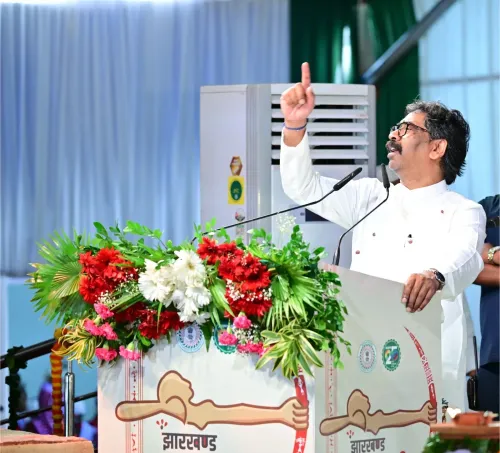
Jharkhand Chief Minister Hemant Soren on Thursday, 11 June 2026 highlighted the state's progress on nutrition and school education while calling on the central government to expand PM SHRI schools and Kendriya Vidyalayas in Jharkhand and to integrate school-education funds to give states greater planning flexibility.
Context
Posting on X, CM Soren acknowledged a persistent infrastructure gap: out of 38,000 anganwadi centres in the state, 15,000 still do not have their own buildings. Despite this shortfall, he said, the state has recorded 'ullekhaneey sudhar' (notable improvement) in malnutrition and stunting through Poshan Abhiyan and the state-run SAAMAR programme. He also noted that every child is being provided an egg daily.
The Chief Minister added that the state is constructing 5,000 new anganwadi centres from its own resources, and appealed for central support to accelerate that effort.
Policy Backdrop
Poshan Abhiyan, launched by the central government in 2018, is a nationwide mission targeting stunting, undernutrition, and anaemia among children, pregnant women, and lactating mothers. SAAMAR is Jharkhand's own complementary programme using community-based interventions to address the same challenges at the ground level.
On education, CM Soren pointed to the CM Schools of Excellence initiative, under which students have been selected to IIT, medical colleges, and other prestigious institutions. The state has committed to building 5,000 such schools to extend quality education to every village. He urged the Centre to increase the number of PM SHRI schools — launched in 2022 to develop model institutions aligned with the National Education Policy 2020 — and Kendriya Vidyalayas in Jharkhand.
Stakeholders and Impact
The twin announcements directly concern Jharkhand's most vulnerable populations: children in tribal and rural districts who depend on anganwadi services for supplementary nutrition and pre-school learning, and students in government schools seeking pathways to higher education. Infrastructure gaps in anganwadi centres have long been cited as a barrier to consistent service delivery in the state.
Soren's call for fund integration echoes a broader demand from multiple state governments for the Centre to consolidate overlapping school-education schemes, allowing states to plan and implement programmes with fewer procedural constraints. Greater flexibility in fund use could allow Jharkhand to direct resources toward its most acute gaps without being bound by individual scheme guidelines.
What's Next
The central government's response to Jharkhand's request will be closely watched in the context of the next education ministry review and any forthcoming union budget allocations. An expansion of PM SHRI or Kendriya Vidyalaya sanctioned seats for Jharkhand, or a move toward scheme-integration guidelines, would represent a concrete outcome of the Chief Minister's appeal. The state's self-funded push to build 5,000 new anganwadi centres and 5,000 schools of excellence signals that Jharkhand intends to press ahead regardless of the pace of central support.
Point of View
000 anganwadi centres and 5,000 model schools signals political confidence but also underscores the structural underfunding that tribal-majority states face in social-sector delivery. The appeal for fund integration reflects a systemic frustration shared by several non-BJP state governments, positioning Jharkhand as a voice for broader centre-state fiscal reform. How the Union education and women-and-child development ministries respond will test whether cooperative rhetoric translates into revised allocation norms ahead of the next budget cycle.
NationPress
26 Oct 2026
Frequently Asked Questions
How many anganwadi centres in Jharkhand lack their own buildings?
According to CM Hemant Soren's post of 11 June 2026 , 15,000 out of 38,000 anganwadi centres in Jharkhand do not have their own buildings.
What is SAAMAR in Jharkhand?
SAAMAR is a Jharkhand state programme that uses community-based interventions to reduce malnutrition and anaemia, complementing the central Poshan Abhiyan mission.
What are CM Schools of Excellence in Jharkhand?
CM Schools of Excellence is a Jharkhand government initiative that upgrades selected government schools with enhanced facilities; students from these schools have been admitted to IITs , medical colleges, and other premier institutions.
What is PM SHRI and why is Jharkhand asking for more such schools?
PM SHRI (Pradhan Mantri Schools for Rising India) is a central scheme launched in 2022 to develop model schools aligned with NEP 2020 . CM Soren has requested an increase in PM SHRI schools in Jharkhand to complement the state's own model-school expansion drive.
What did CM Soren say about integrating education funds?
CM Soren urged the central government to consolidate various school-education schemes and funds so that states can plan and implement programmes more effectively without being constrained by multiple separate scheme guidelines.