Srinagar routes to Martyrs' Graveyard sealed ahead of July 13
Synopsis
Every road to Srinagar's Martyrs' Graveyard was sealed on July 12, with Mehbooba Mufti reportedly placed under house arrest and Mirwaiz Umar Farooq's planned procession effectively blocked. The crackdown underscores how July 13 — once a state holiday marking the 1931 killing of 22 protesters — has become a flashpoint since Article 370's abrogation in 2019.
Key Takeaways
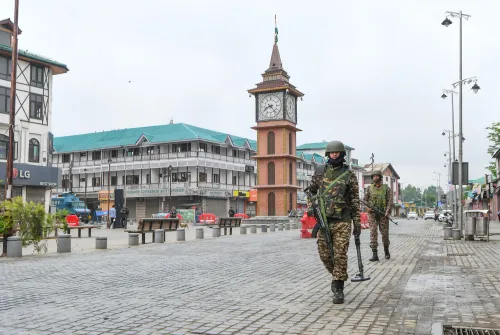
Authorities sealed all routes to the Martyrs' Graveyard at Naqshband Sahib, Nowhatta in Srinagar on 12 July , a day before the July 13 observance.
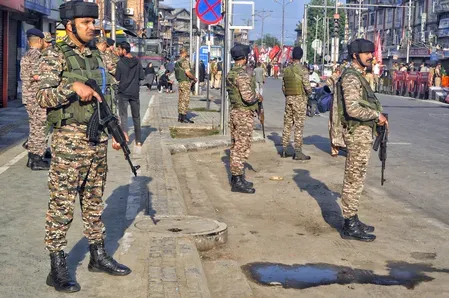
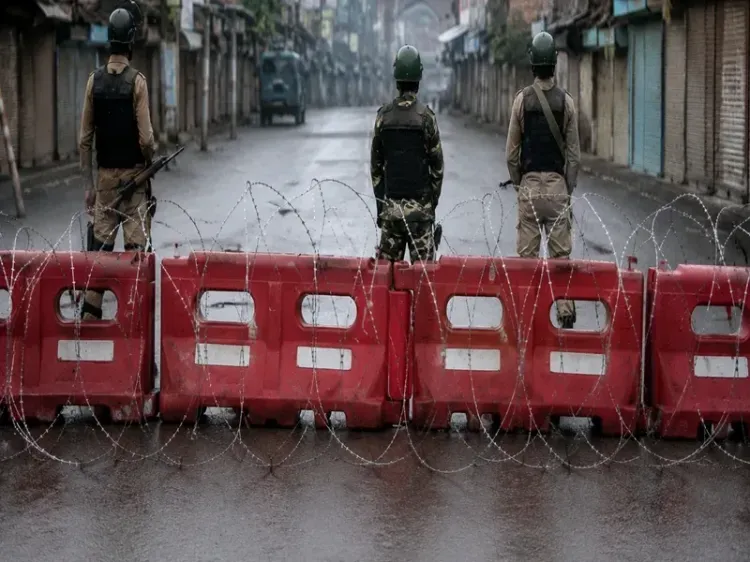
Heavy police and CRPF deployment was made across the area; vehicular movement was fully suspended.
Mehbooba Mufti , Leader of the Opposition and PDP chief, was reportedly placed under house arrest on Saturday to prevent her from visiting the site.
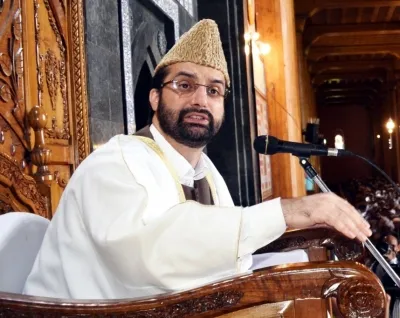
Mirwaiz Umar Farooq had announced a peaceful procession to the graveyard on July 13 to pay tribute to the 22 people killed in the 1931 firing.
July 13 was observed as Martyrs' Day and a state holiday in Jammu and Kashmir until 2019 , when Article 370 was abrogated and the practice was discontinued.
Authorities in Srinagar sealed all routes leading to the Martyrs' Graveyard at Naqshband Sahib in the Nowhatta area of the old city on Sunday, 12 July, a day before the July 13 observance that marks the killing of 22 protesters by Maharaja's guards in 1931. Heavy deployments of police and Central Reserve Police Force (CRPF) personnel were positioned across the area, with vehicular movement fully suspended on approach roads.
The 1931 Incident and Its Historical Significance
On 13 July 1931, a crowd gathered outside Srinagar Central Jail, where a Pathan butler named Abdul Qadeer was on trial for allegedly delivering a provocative speech against the Maharaja's rule in Jammu and Kashmir. Jail guards opened fire on the assembled protesters, killing 22 people. The bodies were taken in a large procession and buried in the courtyard of the Naqshband Sahib mosque in Srinagar — a site that subsequently became the Martyrs' Graveyard.
Since 1931, July 13 had been observed annually as Martyrs' Day, with the party in power and other political leaders paying floral tributes at the graveyard. The day was also a designated state holiday in Jammu and Kashmir.
What Changed After Article 370 Abrogation
Following the abrogation of Article 370 in 2019 and the bifurcation of the erstwhile state into two Union Territories, the government discontinued the formal Martyrs' Day observance. July 13 was simultaneously removed from the list of public holidays in Jammu and Kashmir. This is the sixth consecutive year that the administration has restricted access to the site around this date.
Political Leaders Blocked, Leaders Under House Arrest
The ruling National Conference had announced that its leaders and workers would visit the graveyard on Sunday to offer floral tributes to those killed in 1931. However, with all approach roads sealed, access to the site was effectively denied.
Iltija Mufti, daughter of former Chief Minister and Leader of the Opposition Mehbooba Mufti of the Peoples Democratic Party (PDP), told reporters that authorities had placed her mother under house arrest on Saturday to prevent her from visiting the graveyard. Senior religious leader and chief cleric Mirwaiz Umar Farooq had also announced on Friday his intention to lead a peaceful procession to the graveyard on July 13 to pay tribute to the 1931 victims.
Security Deployment on the Ground
The entry point from Khanyar and the route from the Nowhatta-Jamia Masjid side were both closed, with police vehicles stationed at each location. A heavy cordon of police and CRPF personnel was also positioned outside the graveyard itself, with additional security at all other entry and exit points. Vehicular movement on all roads leading to the site was suspended and access was completely restricted, according to reports.
The administration has not issued any public statement explaining the security measures. Whether political leaders will be permitted to visit at any point during the day remains to be seen.
Point of View
The Centre's approach to Kashmiri political expression remains coercive rather than conciliatory, and that gap between stated normalcy and ground reality is one mainstream coverage consistently underplays.
NationPress
11 Oct 2026
Frequently Asked Questions
Why is July 13 significant in Jammu and Kashmir?
July 13 marks the 1931 killing of 22 protesters by guards at Srinagar Central Jail, where a man named Abdul Qadeer was on trial for allegedly making a provocative speech against the Maharaja's rule. The day was observed as Martyrs' Day and a state holiday in Jammu and Kashmir for decades until 2019.
Why was the Martyrs' Day observance discontinued after 2019?
Following the abrogation of Article 370 in August 2019 and the reorganisation of Jammu and Kashmir into two Union Territories, the central government removed July 13 from the list of public holidays and discontinued the formal state-sponsored observance of Martyrs' Day.
Who is buried at the Martyrs' Graveyard in Srinagar?
The graveyard at Naqshband Sahib mosque in Nowhatta, Srinagar, holds the remains of the 22 protesters killed in the 1931 firing at Srinagar Central Jail. It has been a site of annual tribute by political and religious leaders since 1931.
Which leaders were blocked from visiting the graveyard on July 13?
The National Conference announced its leaders would visit but found all routes sealed. PDP chief Mehbooba Mufti was reportedly placed under house arrest on Saturday. Chief cleric Mirwaiz Umar Farooq had also announced a peaceful procession to the graveyard but access was effectively denied.
What security measures were put in place around the graveyard?
Authorities sealed entry points from Khanyar and the Nowhatta-Jamia Masjid side, stationed police vehicles at both locations, deployed heavy police and CRPF contingents outside the graveyard, and suspended all vehicular movement on approach roads, completely restricting access to the site.