Stalin Backs Detained Protesters, DMK Offers Legal Aid
Synopsis
DMK president M. K. Stalin on 14 October 2026 demanded the BJP government stop detaining young protesters and announced full legal representation for activists Ashutosh Ranka and Saurav Dassss, invoking the party's long-standing opposition to what it calls political suppression of dissent.
Key Takeaways
Stalin publicly backed detained protesters Ashutosh Ranka and Saurav Dassss on 14 October 2026 .
The DMK pledged 'all necessary legal representation and support' to the two individuals.
Stalin's post challenged the BJP-led central government , arguing mass detentions of youth will only grow public resistance.
The post carried hashtags #CJP and #GyaneshKumarMustGo , linking it to a broader civil-liberties campaign.
The DMK has a documented history of opposing protest-related detentions, including during the anti-CAA movement of 2019-2020 .
The post signals potential coordination across INDIA alliance partners on the issue of detained activists.
Two young activists are behind bars, and DMK president M. K. Stalin is asking the country a pointed question: how many more will it take? On Wednesday, 14 October 2026, Stalin took to X to demand accountability from the BJP-led central government, announcing that the DMK would provide full legal representation and support to detained protesters Ashutosh Ranka and Saurav Dassss.
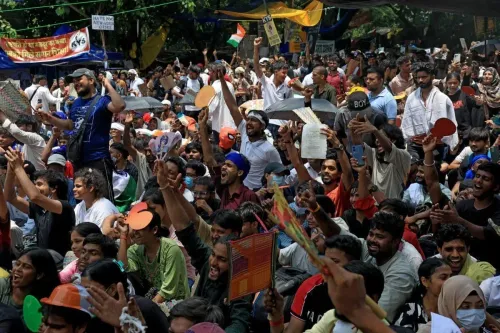
Stalin's post struck a combative note: 'The more young people they jail, the more ordinary citizens, with no political affiliation, will take to the streets and show them the true power of the people.' The message was accompanied by the hashtags #CJP and #GyaneshKumarMustGo, signalling the post's alignment with an organised civil-liberties campaign and a specific demand for accountability around Gyanesh Kumar.
DMK's Consistent Stand on Dissent and Detention
This is not the first time the DMK has stepped into the arena of protest-related detentions. The party threw its weight behind anti-CAA demonstrators in 2019-2020, publicly condemning the arrest of protesters as a suppression of constitutional rights. Stalin's post on Wednesday follows the same arc — framing government action against young activists not as law enforcement, but as political silencing.
The DMK has built a consistent argument over successive years: that the BJP uses central law-enforcement machinery to suppress voices critical of its policies. By offering direct legal aid to named individuals, the party moves beyond rhetoric into institutional support — a deliberate signal to activists and civil-society groups that opposition-ruled states can serve as a shield.
What 'Legal Representation and Support' Means in Practice
The pledge of 'all necessary legal representation and support' from a party that governs Tamil Nadu carries real weight. State-level legal aid, access to party-affiliated lawyers, and the political visibility that comes with a chief ministerial endorsement can materially change outcomes for detained individuals navigating a complex judicial process.
The specific identities and exact circumstances of the two named individuals — and the precise context of the #GyaneshKumarMustGo campaign — are part of an unfolding legal and political situation. What is clear is that the INDIA alliance and its constituent parties are watching closely, and that further statements from other opposition leaders are likely to follow.
In Indian politics, solidarity posts from heavyweights rarely stay solo for long. Stalin has fired the opening salvo — the question now is how loud the chorus grows.
Point of View
The party shifts from symbolic solidarity to actionable opposition. The #GyaneshKumarMustGo hashtag suggests a coordinated campaign around a specific accountability target, which could amplify the political pressure if other INDIA alliance parties echo the demand. Historically, such escalation cycles — detention, solidarity, legal challenge, public mobilisation — have shaped election narratives in states where civil-liberties sentiment runs deep.
NationPress
14 Oct 2026
Frequently Asked Questions
Why did M. K. Stalin post about detained protesters on 14 October 2026?
Stalin expressed solidarity with detained activists Ashutosh Ranka and Saurav Dassss and announced DMK's legal support, framing their detention as part of a BJP pattern of silencing youth dissent.
What legal support is DMK offering to the detained protesters?
Stalin stated the DMK stands ready to provide 'all necessary legal representation and support' to Ashutosh Ranka and Saurav Dassss, meaning party-affiliated legal resources and political backing during proceedings.
What is the #GyaneshKumarMustGo hashtag about?
The hashtag is associated with a civil-liberties campaign demanding accountability from Gyanesh Kumar; the specific context is part of an ongoing political and legal situation in 2026.
What is the DMK's history with protest-related detentions?
The DMK publicly opposed the arrests of anti-CAA protesters in 2019-2020, consistently framing central government crackdowns on demonstrators as unconstitutional suppression of dissent.
What does Stalin's statement mean for the INDIA alliance?
The post signals that the DMK is likely to rally other INDIA alliance partners around the issue of detained activists, potentially widening opposition pressure on the BJP-led central government.