Stalin Hits Back as DVAC Raids Ex-Minister E. V. Velu
Synopsis
DMK president M. K. Stalin on June 25, 2026, defended former minister E. V. Velu after a DVAC raid at his home in Tamil Nadu, calling it political vendetta. Stalin said Velu would cooperate fully and fight the case in court, asserting DMK has never had a corruption charge proven against it during its governance.
Key Takeaways
The DVAC conducted a raid at the residence of E.
Velu , DMK's Tiruvannamalai South district secretary and former minister, on June 25, 2026 .
Stalin confirmed Velu is cooperating fully with the raiding team and will contest any charges through the courts.
Stalin characterised the raid as 'political vendetta' by the ruling party, not legitimate anti-corruption enforcement.
Stalin claimed that no corruption allegation filed against DMK during its governance has ever been proven in court.
The episode reflects a long-standing pattern in Tamil Nadu politics of opposing parties accusing each other of weaponising the DVAC .
DMK signalled it will not be intimidated, with Stalin vowing the party would 'face this and emerge victorious.'
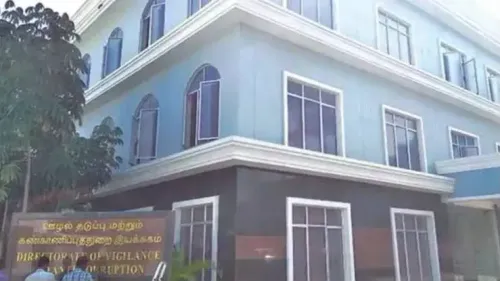
DMK president M. K. Stalin on Thursday, June 25, 2026, publicly backed former minister and Tiruvannamalai South district party secretary E. V. Velu after the state's Directorate of Vigilance and Anti-Corruption (DVAC) conducted a raid at Velu's residence, asserting that the party would face the action through legal channels and emerge victorious.
What Happened
Stalin confirmed that a DVAC raid was underway at the home of E. V. Velu, describing him as a 'beloved brother' and the party's district secretary for Tiruvannamalai South. He stated that Velu was extending full cooperation to the raiding team. Stalin wrote that Velu would 'face it legally and prove his side's justice in court,' signalling the party's intent to contest any charges through due process rather than political confrontation alone.
Context
E. V. Velu is a senior DMK functionary who previously served as a minister in a Tamil Nadu government led by the party. The DVAC is Tamil Nadu's nodal state agency for probing corruption allegations against public servants and political figures. Raids by the agency on opposition leaders are a recurring feature of Tamil Nadu's political landscape, with both major Dravidian parties having faced such actions during periods when they were out of power.
Stalin's post, originally written in Tamil, characterised the raid as politically motivated, stating: 'arsiyal pazhivaangum nokkathtudan' — meaning 'with the intent of political vendetta.' He argued that history shows not a single corruption case filed against DMK during its tenure in government has resulted in proven charges.
Policy Backdrop
Tamil Nadu's two dominant Dravidian parties — the DMK and the AIADMK — have long traded accusations of weaponising vigilance agencies for political purposes. Cases registered during one party's rule are frequently portrayed by the other side as lacking prosecutable evidence once the government changes hands. This cyclical pattern has made DVAC actions a flashpoint in the state's political discourse, with the agency's independence routinely questioned by whichever party is in opposition.
Stalin underlined this history directly, writing that 'not a single allegation of corruption filed during DMK's governance has ever been proven' — a claim he positioned as the basis for confidence that Velu's case would follow the same trajectory.
Stakeholders and Impact
E. V. Velu faces immediate legal scrutiny, though the specific nature of the case under investigation was not disclosed in Stalin's post. For the DMK as an organisation, the raid tests party solidarity and the leadership's public posture under pressure. Stalin's swift, combative response — framing the action as intimidation rather than legitimate enforcement — is aimed at reassuring the rank and file and signalling that the party's resolve is unshaken.
Stalin wrote pointedly: 'DMK is not a movement that will be frightened by these threats of the ruling party. We have seen far greater suppression than this. We will face this too and emerge victorious.' The statement serves as much as an internal morale message as a public rebuttal.
What's Next
The immediate focus shifts to court proceedings arising from the DVAC raid, where Velu's legal team is expected to contest any charges filed. Political observers will watch whether the ruling party pursues further investigative action against other DMK district-level leaders, and whether the DMK escalates its counter-narrative through rallies or legislative channels. The episode is likely to sharpen the opposition's campaign rhetoric heading into the next electoral cycle in Tamil Nadu.
Point of View
Public defence of E. V. Velu follows a well-worn playbook in Tamil Nadu politics: frame vigilance agency action against a party leader as political persecution rather than lawful inquiry, thereby converting legal jeopardy into a solidarity moment. By invoking the historical argument that no DMK-era corruption case has ever ended in conviction, Stalin is simultaneously reassuring the cadre and pre-empting any narrative that the party is vulnerable. The move also puts the ruling dispensation on the defensive, forcing it to justify the DVAC action in the court of public opinion even before a court of law weighs in. How the case progresses legally will determine whether this posture holds or becomes a liability.
NationPress
24 Sept 2026
Frequently Asked Questions
Why did DVAC raid E. V. Velu's house?
The DVAC conducted a raid at the residence of E. V. Velu, DMK's Tiruvannamalai South district secretary and former minister, as part of a corruption investigation. The specific details of the case were not disclosed in Stalin's post.
Who is E. V. Velu in Tamil Nadu politics?
E. V. Velu is a senior DMK leader who serves as the party's district secretary for Tiruvannamalai South and is a former minister in a DMK-led Tamil Nadu government.
What is the DVAC in Tamil Nadu?
The Directorate of Vigilance and Anti-Corruption (DVAC) is the Tamil Nadu state agency responsible for investigating corruption allegations against public servants and political figures.
What did M. K. Stalin say about the DVAC raid on E. V. Velu?
Stalin called the raid an act of political vendetta, said Velu was cooperating fully, and asserted that Velu would prove his innocence in court. He also claimed that no corruption case filed against DMK during its rule has ever been proven.
Has DVAC successfully prosecuted DMK leaders before?
Stalin's post claims that not a single corruption allegation filed against DMK during its governance has ever resulted in proven charges, though this assertion reflects the party's stated position and has not been independently adjudicated.