Stalin Hails Youth Anti-NEET Protests, Vows Abolition
Synopsis
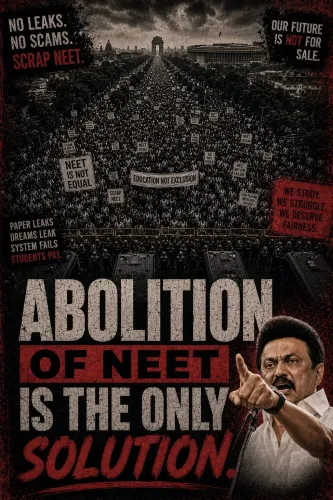
DMK president M. K. Stalin on 25 July 2026 hailed youth-led protests against NEET, comparing them to the farmer agitation that forced repeal of the farm laws, and pledged the medical entrance exam would be abolished.
Key Takeaways
Stalin congratulated Indian youth on 25 July 2026 for protests against NEET held across the country, both offline and online.
Stalin drew an explicit parallel with the farm laws repealed in December 2021 after sustained farmer protests, framing NEET abolition as the next achievable goal.
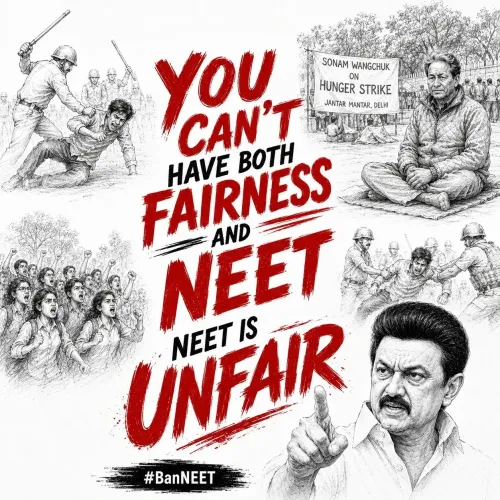
The post referenced Jantar Mantar , Sonam Wangchuk , and hashtags #CJP and #AbhijeetDipke , signalling a broad, cross-regional coalition.
The Tamil Nadu Legislative Assembly had passed a NEET exemption bill in September 2021 , but it did not receive presidential assent.
The DMK has challenged NEET in the Supreme Court multiple times, arguing it disadvantages state-board and rural students.
Any fresh Union government response or Supreme Court hearings on NEET exemptions will be closely watched in the coming weeks.
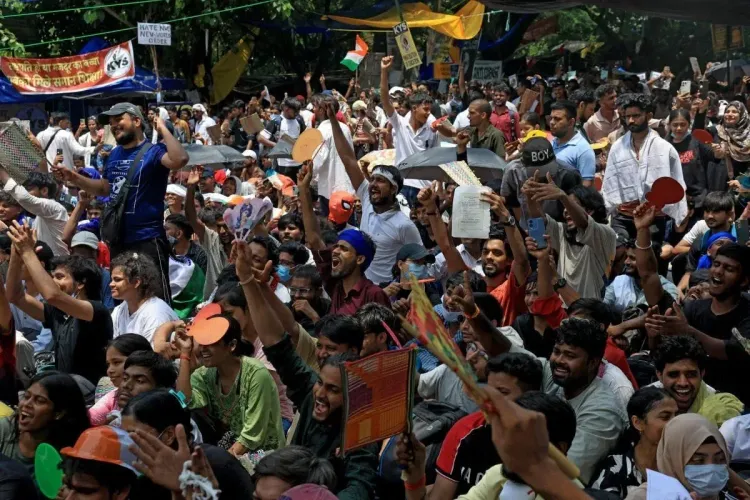
DMK president M. K. Stalin on Saturday, 25 July 2026 congratulated Indian youth for staging protests across the country — both offline and online — against NEET, drawing an explicit parallel with the farmer protests that forced the repeal of three central farm laws in December 2021, and pledging that the examination would similarly be abolished.
Context
In his post, Stalin wrote: 'The farmers of India did it first. The youth have done it today.' He credited sustained mass mobilisation — referencing Jantar Mantar in New Delhi as a focal protest site — with making a 'victory' possible, though the precise policy outcome he alludes to was not specified in the post. The hashtags #CJP, #AbhijeetDipke, and #SonamWangchuk signal solidarity with individuals and organisations associated with the broader movement.
Sonam Wangchuk, the Ladakh-based engineer and activist, has previously led high-profile protests at Jantar Mantar on issues of federalism and climate. His inclusion in Stalin's post underlines the cross-regional character of the anti-NEET coalition that has formed around student and civil-society groups.
Policy Backdrop
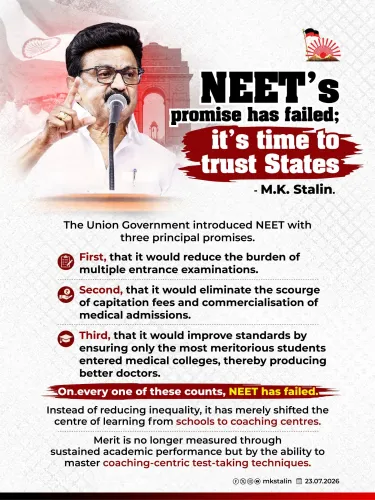
The National Eligibility cum Entrance Test (NEET) has been a flashpoint between the Union government and several state governments since its nationwide rollout by the National Testing Agency in 2016. Critics, led prominently by the DMK, argue that the uniform examination disadvantages students from state boards, rural backgrounds, and vernacular-medium schools.
The Tamil Nadu Legislative Assembly passed a bill in September 2021 seeking an exemption from NEET for the state; the bill did not receive presidential assent. The DMK government has also mounted repeated legal challenges in the Supreme Court, framing NEET opposition as both a social-justice and a federalism issue. Stalin's invocation of the farm-law repeal is a deliberate rhetorical move: those three agricultural laws, enacted in 2020, were withdrawn by the Union government in December 2021 after more than a year of sustained farmer protests centred on Delhi's borders and Jantar Mantar.
Stakeholders and Impact
The primary stakeholders are medical aspirants — particularly those from rural districts, state-board schools, and first-generation college-going families — who have long contended that NEET's syllabus alignment with CBSE creates a structural disadvantage. State education departments in southern and northeastern states have echoed these concerns, arguing that centralised testing erodes their constitutional domain over education.
Regional parties across the political spectrum have periodically united on the NEET question, making it one of the more durable centre-state fault lines in Indian education policy. Stalin's statement, arriving on the same day as the youth protests, is likely to reinvigorate calls in Parliament and state assemblies for a legislative or judicial resolution.
What's Next
Observers will watch for any fresh Union government response, new Supreme Court hearings on pending NEET exemption petitions, and the shape of medical admission calendars for 2026-27 across states. If the 'victory' alluded to in Stalin's post reflects a concrete policy concession, it could accelerate demands from other states for similar carve-outs. Stalin's vow — 'we shall ensure that NEET is also abolished' — sets a clear political benchmark against which the DMK and its allies will be measured in the months ahead.
Point of View
Amplified by the inclusion of Sonam Wangchuk and Jantar Mantar, suggests a deliberate effort to broaden the anti-NEET coalition beyond Tamil Nadu's borders. If a concrete policy concession did occur on or around 25 July 2026, this post will mark the moment regional parties claimed ownership of the outcome ahead of any electoral cycle.
NationPress
25 Jul 2026
Frequently Asked Questions
What is NEET and why do parties like DMK oppose it?
NEET, or the National Eligibility cum Entrance Test, is the uniform medical entrance examination conducted by the National Testing Agency since 2016. Parties like the DMK oppose it on the grounds that its CBSE-aligned syllabus disadvantages students from state boards, rural areas, and vernacular-medium schools, and that it encroaches on states' constitutional authority over education.
What did M. K. Stalin say about NEET on 25 July 2026?
Stalin congratulated Indian youth for staging protests against NEET across the country on 25 July 2026, compared the movement to the farmer protests that led to the repeal of farm laws in December 2021, and pledged that NEET would similarly be abolished.
What is the connection between the farm law repeal and NEET protests?
The three central farm laws enacted in 2020 were repealed by the Union government in December 2021 after sustained farmer protests. Stalin and other regional leaders cite this as proof that mass mobilisation can force a policy reversal, using it as a template for the anti-NEET campaign.
Has Tamil Nadu tried to get an exemption from NEET before?
Yes. The Tamil Nadu Legislative Assembly passed a bill in September 2021 seeking a state exemption from NEET, but the bill did not receive presidential assent. The DMK government has also filed multiple petitions in the Supreme Court challenging the examination.
Who is Sonam Wangchuk and why was he mentioned in Stalin's post?
Sonam Wangchuk is a Ladakhi engineer and activist known for leading protests on federalism and climate issues, including demonstrations at Jantar Mantar in New Delhi. His mention in Stalin's post highlights the cross-regional nature of the coalition that has formed around the anti-NEET movement.