Stalin Hits TVK Govt Over ₹700 Cr Chennai Heroin Bust
Synopsis
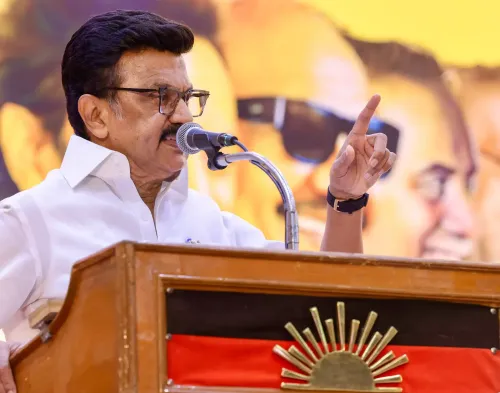
DMK president M. K. Stalin attacked Tamil Nadu's TVK government after the Directorate of Revenue Intelligence seized ₹700 crore worth of heroin in Chennai, demanding answers from Chief Minister Vijay and the state DGP on why state police have made no comparable arrests.
Key Takeaways
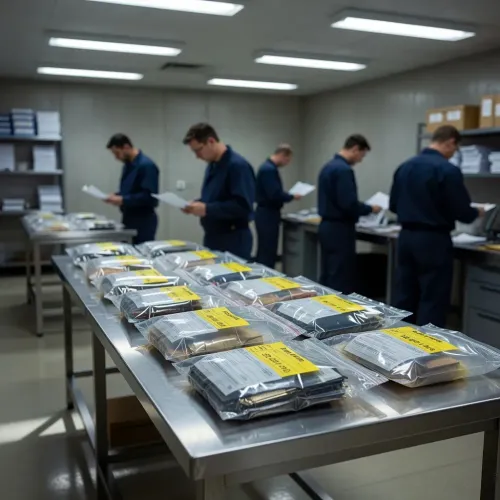
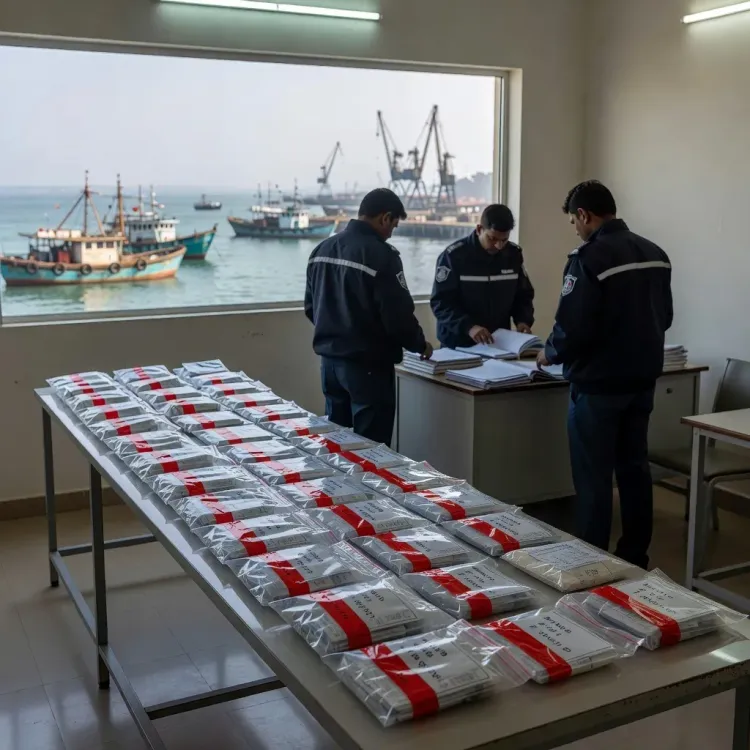
The Directorate of Revenue Intelligence (DRI) seized heroin worth ₹700 crore in Chennai , according to Stalin's post on 19 November 2026 .
A month earlier, the same DRI unit reportedly seized narcotics worth ₹270 crore in Nagapattinam , allegedly linked to a TVK functionary.
Stalin questioned whether Tamil Nadu Police cannot catch traffickers or are deliberately ignoring them.
Stalin challenged Chief Minister Vijay — who holds the Home portfolio — to publicly address the law-and-order failures he outlined.
He asked what the 65 special anti-narcotics task force units are doing given that only central agencies are making major seizures.
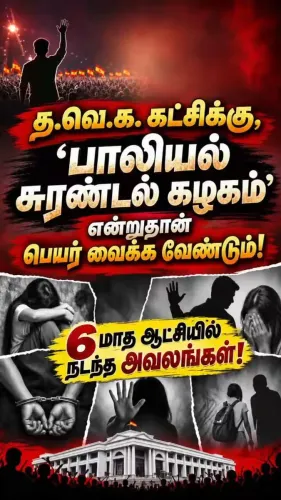
Stalin branded Tamil Nadu a 'Vice City' under TVK rule, citing custodial deaths, robberies, and sexual misconduct by party members alongside the drug busts.
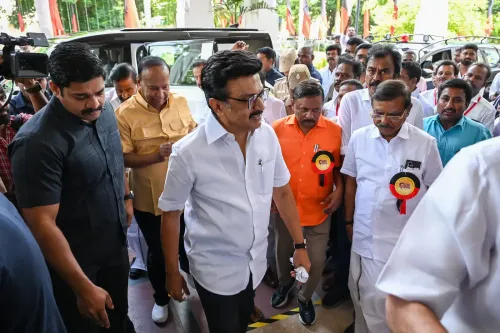
A ₹700 crore heroin seizure in Chennai — made not by Tamil Nadu Police but by a central intelligence agency — has handed DMK president M. K. Stalin a pointed political weapon on Thursday, 19 November 2026. Stalin's broadside frames the bust as proof that the state's own enforcement machinery is either incapable or complicit.
Central Agency Does the Job Tamil Nadu Police Didn't
The seizure was carried out by the Directorate of Revenue Intelligence (DRI), a central government body under the Ministry of Finance that operates independently of state police. Stalin draws a sharp line between the DRI's record and the state force's silence: 'They seize month after month in our state,' he writes, asking whether Tamil Nadu Police simply cannot catch these traffickers — 'பிடிக்க முடியவில்லையா அல்லது கண்டும் காணாமல் இருக்கிறார்களா?' (Cannot catch them, or are they deliberately looking away?)
He also points to a seizure the previous month in Nagapattinam, where the same DRI unit reportedly dismantled a trafficking network linked to a Thamizha Vettri Kazhagam (TVK) functionary referred to as 'Meth' Boobalan, allegedly involving ₹270 crore worth of narcotics. Two central-agency busts in two consecutive months, Stalin argues, make the absence of state-level action impossible to explain away.
'Vice City' Charge and the Silence of CM Vijay
Stalin escalates the attack into a sweeping indictment of the TVK administration, labelling Tamil Nadu a 'Vice City' under its watch. He lists a cascade of law-and-order failures he attributes to the ruling party: sexual assault incidents involving TVK members, large-scale robberies, and custodial deaths he describes as 'spine-chilling.' 'Tamil Nadu, once investors' first address, has become the favourite destination for meth and heroin traffickers,' he writes.
The sharpest line is reserved for Chief Minister Vijay, who holds the Home portfolio. Stalin notes that TVK members allegedly opened a dam illegally — but no one, it seems, can open the Chief Minister's mouth. He pointedly asks why the 65 special anti-narcotics task force units set up specifically to curb drug trafficking have produced no results comparable to the DRI's haul.
The DRI Track Record That Makes the Contrast Stick
The Directorate of Revenue Intelligence has long been the central government's primary instrument against smuggling and narcotics on India's coastline. Tamil Nadu's lengthy coastline — historically a conduit for maritime smuggling — has periodically generated high-value drug seizures that bypassed state police entirely, a pattern opposition leaders have repeatedly cited across administrations.
Stalin demands a public answer from the state's Director General of Police, who he notes offered crime statistics the previous day but has yet to address the heroin bust. 'A case has been registered' — the DGP's stock response, as Stalin characterises it — will not suffice this time, he insists.
With two massive central-agency seizures logged in as many months and no matching action from state enforcement, the pressure on Tamil Nadu's Home department to explain the gap — or close it — is now squarely on the record.
Point of View
He frames the TVK government's law-and-order record not as a policy debate but as a credibility crisis. The 'Vice City' label is designed to stick in public memory and neutralise any counter-narrative the ruling party might offer. For the TVK administration, the real danger is the structural argument — that the DRI's repeated hauls in Tamil Nadu imply either state police failure or, more damaging, selective inaction. Chief Minister Vijay's silence on Home affairs, repeatedly cited by Stalin, is fast becoming a political liability that no statistics-led press briefing can easily offset.
NationPress
19 Nov 2026
Frequently Asked Questions
What was seized in the Chennai heroin bust that MK Stalin mentioned?
According to Stalin's post, the Directorate of Revenue Intelligence seized heroin worth ₹700 crore in Chennai. The same DRI unit had reportedly seized narcotics worth ₹270 crore in Nagapattinam the previous month.
Why is MK Stalin criticising the TVK government over the drug bust?
Stalin argues that it is a central government agency — not Tamil Nadu Police — that keeps making major drug seizures in the state, raising questions about whether state enforcement is ineffective or deliberately inactive.
What is the Directorate of Revenue Intelligence (DRI)?
The DRI is a central government intelligence and enforcement agency under India's Ministry of Finance, responsible for tackling smuggling and narcotics trafficking. It operates independently of state police forces.
What is the 65 anti-narcotics task force MK Stalin mentioned?
Stalin refers to 65 special anti-narcotics rapid-action units that he says were set up specifically to curb drug trafficking in Tamil Nadu, questioning why they have not produced results comparable to the DRI's seizures.
Who is Chief Minister Vijay and why is Stalin demanding he speak?
Vijay is the Chief Minister of Tamil Nadu under the TVK government and holds the Home portfolio, making him directly responsible for state policing. Stalin is demanding he publicly address the law-and-order failures and explain the absence of state-led drug busts.