Stalin loses Kolathur seat, becomes second sitting Tamil Nadu CM to fall after Jayalalithaa
Synopsis
For the first time since Jayalalithaa's 1996 defeat, a sitting Tamil Nadu Chief Minister has lost his own Assembly seat. M.K. Stalin's fall in Kolathur to a former DMK functionary turned TVK candidate is not just a personal setback — it signals the rise of a credible new political force and a dramatic realignment in Tamil Nadu's political landscape.
Key Takeaways
Stalin lost the Kolathur constituency in the 2026 Tamil Nadu Assembly elections to V.S.
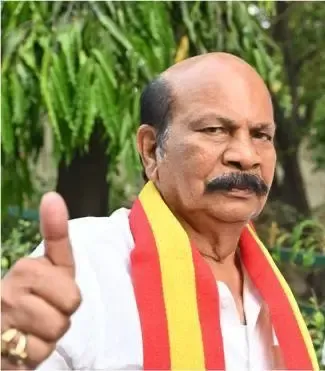
Babu of the Tamilaga Vettri Kazhagam (TVK) .
He is only the second sitting Chief Minister in Tamil Nadu's history to lose an Assembly election, after J.
Jayalalithaa in 1996 .
Jayalalithaa was defeated in the Bargur constituency by DMK's E.G.
Sugavanam — the last such instance before Monday's result.
Stalin had won Kolathur consecutively in 2011 , 2016 , and 2021 before the 2026 defeat.
The result marks a significant rise for the TVK as a major political force in Tamil Nadu.
Karunanidhi never lost an election he contested, making this defeat a historic moment for the DMK .
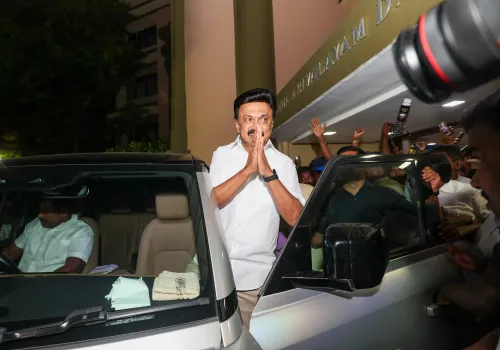
Tamil Nadu Chief Minister and Dravida Munnetra Kazhagam (DMK) president M.K. Stalin on Monday, 4 May 2026, became only the second sitting Chief Minister in the state's history to lose an Assembly election, after J. Jayalalithaa, following his defeat in the Kolathur constituency. The loss, delivered by V.S. Babu of the Tamilaga Vettri Kazhagam (TVK), marks one of the most consequential results of the 2026 Tamil Nadu Assembly elections.
The Defeat and Its Historic Significance
Stalin was unseated by V.S. Babu, a former DMK functionary who had switched political allegiance to the TVK. The last time a sitting Tamil Nadu Chief Minister lost an Assembly seat was in 1996, when J. Jayalalithaa was defeated in the Bargur constituency by the DMK's E.G. Sugavanam — a gap of three decades. Stalin's defeat thus ends a long-standing pattern in which incumbent Chief Ministers in Tamil Nadu reliably held their seats through successive elections.
Stalin's Four-Decade Electoral Journey
Stalin's legislative career stretches over four decades, marked by early setbacks before a long run of dominance. He made his electoral debut in 1984 from the Thousand Lights constituency, losing that first contest. He returned to win from the same seat in 1989, before suffering another defeat in 1991. He then strung together three consecutive victories from Thousand Lights between 1996 and 2006.
Following constituency delimitation, Stalin shifted to Kolathur in 2011 and won the seat in 2011, 2016, and 2021 — building a formidable personal stronghold. His defeat in 2026, despite that consistent track record, signals a significant erosion of his individual electoral brand.
Administrative Record and DMK Leadership
Beyond the legislature, Stalin has held several key positions. He served as Chennai's first directly elected Mayor in 1996 and launched the 'Singara Chennai' initiative, aimed at modernising the city's civic infrastructure. He later held the portfolios of Rural Development and Local Administration in 2006.
After the passing of his father and DMK patriarch M. Karunanidhi in 2018, Stalin assumed the party presidency and led the DMK back to power in the 2021 Assembly elections, becoming Chief Minister. Notably, Karunanidhi had maintained an extraordinary electoral record — winning every election he contested over several decades — making Stalin's 2026 defeat a particularly symbolic moment in the party's history.
Rise of TVK and a Shifting Political Landscape
The outcome is widely being viewed as evidence of the Tamilaga Vettri Kazhagam's emergence as a major political force in Tamil Nadu. The TVK, which drew several former DMK functionaries into its fold, appears to have made decisive inroads in constituencies that were once considered DMK bastions. This comes amid broader questions about anti-incumbency against the Stalin government and the consolidation of a credible third force in state politics.
Whether the DMK can regroup and retain governmental power despite its president's personal defeat will be the defining political question in the days ahead.
Point of View
That same dynamic appears to have turned against it. The TVK's ability to field and win with a former DMK insider in Stalin's own constituency suggests the party's grassroots networks are fraying at the edges. The deeper question is whether the DMK can hold government — if it has won enough seats elsewhere — without its president holding a legislative seat, and how long that constitutional and political tension can be sustained.
NationPress
21 Sept 2026
Frequently Asked Questions
Why is M.K. Stalin's defeat in Kolathur historically significant?
Stalin's loss makes him only the second sitting Chief Minister in Tamil Nadu's history to lose an Assembly election, after J. Jayalalithaa was defeated in the Bargur constituency in 1996. It ends a three-decade pattern of incumbent CMs retaining their seats.
Who defeated M.K. Stalin in Kolathur?
V.S. Babu of the Tamilaga Vettri Kazhagam (TVK) defeated Stalin in the Kolathur constituency during the 2026 Tamil Nadu Assembly elections. Babu is a former DMK functionary who had switched allegiance to the TVK.
When was the last time a sitting Tamil Nadu CM lost an election?
The last such instance was in 1996, when then Chief Minister J. Jayalalithaa lost the Bargur constituency to DMK's E.G. Sugavanam. That was nearly 30 years before Stalin's 2026 defeat.
What is M.K. Stalin's electoral history?
Stalin debuted in 1984 from Thousand Lights and lost, then won in 1989, lost again in 1991, and won three consecutive terms from 1996 to 2006. After delimitation, he shifted to Kolathur and won in 2011, 2016, and 2021 before losing in 2026.
What does this result mean for the DMK and the TVK?
The result signals the rise of the Tamilaga Vettri Kazhagam as a major political force in Tamil Nadu, capable of defeating the DMK president in his own stronghold. For the DMK, it raises urgent questions about anti-incumbency and organisational resilience heading into the post-election period.