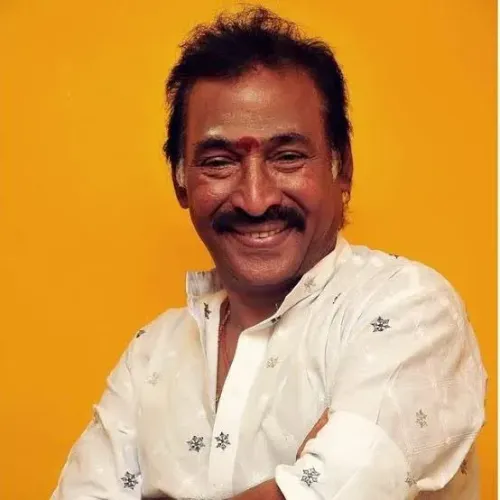
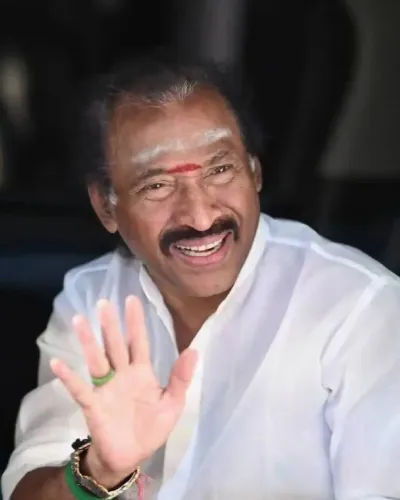
Stalin mourns composer Deva, Tamil cinema's 'Theniisaithendral'
Synopsis
DMK president M. K. Stalin mourned the passing of Tamil film composer Deva, celebrating his pioneering role in bringing Gaana music to mainstream cinema, his era-defining Rajinikanth collaborations, and the title 'Theniisaithendral' conferred by Kalaignar Karunanidhi.
Key Takeaways
Stalin expressed shock at the death of Tamil composer Deva on 17 October 2026 .
Deva was titled 'Theniisaithendral' (sweet-melody breeze of the south) by former Chief Minister Kalaignar Karunanidhi .
Deva is credited with mainstreaming Gaana folk music in Tamil cinema, making the genre nearly synonymous with his name.
His collaborations with Rajinikanth on Annamalai , Baasha and Arunachalam remain among the most celebrated in Tamil film music history.
He also composed for Kamal Haasan films including Avvai Shanmugam and Panchathanthiram , and for Vijayakanth .
Stalin extended condolences to Deva's son and fellow composer Sreekandh Deva , brother Murali , the family and fans.
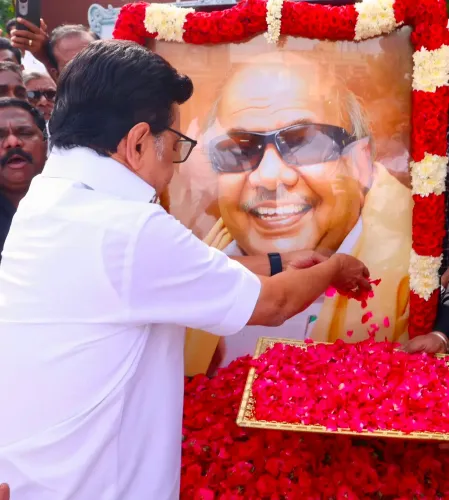
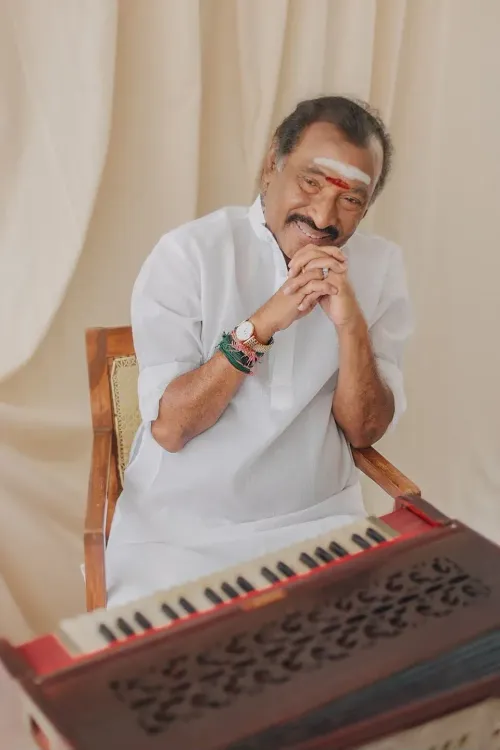
A gentle breeze has stilled. DMK president M. K. Stalin expressed deep shock on Saturday, 17 October 2026, at the passing of celebrated Tamil film music composer Deva — the man former Chief Minister Kalaignar Karunanidhi once crowned 'Theniisaithendral', meaning 'sweet-melody breeze of the south' — and offered heartfelt condolences to the composer's family and the Tamil film world.
From a village to the vanguard of Tamil cinema's mass sound
Stalin's tribute traces the arc of a remarkable life: a composer who arrived in Chennai from a modest rural background and rose to become one of Tamil cinema's most sought-after names from the 1980s onward. What set Deva apart, Stalin writes, was his near-singular role in carrying Gaana — the raw, street-born folk-music tradition of north Chennai — into mainstream Tamil cinema. 'If people think of Gaana, they think of Deva,' Stalin notes, and few would argue.
The composer navigated a fiercely competitive era without losing his footing. On one side stood the towering Ilaiyaraaja; on the other, the global phenomenon A. R. Rahman. Deva carved a third lane entirely his own, delivering mass anthems and lush melodies in equal measure. Tamil popular music history, Stalin says plainly, simply cannot be written without dedicating multiple chapters to Deva.
The Rajinikanth connection — and a title screen that lives on
Stalin lingers longest on Deva's partnership with Superstar Rajinikanth. The films Annamalai, Baasha and Arunachalam produced music that became inseparable from Rajinikanth's screen persona — and Stalin points to a telling detail: even today, Rajinikanth's name still appears on screen accompanied by Deva's music from those films, a quiet testament to how completely their collaboration defined an era. Stalin's tribute also salutes Aattokkaaran, noting that there is 'probably not an auto stand in Tamil Nadu' that has not resounded with that song.
Beyond Rajinikanth, Deva left his mark on the comedy films of Kamal Haasan — Avvai Shanmugam and Panchathanthiram — and on the hits of Captain Vijayakanth, including Pasamulla Pandiyare. For the people of Madurai, Deva's devotional number 'Vaararoo Azhagar Vaararoo' has become so woven into the Chittirai festival that imagining the celebration without it is, Stalin writes, simply impossible.
Melodies that outlast monuments — and a title earned, not given
Stalin is careful to rescue Deva from the 'mass composer' label alone. Films like Aasai, Kaadhal Kottai, Kann Ethire Thoandrinaal and Kaalam Ellaam Kaadhal Vaazhga prove a composer equally at home in tenderness as in thunder. It was the late Kalaignar Karunanidhi who formalised this reading when he bestowed the title 'Theniisaithendral' — a title Stalin clearly believes Deva wore with complete grace.
Stalin also notes that Deva brought no ego to his later years: he sang willingly on the compositions of younger artists, including Anirudh, and continued to fill concert grounds across Tamil Nadu right until recently. That openness, Stalin suggests, was as much a part of the man as the music.
Condolences to Sreekandh Deva and the family
Stalin closes by offering his 'deepest condolences and comfort' to Deva's son, composer Sreekandh Deva, his brother Murali, the wider family, colleagues across the film industry, and the composer's vast base of fans. 'Even if Deva has departed this earth,' Stalin writes, 'the sweet-melody breeze he created will never stop blowing.'
Point of View
Film-by-film tribute reflects a long-standing DMK tradition of treating Tamil cinema's cultural figures as integral to the party's Dravidian identity project. By invoking Kalaignar Karunanidhi's original conferral of the 'Theniisaithendral' title, Stalin subtly reinforces the DMK's custodianship of Tamil cultural heritage. The tribute also signals to the Tamil film industry — a powerful soft-power constituency — that the party's respect for its veterans remains personal and detailed, not merely ceremonial. Coming from the party currently in power in Tamil Nadu, the homage could also set the tone for any state-level honours that follow.
NationPress
17 Oct 2026
Frequently Asked Questions
Who was Tamil composer Deva?
Deva was a prominent Tamil film music composer who rose from a rural background to become one of Tamil cinema's leading names from the 1980s, best known for popularising Gaana music and for his collaborations with Superstar Rajinikanth.
What does 'Theniisaithendral' mean and who gave it to Deva?
'Theniisaithendral' means 'sweet-melody breeze of the south' in Tamil, a title conferred on Deva by former Tamil Nadu Chief Minister Kalaignar Karunanidhi in recognition of his melodic contributions to Tamil film music.
Which Rajinikanth films did Deva compose music for?
Deva composed music for Rajinikanth's blockbusters Annamalai, Baasha and Arunachalam, films whose songs remain closely associated with Rajinikanth's screen identity even today.
Why did Stalin pay tribute to composer Deva?
DMK president M. K. Stalin posted a detailed tribute on X after Deva's death, expressing personal shock, celebrating the composer's legacy across mass songs and melodies, and offering condolences to the family.
Who is Sreekandh Deva?
Sreekandh Deva is composer Deva's son and himself a film music composer; M. K. Stalin specifically named him while extending condolences to the bereaved family.