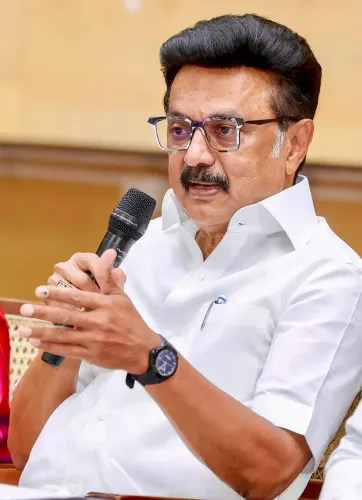
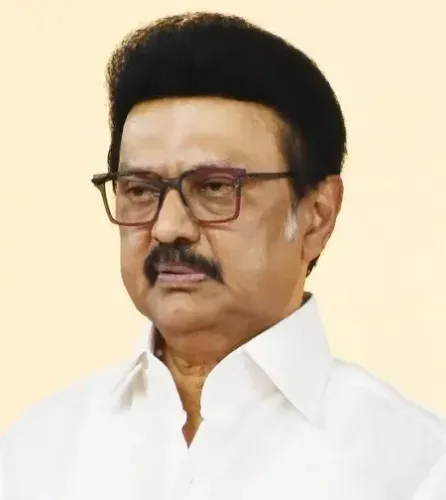
Stalin demands CEC Gyanesh Kumar's removal, end to SIR, release of detained leaders
Synopsis
DMK chief M.K. Stalin has escalated the opposition's battle over the Special Intensive Revision of electoral rolls, publicly demanding CEC Gyanesh Kumar's removal and calling the Centre's crackdown on protesters an 'undeclared Emergency' — with former chief ministers and student leaders reportedly among those detained.
Key Takeaways
Stalin on 10 October demanded the removal of Chief Election Commissioner Gyanesh Kumar via a post on X .
Stalin called for the withdrawal of the Special Intensive Revision (SIR) of electoral rolls and the immediate release of detained political leaders and activists.
He named former chief ministers Pinarayi Vijayan , Arvind Kejriwal , Mamata Banerjee , and Manik Sarkar , along with CPI(M) general secretary M.A.
Baby , as among those detained.
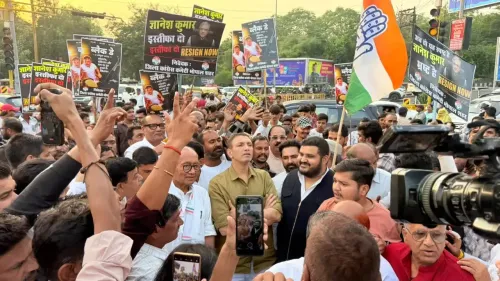
Stalin described the situation as an 'undeclared Emergency' and alleged that barricades and internet shutdowns in Delhi were being used to suppress dissent.
He also accused the TVK government in Tamil Nadu of detaining CPI(M) state secretary Shanmugam and party workers to demonstrate loyalty to the Centre.
The Election Commission of India had not issued a formal public response to Stalin's allegations at the time of reporting.
Dravida Munnetra Kazhagam (DMK) president M.K. Stalin on Saturday, 10 October issued a sharp set of demands, calling for the removal of Chief Election Commissioner (CEC) Gyanesh Kumar, the withdrawal of the Special Intensive Revision (SIR) of electoral rolls, and the immediate release of political leaders and activists detained during protests across the country. Stalin made his position public through a strongly worded post on X, framing the unfolding situation as an attack on democratic rights.
Stalin's Core Allegations
In his post, Stalin accused the Bharatiya Janata Party (BJP)-led Union government of suppressing dissent and described the current political climate as an 'undeclared Emergency'. He alleged that those who were defending democracy were being imprisoned, while those he accused of undermining it continued to enjoy government protection.
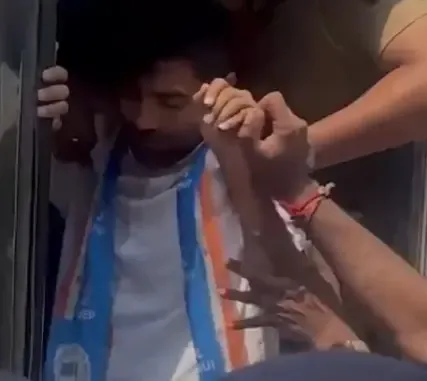
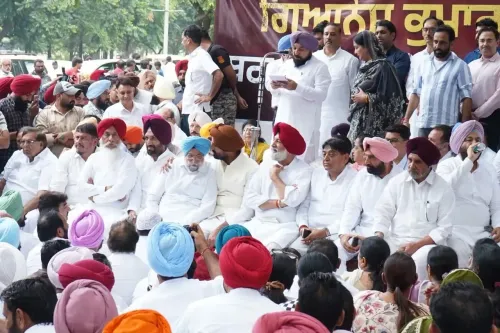
Stalin specifically named former chief ministers Pinarayi Vijayan, Arvind Kejriwal, Mamata Banerjee, and Manik Sarkar, along with Communist Party of India (Marxist) [CPI(M)] general secretary M.A. Baby and leaders of several student organisations, as individuals who had been detained while campaigning to protect voting rights.
Questions Over CEC's Security and Conduct
Contrasting the treatment of detained opposition figures with the security afforded to the election chief, Stalin questioned why Kumar continued to receive Z-plus protection. He also alleged, without providing specific case details in his post, that Kumar was facing proceedings related to sedition. Stalin maintained that the alleged political motives behind the SIR exercise had been exposed and could no longer be concealed.
Notably, the SIR has drawn sustained opposition from multiple parties who argue it could disenfranchise voters, particularly marginalised communities. This is among the most high-profile flashpoints between the Election Commission of India (ECI) and the opposition in recent memory.
Criticism Directed at Tamil Nadu's TVK Government
Stalin's criticism extended beyond the Centre. He accused the TVK government in Tamil Nadu of seeking to please its 'masters in Delhi' by acting against protesters opposing the electoral roll revision. He alleged that CPI(M) state secretary Shanmugam and other party workers had been detained in Tamil Nadu for protesting against SIR and demanding Kumar's resignation. Stalin described the state government's conduct as a demonstration of loyalty to the Union government rather than a defence of citizens' rights.
Barricades, Internet Shutdowns, and a Broader Warning
Stalin warned that barricades and internet shutdowns in Delhi would not silence the protests. He questioned how long the Union government could keep, in his words, 'an entire country under siege.' His post linked detentions in both Delhi and Tamil Nadu to wider concerns over electoral integrity, presenting the agitation as a nationwide campaign to defend democratic processes.
This comes amid a broader pattern of opposition parties coordinating resistance to the SIR, with protests reported in multiple states. The scale of the political mobilisation — spanning regional heavyweights from Kerala, West Bengal, Delhi, and Tripura — signals that the controversy is unlikely to be contained at the state level.
Key Demands and What Comes Next
Stalin's three central demands are: the immediate release of all detainees, the withdrawal of the SIR exercise, and the removal of CEC Gyanesh Kumar from office. He also called for accountability from those he accused of betraying democratic rights. The Election Commission of India has not, according to available reports, issued a formal public response to Stalin's specific allegations at the time of publication. How the Centre and the ECI respond to the mounting opposition pressure will be closely watched in the days ahead.
Point of View
West Bengal, Delhi, and Tripura as fellow detainees in the same cause, it signals a rare cross-regional opposition convergence. The SIR has handed the opposition a unifying grievance at a moment when it badly needed one. What mainstream coverage underplays is the intra-state dimension: Stalin's attack on the TVK government in Tamil Nadu suggests the political fault lines here run deeper than Centre versus opposition — they cut through state-level loyalties too. The Election Commission's silence in the face of named sedition allegations against its own chief is itself a story that demands scrutiny.
NationPress
10 Oct 2026
Frequently Asked Questions
What is the Special Intensive Revision (SIR) of electoral rolls?
The Special Intensive Revision (SIR) is an exercise conducted by the Election Commission of India to update and revise voter rolls. Opposition parties, including the DMK, have alleged that the process is politically motivated and could disenfranchise voters, particularly from marginalised communities, prompting widespread protests.
Why is M.K. Stalin demanding the removal of CEC Gyanesh Kumar?
Stalin alleges that Chief Election Commissioner Gyanesh Kumar is overseeing a politically motivated SIR exercise designed to benefit the ruling BJP. He also claimed, without providing case details, that Kumar faces sedition-related proceedings, and questioned why he continues to receive Z-plus security while opposition leaders are detained.
Which leaders were reportedly detained during the SIR protests?
According to Stalin's post, former chief ministers Pinarayi Vijayan, Arvind Kejriwal, Mamata Banerjee, and Manik Sarkar, CPI(M) general secretary M.A. Baby, and leaders of several student organisations were detained while campaigning against the SIR. In Tamil Nadu, CPI(M) state secretary Shanmugam and party workers were also reportedly taken into custody.
What did Stalin mean by calling the situation an 'undeclared Emergency'?
Stalin used the phrase 'undeclared Emergency' to draw a parallel with India's 1975–77 Emergency period, when civil liberties were suspended. He alleged that the BJP-led Centre was suppressing democratic dissent through detentions, internet shutdowns, and barricades — particularly in Delhi — without formally declaring a state of emergency.
What is Stalin's position on the TVK government in Tamil Nadu?
Stalin accused the TVK government in Tamil Nadu of acting against protesters to demonstrate loyalty to the Union government in Delhi, rather than defending citizens' democratic rights. He alleged that CPI(M) state secretary Shanmugam and other party workers were detained in Tamil Nadu on the TVK government's watch.