Stalin Wishes DMK Functionary Shanmugam on Birthday
Synopsis
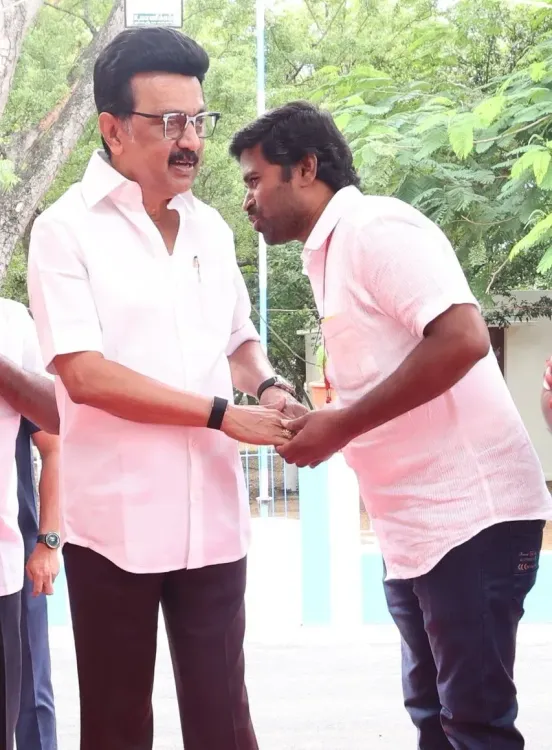
DMK president M. K. Stalin on June 19, 2026, publicly wished party functionary Shanmugam on his birthday via X, praising his devotion to the party and its principles — a reflection of the DMK's long-standing culture of personalised cadre recognition.
Key Takeaways
Stalin posted birthday greetings for party functionary Shanmugam (@ShanmugamChin10) on June 19, 2026 .
Stalin praised Shanmugam for his devotion to the party and firm adherence to its principles .
The post was written in Tamil and addressed Shanmugam as thambi (younger brother), signalling personal affection within the party hierarchy.
Such public acknowledgements are a consistent DMK practice to boost cadre morale and reinforce internal loyalty.
The DMK , founded in 1949 , has maintained this culture of personalised recognition since its founding era.
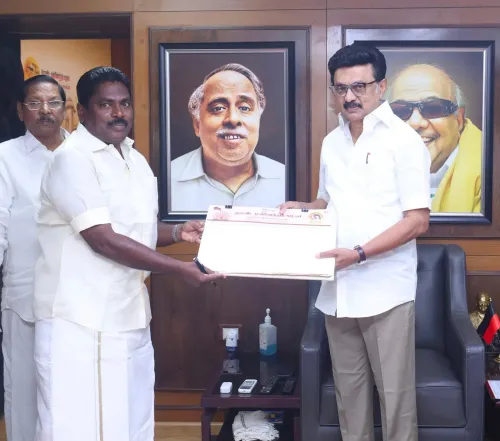
DMK president M. K. Stalin on Friday, June 19, 2026, extended public birthday greetings to party functionary Shanmugam (known on X as @ShanmugamChin10), praising his dedication to the organisation and its principles.
In his post in Tamil, Stalin wrote: 'கழகத்தின் மீதான பற்றும் - கொள்கைப் பிடிப்பும் கொண்டு செயலாற்றும் தம்பி @ShanmugamChin10 அவர்களுக்குப் பிறந்தநாள் வாழ்த்துகள்!' — translated as: 'Birthday wishes to my dear brother Shanmugam, who works with devotion to the party and a firm grip on its principles!'
Context
The greeting reflects a well-established practice within the Dravida Munnetra Kazhagam (DMK), where senior leaders publicly acknowledge the birthdays of loyal cadres and functionaries on social media. Stalin's choice of the word thambi (younger brother) signals personal warmth and hierarchical affection within the party structure.
The post specifically highlights two qualities in Shanmugam: attachment to the party (kazhagattin meedhana patrum) and adherence to its ideology (kollaip pidipu). These are considered cardinal virtues within the DMK's organisational culture.
Policy Backdrop
The DMK, founded in 1949 by C. N. Annadurai, has long maintained a culture of personalised recognition for cadre loyalty, a tradition that dates back to its founding figures and continues under Stalin's leadership. The party places significant emphasis on ideological consistency — rooted in Dravidian social justice, rationalism, and federalism — as a benchmark for internal recognition.
Public acknowledgements by top leaders serve a dual function: they boost individual morale and reinforce the party's internal hierarchy at a time when Tamil Nadu politics remains intensely competitive ahead of future assembly elections.
Stakeholders and Impact
DMK cadres across Tamil Nadu closely follow such public gestures by Stalin, who has used social media systematically to maintain direct communication with party workers at every level. A birthday greeting from the party president carries significant symbolic weight within the organisation's rank and file.
For mid-level functionaries in particular, such public recognition from Stalin can elevate their standing within district and local party units, reinforcing loyalty and active participation in organisational work.
What's Next
Similar recognitions from Stalin are expected to continue as the DMK keeps its cadre network engaged ahead of electoral cycles in Tamil Nadu. Observers of Dravidian politics note that these gestures, while ceremonial in nature, are a deliberate and consistent tool of party management that distinguishes the DMK's organisational style from many of its rivals.
Point of View
And Stalin has amplified this practice onto social media with notable consistency. In a party where ideological loyalty is a stated organisational value, calling out a functionary's 'grip on principles' is a coded signal of trust that resonates deeply within the rank and file. This pattern of micro-recognition helps the DMK maintain grassroots cohesion, a structural advantage in Tamil Nadu's competitive Dravidian political landscape. As elections approach, such gestures are likely to intensify as the party works to keep its network energised.
NationPress
19 Sept 2026
Frequently Asked Questions
Why did MK Stalin wish Shanmugam on his birthday on X?
Stalin wished Shanmugam on his birthday on June 19, 2026, publicly praising his loyalty to the DMK and commitment to its principles, as part of the party's established culture of recognising dedicated cadres.
Who is Shanmugam that MK Stalin wished on X?
Shanmugam, known on X as @ShanmugamChin10, is a DMK party functionary whom Stalin described as working with devotion to the organisation and firm adherence to its ideology. Specific details of his position are not publicly confirmed.
What did MK Stalin write in his birthday post in Tamil?
Stalin wrote in Tamil that Shanmugam works with 'devotion to the party and a firm grip on its principles,' and addressed him as 'thambi' meaning younger brother, before extending birthday wishes.
Why does the DMK publicly celebrate cadre birthdays on social media?
The DMK has a long-standing culture of personalised recognition for loyal workers, and public birthday greetings from senior leaders boost cadre morale and reinforce internal hierarchy, a practice that has been extended to social media under Stalin's leadership.
What does 'thambi' mean in MK Stalin's birthday post?
'Thambi' is a Tamil word meaning 'younger brother.' Stalin's use of the term in the post signals personal warmth and hierarchical affection toward the functionary within the party's organisational culture.