Can Startups Propel India's Nuclear Program through Technology Advancements?
Synopsis
Startups hold a vital position in shaping India's nuclear future through innovative technology development. Dr. Anil Kakodkar emphasizes their importance in creating a self-reliant program, focusing on micro-reactors and component supply. This collaboration between startups and large enterprises can transform India's energy landscape, making it more sustainable and efficient.
Key Takeaways
Startups can enhance India's self-reliance in nuclear technology.
Investment in micro-reactors can address energy needs in remote areas.
Safety in nuclear technologies is paramount for public confidence.
Collaboration between startups and established firms is essential.
Advancements in reactor designs, including thorium and molten salt, are crucial.
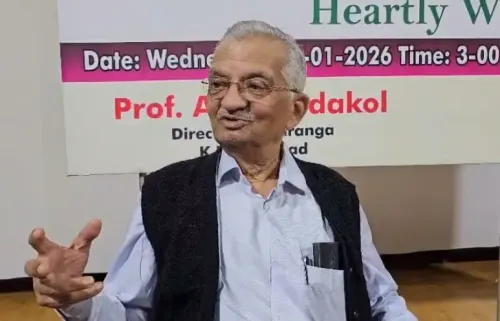
New Delhi, Jan 15 (NationPress) Startups have the potential to significantly contribute to a self-sufficient nuclear program by focusing on technology development, stated Dr. Anil Kakodkar, former chairman of the Atomic Energy Commission, on Thursday.
Kakodkar conveyed to IANS that India’s nuclear initiative has always been built on the foundation of self-reliance.
In spite of past technology embargoes, India has successfully developed advanced reactor systems that now operate with impressive efficiency.
Kakodkar elaborated that nuclear reactors are substantial constructs. A 1,000-megawatt nuclear power plant demands an enormous financial commitment. With costs around Rs 20 crore per megawatt, a plant of this size necessitates an investment of approximately Rs 20,000 crore. Such a scale of funding is evidently beyond the capacity of a startup. However, a diverse range of contributors is essential.
“Startups can still play a crucial role, especially in technology development,” Kakodkar remarked.
“They can concentrate on smaller proof-of-principle systems, like micro-reactors with a capacity of about one megawatt. These systems are vital, provided they are exceptionally safe. Designs that are considered ‘walk-away safe’ can help eliminate the risk of devastating failures, akin to Chernobyl. This is an area where startups can make a significant impact,” the expert told IANS.
“Though these reactors won't resolve large grid-related challenges, they can cater to the energy demands of remote areas,” he noted.
Moreover, once their safety is validated, it will enhance public trust, which can facilitate other applications. “For instance, a large residential complex could require a couple of megawatts, which could be supplied by these systems,” Kakodkar added.
Another opportunity for startups lies in nuclear power projects that necessitate numerous components, which these companies can produce and provide.
“Thus, we require an ecosystem comprising extensive system-level initiatives and numerous startups that together can realize the envisioned self-sufficient program,” Kakodkar asserted, emphasizing the importance of developing fast reactors, thorium-based reactors, and molten salt reactors. There remains considerable advancement needed in all these sectors, and startups can play a pivotal role in this journey,” the expert concluded.
Point of View
It is evident that the intersection of innovative startups and established nuclear technology is crucial for India's energy independence. The emphasis on safety and self-reliance aligns with national interests, and fostering this ecosystem can significantly enhance the country's energy landscape.
NationPress
30 Sept 2026
Frequently Asked Questions
How can startups contribute to India's nuclear program?
Startups can focus on developing safe, small-scale nuclear technologies, such as micro-reactors, which can enhance energy access in remote areas.
What is the investment required for a nuclear power plant?
A 1,000-megawatt nuclear power plant typically requires around Rs 20,000 crore, making it challenging for startups to handle alone.
What are 'walk-away safe' reactors?
'Walk-away safe' reactors are designed to eliminate the risk of catastrophic failures, ensuring safety and reliability in nuclear energy production.