How Did Subramania Bharati Illuminate India’s Cultural and National Consciousness?
Click to start listening
Synopsis
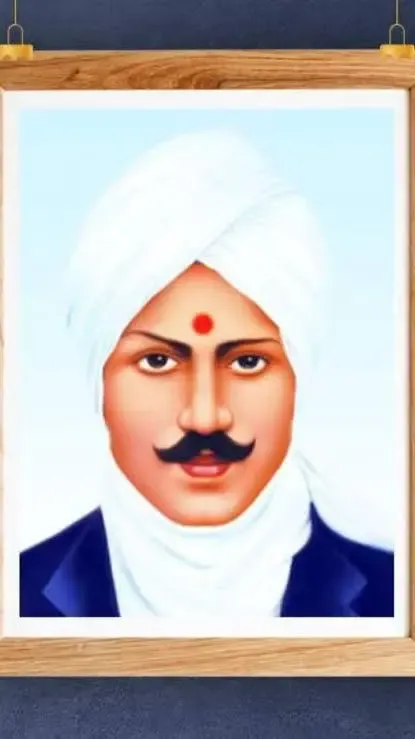
Prime Minister Modi's tribute to Mahakavi Subramania Bharati highlights his lasting influence on India's cultural and national consciousness. Bharati's powerful poetry and advocacy for equality continue to inspire and resonate today. Discover how his vision for an inclusive society and respect for all languages shaped India's literary landscape.
Key Takeaways
- Mahakavi Subramania Bharati was a multifaceted personality who contributed significantly to Tamil literature.
- He advocated for social justice, equality, and the eradication of the caste system.
- Bharati emphasized the importance of language and culture in shaping national identity.
- His vision for an inclusive society continues to inspire contemporary movements.
- Bharati was a pioneering voice for women's rights and education.
New Delhi, Dec 11 (NationPress) Prime Minister Narendra Modi honored Mahakavi Subramania Bharati on his birth anniversary, noting that his poetry sparked bravery and his insights had the potential to create a profound impact on people's minds.
On the social media platform X, PM Modi stated, “Honoring Mahakavi Subramania Bharati on his birth anniversary. His poetry sparked bravery and his insights have the ability to create lasting impressions on countless individuals.”
“He illuminated India’s cultural and national consciousness. He dedicated his efforts to fostering a society characterized by justice and inclusion. His contributions to Tamil literature are unmatched,” he further elaborated in his post.
Subramania Bharati left a profound legacy across various fields, showcasing his diverse talents. As a representation of India’s multilingual essence, Bharati mastered 32 languages, including three foreign tongues. He penned remarkable poems and essays in English but took immense pride in his identity as a Tamil poet and journalist. He believed that Tamil, along with all Indian languages, held equal value to English.
Bharati encouraged Indians to embrace their rich heritage, emphasizing the crucial role of language and literature. While he was deeply proud of his Tamil identity, he also expressed profound respect for other languages, referring to Telugu as “Sundara Telugu.” He motivated people to take pride in being Bharatiyas, belonging to a land replete with ancient wisdom—which he famously described as “The glorious symbol (tilak) of the world, the Land of Bharat.”
He was a visionary advocating for freedom in the broadest sense. Not only did he participate in the freedom struggle against foreign dominion, but he also imagined an India devoid of hunger, gender inequality, untouchability, environmental degradation, and narrow-minded linguistic and religious dogma. This visionary perspective makes him significant even today.
Bharati was a strong proponent of dismantling the caste system. He held the belief that all beings are equal, and to demonstrate this principle, he performed the upanayanam for a young Dalit man, proclaiming him a Brahmin. In one of his verses, he wrote: “There is no caste system. It is a sin to categorize individuals based on caste, which implies that an educated person treats everyone equally, irrespective of caste.”
While he opposed colonial rule and the oppression of Indians by the British, Bharati respected foreigners who cherished and honored Bharat and its culture. One notable example is Margaret E. Noble, an Irish woman later called Sister Nivedita by Swami Vivekananda. She established a girls' school in Calcutta, instilling a sense of nationalism in her students and introducing the singing of Vande Mataram as a school prayer.
Bharati was a fierce champion of women's rights and their involvement in politics. He advocated for enhanced rights and education for women, maintaining that they should lead societal transformation in line with ancient Indian wisdom.
Point of View
It’s imperative to recognize the profound impact of Mahakavi Subramania Bharati on Indian society. His advocacy for equality and cultural pride continues to resonate in contemporary discussions, reminding us of the need for inclusivity and respect across all languages and communities. Bharati's legacy serves as a guiding light for current and future generations.
NationPress
13/12/2025
Frequently Asked Questions
What was Subramania Bharati's contribution to Tamil literature?
Subramania Bharati made unparalleled contributions to Tamil literature through his powerful poetry and essays, which emphasized themes of courage, equality, and cultural pride.
How did Bharati view the caste system?
Bharati opposed the caste system vehemently, believing in the equality of all individuals and advocating for a society free from caste-based discrimination.
What was Bharati's stance on women's rights?
Bharati was a staunch advocate for women's rights, emphasizing their crucial role in societal transformation and championing their education and political participation.
How did Bharati influence the independence movement?
Bharati actively participated in the freedom struggle against colonial rule, envisioning an India free from oppression and advocating for social justice.
What languages did Bharati speak?
Bharati was proficient in 32 languages, including three foreign languages, showcasing his multilingual prowess and deep respect for linguistic diversity.