Sugar prices to stay affordable this Dussehra and Diwali: ISMA
Synopsis
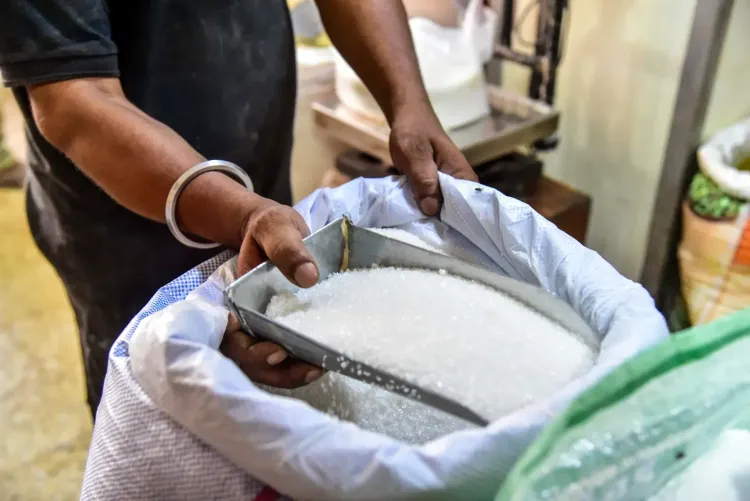
With Dussehra and Diwali weeks away, India's top sugar industry body says ex-mill prices have already fallen 25–30%, with the pan-India average now at ₹4,450 per quintal — and retail prices expected to follow. ISMA's Deepak Ballani says government and industry are jointly committed to keeping sugar affordable as festive demand peaks.
Key Takeaways
ISMA Director General Deepak Ballani confirmed on 24 September 2026 that government and industry are committed to affordable sugar prices during the festive season.
Ex-mill sugar prices have rationalised by approximately 25–30 per cent , with the pan-India average at ₹4,450 per quintal .
Retail prices have already begun moderating and are expected to decline further ahead of Dussehra and Diwali .
A time lag between ex-mill and retail price movements means full transmission to consumers may take several more weeks.
Domestic sugar supplies remain adequate, according to ISMA .
Indian Sugar and Bio-energy Manufacturers Association (ISMA) Director General Deepak Ballani on Thursday, 24 September 2026, assured consumers that both the government and the sugar industry are aligned on keeping sugar prices stable and affordable through the upcoming festive season, with Dussehra and Diwali approaching fast. Ballani said domestic supply levels remain adequate and price correction is already underway.
What the Industry Says
"Government and industry, we are committed to provide sugar at a very reasonable rate to the consumers, especially during the festival demand, festival season," Ballani said. He added that ensuring affordable availability during high-demand periods such as Dussehra and Diwali is a shared priority for both regulators and manufacturers.
Retail Prices Already Moderating
According to Ballani, retail sugar prices have begun to decline and are expected to fall further in the coming weeks. He noted, however, that there is a typical time lag between movements in wholesale ex-mill prices and what consumers eventually pay at the retail counter, as savings at the mill level take time to pass through the supply chain.
"It takes some time for the prices to reflect all the way down to the retail prices," he explained, adding that once market participants adjust to the lower cost environment, retail corrections tend to follow.
Ex-Mill Prices Down 25–30 Per Cent
Ex-mill sugar prices have already rationalised by approximately 25–30 per cent, with the pan-India average ex-mill price currently at around ₹4,450 per quintal. Ballani expressed confidence that retail prices will gradually align with this lower benchmark. This level of ex-mill correction, if fully transmitted, could meaningfully ease the household cost of sugar just as festive demand peaks.
Context and Broader Significance
Sugar is a critical input for sweets and confectionery during India's festive calendar, making price stability a politically and economically sensitive issue. The festive season — stretching from October through November — typically sees a sharp uptick in demand, which in past years has triggered retail price spikes. This comes amid a broader government focus on food inflation management, with the Centre having periodically intervened in commodity markets — from pulses to edible oils — to prevent price shocks around festivals. The ISMA's proactive messaging is notable as it attempts to anchor consumer expectations ahead of peak demand.
What to Watch Next
The pace at which ex-mill price gains transmit to retail outlets will be the key metric in the coming weeks. Analysts and industry observers will monitor whether the current ₹4,450 per quintal ex-mill average translates into lower shelf prices by Diwali. Any supply disruption — whether from logistics bottlenecks or hoarding — could delay the anticipated correction.
Point of View
But the gap between ex-mill corrections and retail reality is where consumer trust gets tested. A 25–30% drop in wholesale prices is significant — yet Indian consumers have repeatedly seen mill-level savings fail to reach the neighbourhood kirana store by the time festivals arrive. The government's track record of direct market intervention in pulses and edible oils suggests it has the toolkit to act if retail prices stay sticky. The real question is whether this verbal commitment translates into active monitoring of retail margins, or remains pre-festive optics.
NationPress
24 Sept 2026
Frequently Asked Questions
Will sugar prices fall before Diwali 2026?
According to ISMA Director General Deepak Ballani, retail sugar prices have already started moderating and are expected to decline further in the weeks ahead of Diwali. Ex-mill prices have corrected by 25–30%, and the retail market is expected to gradually reflect this.
What is the current ex-mill sugar price in India?
The pan-India average ex-mill sugar price is currently around ₹4,450 per quintal, according to ISMA. This represents a rationalisation of approximately 25–30 per cent from earlier levels.
Why is there a gap between ex-mill and retail sugar prices?
There is typically a time lag between movements in ex-mill (wholesale) prices and what consumers pay at retail outlets, as lower costs take time to pass through the supply chain. ISMA's Deepak Ballani acknowledged this lag and said retail prices will correct once market participants adjust to the new cost levels.
What is ISMA and why does its statement matter?
The Indian Sugar and Bio-energy Manufacturers Association (ISMA) is the apex body representing sugar mills across India. Its statements on pricing and supply carry significant weight because member mills collectively account for the bulk of domestic sugar production, making ISMA a key interlocutor between the industry and the government on price management.
How does the government manage sugar prices during festive seasons?
The Centre periodically intervenes in commodity markets — including through stock limits, export controls, and coordinated communication with industry bodies — to prevent price spikes during high-demand periods. ISMA's coordinated messaging ahead of Dussehra and Diwali is part of this broader price-stability framework.