CM Sukhu accuses Centre of cutting HP's forest grant since 1952
Synopsis
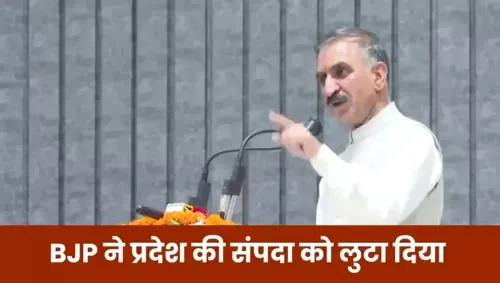
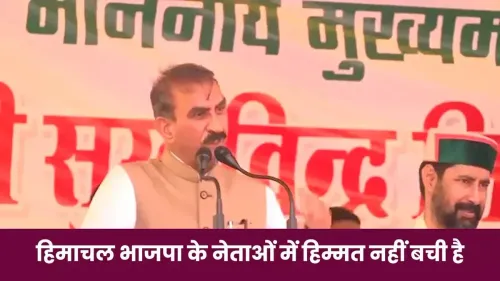
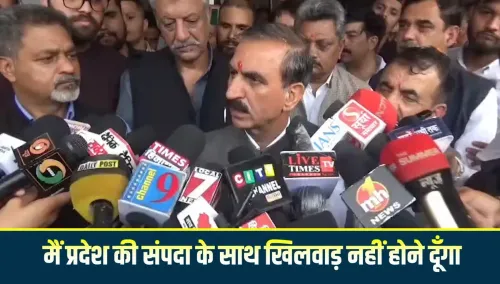
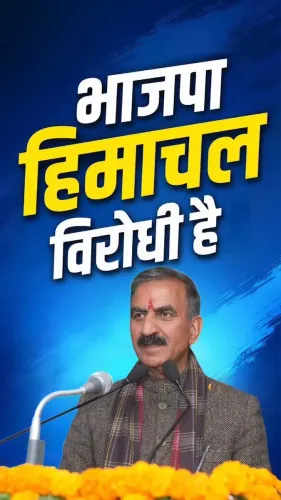
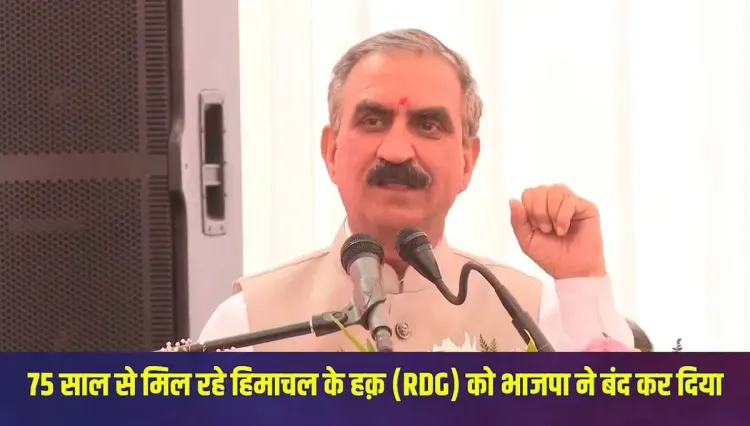
Himachal Pradesh CM Sukhvinder Singh Sukhu accused the Centre of scrapping a compensatory forest grant the state has received since 1952, valued at roughly ₹10,000 crore a year, and charged the BJP with giving away 5,000 bighas of Baddi land to industrialists at negligible prices.
Key Takeaways
CM Sukhu says the Centre has withdrawn Himachal Pradesh's RDG — a compensatory grant linked to forest and water conservation received since 1952 .
The grant was worth approximately ₹10,000 crore per year , according to CM Sukhu .
He accused the BJP of allotting 5,000 bighas of land in Baddi to industrialists at 'throwaway prices' under customised industrial packages.
Baddi , in Solan district , is Himachal Pradesh's primary industrial hub with a concentration of pharmaceutical and manufacturing units.
CM Sukhu contrasted the alleged BJP-era land deals with his government's stated anti-corruption stance.
The dispute reflects a long-running tension over fiscal compensation for Himalayan states that forgo revenue to protect forests and rivers.
Himachal Pradesh Chief Minister Sukhvinder Singh Sukhu on Friday, 5 June 2026 accused the central government of withdrawing a compensatory grant that the state has received since 1952 in recognition of its forest and water conservation, and simultaneously charged the Bharatiya Janata Party with having given away 5,000 bighas of land in Baddi to industrialists at throwaway prices under the cover of customised industrial packages.
Context
Writing in Hindi, CM Sukhu stated: 'केंद्र सरकार ने हिमाचल प्रदेश को वर्ष 1952 से मिल रही RDG का हक़ छीन लिया' ('The central government has snatched away the RDG entitlement that Himachal Pradesh has received since 1952'). He argued that the state's residents have long protected its forests, water sources, and environment, and that in return the state was receiving approximately ₹10,000 crore annually — a figure he described as Himachal's rightful due, now taken away.
On a separate count, he alleged that the BJP, during its tenure in the state, distributed 5,000 bighas of land in Baddi to capitalists at negligible rates under the banner of customised industrial packages, effectively plundering the state's assets.
Policy Backdrop
Himachal Pradesh has historically received compensatory central grants tied to its status as an ecologically sensitive Himalayan state that foregoes revenue from dense forest cover and river systems. Since its formation as a full state in 1971, successive Finance Commissions have periodically restructured these grants, with the 14th Finance Commission (2015) notably revising revenue-deficit and environmental compensation formulas affecting special-category Himalayan states.
The grant CM Sukhu refers to as RDG — understood in this context as a revenue or resource-deficit compensatory grant — has been a contentious subject in centre-state fiscal negotiations. Baddi, located in Solan district, is Himachal Pradesh's largest industrial hub, known for pharmaceutical and manufacturing units; previous state governments, including BJP administrations, offered customised land and tax packages there to attract investment.
Stakeholders and Impact
The withdrawal of the grant, if confirmed by the Centre, would have direct fiscal consequences for Himachal Pradesh's state budget, which is already heavily dependent on central transfers and hydel-power royalties. Residents of ecologically fragile zones — particularly forest-adjacent communities — stand to lose development funds linked to conservation incentives.
The Baddi land-allotment allegation, if substantiated, would affect the credibility of past industrial policy in the state and could prompt scrutiny of land records and allotment orders from the previous BJP government's tenure. CM Sukhu contrasted that record with his administration's stated goal of closing 'backdoor channels of corruption' to protect state assets.
What's Next
The Congress government in Shimla is expected to raise the grant-withdrawal issue formally in the state assembly and through official correspondence with the Union Finance Ministry. Any revision to central grant formulas would likely feed into deliberations around the upcoming Finance Commission cycle.
On the Baddi front, the state government may order a review of past land allotments, which could become a flashpoint in the ongoing political contest between the ruling Congress and the BJP ahead of the next assembly session. The broader dispute underscores a recurring tension between ecologically sensitive Himalayan states and the Centre over equitable fiscal compensation for foregone revenue.
Point of View
Anchoring the entitlement in the state's foundational history rather than in recent policy disputes. Coming on World Environment Day (5 June), the timing amplifies the conservation angle and gives the Congress a narrative hook that is difficult for the BJP to counter without defending either the Centre's fiscal decisions or past industrial land policy in Baddi. This pattern of linking centre-state fiscal grievances to local BJP-era governance is likely to intensify as the next Finance Commission cycle approaches.
NationPress
21 Oct 2026
Frequently Asked Questions
What is the RDG grant that Himachal Pradesh has been receiving since 1952?
RDG in this context refers to a compensatory grant from the central government to Himachal Pradesh in recognition of the state's foregone revenue from forest and water conservation. CM Sukhu states the state received this since 1952 and that it amounted to roughly ₹10,000 crore annually , though the precise definition and current status are subject to official confirmation.
Why is CM Sukhu accusing the Centre of withdrawing Himachal Pradesh's forest grant?
CM Sukhu argues that Himachal Pradesh has long protected its forests, rivers, and environment at the cost of development revenue, and that the compensatory central grant was the state's rightful entitlement for that ecological service. He contends the Centre has now ended that arrangement, depriving the state of a major source of funds.
What is the Baddi land allotment controversy CM Sukhu raised?
CM Sukhu alleged that the BJP , during its tenure in Himachal Pradesh , allotted 5,000 bighas of land in Baddi — the state's main industrial zone — to private industrialists at negligible prices under customised industrial packages, amounting to a giveaway of state assets.
How does Himachal Pradesh's budget depend on central grants?
Himachal Pradesh is heavily reliant on central transfers, including grants and tax devolution, because its mountainous terrain limits agricultural and industrial revenue. Hydel-power royalties and central grants together form a substantial share of the state's receipts, making any reduction in such grants fiscally significant.
What happens next in the Himachal Pradesh grant dispute with the Centre?
The Sukhu government is expected to raise the issue in the state assembly and through formal communication with the Union Finance Ministry . The matter could also become part of broader deliberations in the next Finance Commission cycle, which determines how central revenues are shared with states.