CM Sukhu Rejects BJP-backed Medical Device Park Terms
Synopsis
Chief Minister Sukhvinder Singh Sukhu on 20 June 2026 rejected the BJP-backed Medical Device Park, alleging it would hand over land worth Rs 5,000 crore for Rs 1 crore and supply power at below-cost rates for a decade, harming the state's 75 lakh residents.
Key Takeaways
CM Sukhu declared the proposed Medical Device Park 'not in the interest of Himachal Pradesh' on 20 June 2026 .
The project allegedly required land to be provided at Rs 1 per square metre and power at Rs 3 per unit for 10 years , while the state buys winter power at Rs 7 per unit .
Land worth an alleged Rs 5,000 crore was to be transferred for just Rs 1 crore , with registration fees waived.
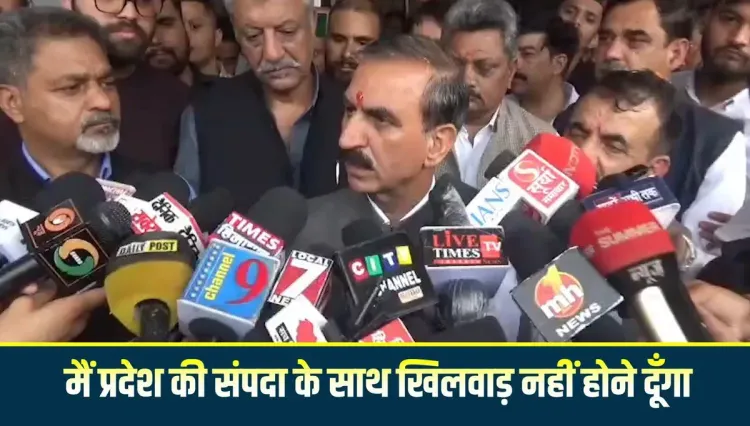
Sukhu stated his government will not sign any agreement that damages the state's resources or the rights of its 75 lakh residents .
The dispute reflects a broader Congress-BJP rivalry in Himachal Pradesh over the terms of industrial incentives since the 2022 government change.
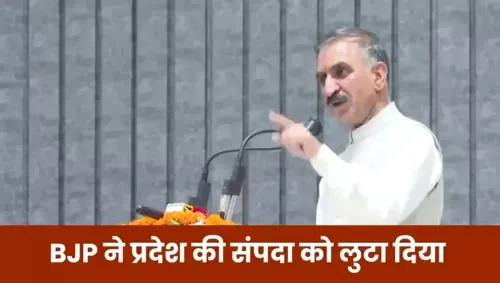
Himachal Pradesh Chief Minister Sukhvinder Singh Sukhu on Saturday, 20 June 2026, publicly rejected the proposed Medical Device Park project championed by the Bharatiya Janata Party, declaring that its incentive structure would cause serious financial damage to the state and its 75 lakh residents.
Context
In a post on X, CM Sukhu stated that the Medical Device Park being advocated by BJP leaders is 'not in the interest of the state' (प्रदेश हित में नहीं है). He alleged that the project required the state to provide land to industries at just one rupee per square metre and supply electricity at three rupees per unit for ten years — even as Himachal Pradesh itself purchases power at seven rupees per unit during winter months.
The Chief Minister further alleged that land worth Rs 5,000 crore would have been handed over for just Rs 1 crore, and that registration fees for the project were to be waived entirely. 'The precious land of Himachal cannot be given away for a pittance,' he wrote.
Policy Backdrop
Himachal Pradesh has historically offered land and power concessions to attract manufacturing investment, a policy approach adopted by successive governments. However, the state's mountainous geography limits flat, developable land, making such assets particularly valuable. The state also faces seasonal power-deficit conditions, forcing it to purchase electricity from the grid at market rates during winter — a structural constraint that makes below-cost power commitments fiscally sensitive.
The Congress government under Sukhu, which came to power in December 2022 after defeating the BJP, has signalled a sharper review of industrial incentive agreements inherited or proposed under the previous administration. This post is consistent with that posture, framing resource stewardship as a core governance commitment.
Stakeholders and Impact
The immediate stakeholders include prospective medical device manufacturers who may have anticipated the park's incentives, state residents who would bear the fiscal cost of subsidised land and power, and the BJP, whose industrial policy legacy is directly under challenge. CM Sukhu was explicit that his administration will not enter 'any agreement that harms the state's resources and the rights of the people.'
Industrial investors tracking Himachal Pradesh as a manufacturing destination will note the signal that the current government intends to renegotiate or reject projects where the state's revenue calculus is seen as unfavourable. This could affect investor confidence in the short term, even as the government frames the move as protecting public interest.
What's Next
The BJP is likely to respond in the Himachal Pradesh state assembly and in public forums, defending the Medical Device Park's original incentive structure as a legitimate tool for employment and industrial growth. The government may be expected to present a revised industrial policy framework that it considers more equitable for the state exchequer.
Watchers of Himachal Pradesh politics will look to upcoming assembly sessions and budget presentations for any formal policy announcement on land and power subsidy norms for new manufacturing projects. The broader question — how hill states balance investment attraction against resource protection — remains unresolved across the Himalayan region.
Point of View
While putting the BJP on the defensive over its industrial legacy. The specific figures cited — land at one rupee per square metre, power at three rupees against a seven-rupee purchase cost — are designed to resonate with a public audience rather than a policy one, signalling that this debate will play out in the political arena as much as in the assembly. The move fits a pattern seen in other states where incoming governments use inherited industrial agreements as a foil to define their own governance identity. The risk for Sukhu is that a perception of anti-investment signalling could deter legitimate industrial interest in a state that needs economic diversification.
NationPress
19 Sept 2026
Frequently Asked Questions
Why did CM Sukhu reject the Medical Device Park in Himachal Pradesh?
CM Sukhu rejected the Medical Device Park saying its terms were financially harmful to the state — land worth Rs 5,000 crore would be given for Rs 1 crore, power would be supplied at Rs 3 per unit for 10 years despite the state buying winter power at Rs 7 per unit, and registration fees were to be waived.
What is the Medical Device Park proposed for Himachal Pradesh?
The Medical Device Park is a proposed industrial project intended to attract medical device manufacturers to Himachal Pradesh. Its incentive structure, including subsidised land and power rates, has become the subject of a political dispute between the ruling Congress and the BJP.
What land and power rates were offered under the Medical Device Park plan?
According to CM Sukhu, the plan offered land at one rupee per square metre and electricity at three rupees per unit for ten years — rates he described as far below the state's actual costs and market value.
What did CM Sukhu say about Himachal Pradesh's land and resources?
CM Sukhu said that Himachal Pradesh's precious land cannot be given away for a pittance, and that as Chief Minister he will not agree to any deal that harms the state's resources or the rights of its 75 lakh residents.
How does the Medical Device Park row fit into Himachal Pradesh politics?
The dispute is part of a recurring Congress-BJP rivalry over industrial incentives since the Congress government came to power in December 2022. The Sukhu administration has signalled a stricter review of projects where the state's revenue calculus is seen as unfavourable.