CM Sukhu Promises MSP for Bada Bhangal Rajmah, Meat Procurement
Synopsis
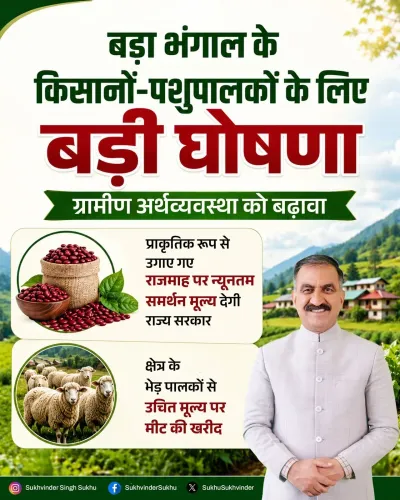
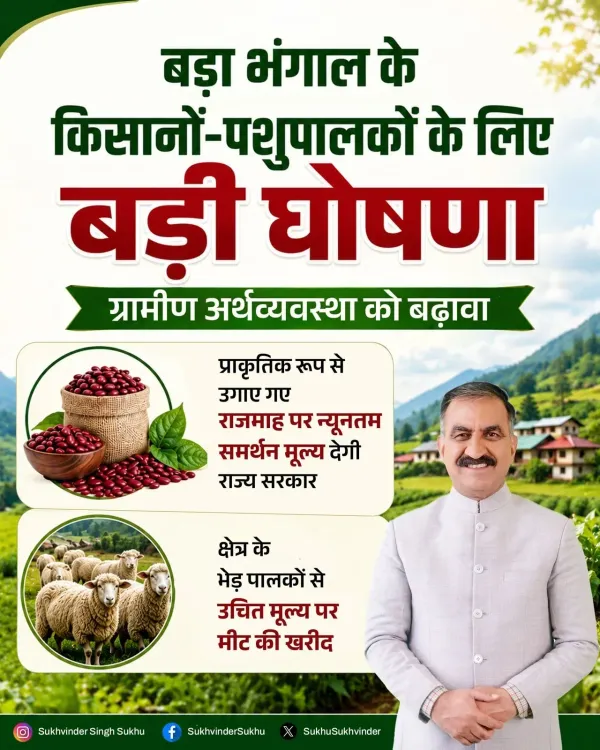
Himachal Pradesh CM Sukhvinder Singh Sukhu has announced MSP for naturally grown rajmah from the remote Bada Bhangal region in Kangra district and fair-price procurement of meat from local sheep herders, aiming to strengthen livelihoods in one of the state's most geographically isolated communities.
Key Takeaways
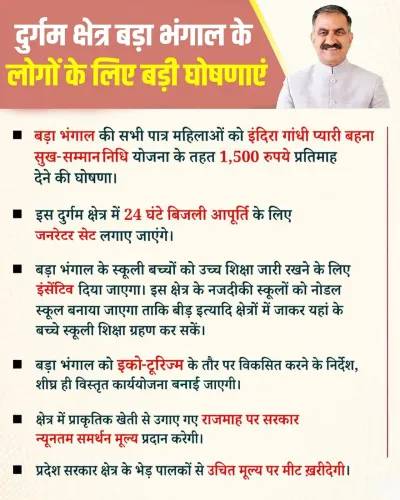
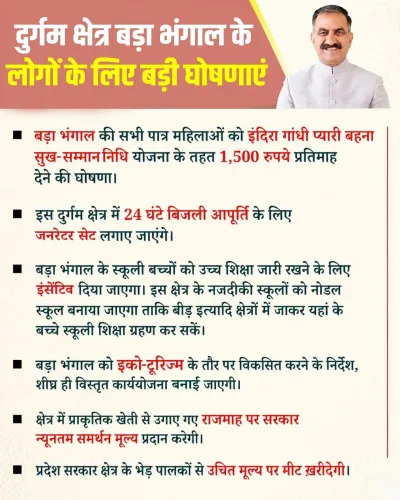
CM Sukhvinder Singh Sukhu announced on 1 July 2026 that the Himachal Pradesh government will guarantee MSP for naturally grown rajmah from Bada Bhangal , Kangra district.
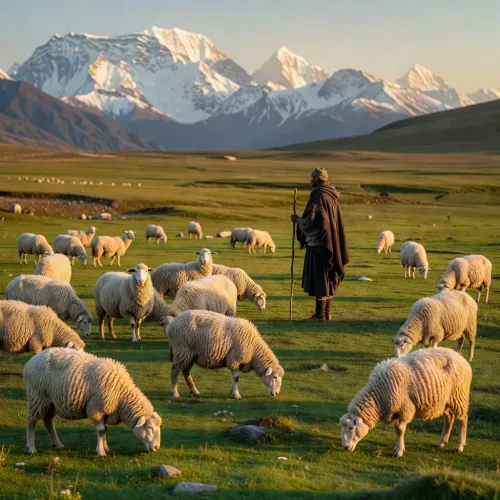
The government will also procure meat from sheep herders in Bada Bhangal at fair prices, covering both crop and livestock farmers.
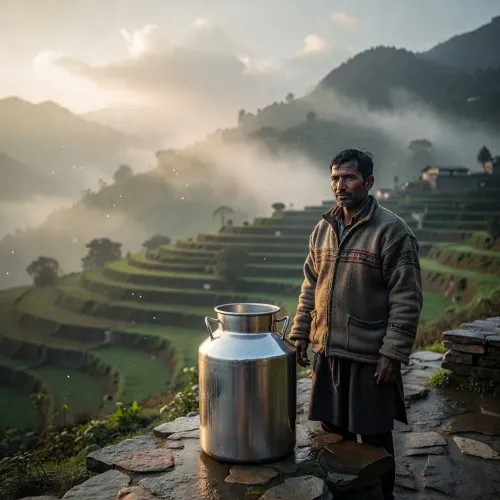
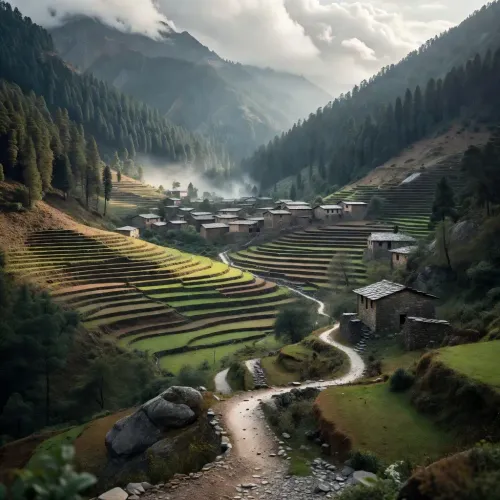
Bada Bhangal is one of Himachal Pradesh's most geographically isolated regions, where difficult terrain has historically cut communities off from mainstream markets.
The announcement extends the state's Prakritik Kheti Khushhal Kisan Yojana (2018) philosophy of supporting natural farming into formal price-guarantee territory for niche hill crops.
Formal government orders on the MSP rate, procurement agencies, and collection centre locations are yet to be issued and will determine the scheme's on-ground impact.
The move fits a broader Himalayan trend of states using targeted MSP and assured procurement to address market access gaps and reduce outmigration from high-altitude villages.
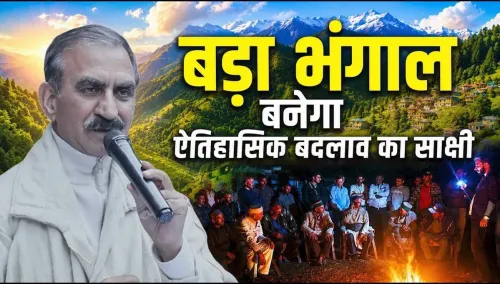
Himachal Pradesh Chief Minister Sukhvinder Singh Sukhu on Wednesday, 1 July 2026, announced that his government will guarantee a Minimum Support Price (MSP) for naturally grown kidney beans (rajmah) from the remote high-altitude region of Bada Bhangal in Kangra district, and will also procure meat from local sheep herders at fair prices.
Context
Posting on X, CM Sukhu acknowledged the resilience of Bada Bhangal's communities, writing that the people of the region have preserved their hardwork, traditions, and rich heritage of natural farming across generations despite difficult geographical conditions. He pledged that every hardworking family in Bada Bhangal will receive fair value for their labour, and that livelihoods will be further strengthened through this initiative.
Bada Bhangal is one of Himachal Pradesh's most isolated pockets, accessible only through high mountain passes for much of the year. Its farming and herding communities have historically struggled to access mainstream agricultural markets, leaving them dependent on middlemen who offer well below market rates for their produce.
Policy Backdrop
The announcement builds on Himachal Pradesh's Prakritik Kheti Khushhal Kisan Yojana, launched in 2018, which has promoted chemical-free natural farming across the state. In 2023-24, the state expanded procurement support for niche hill crops — including rajmah and millets — under the Himachal Pradesh Agricultural Produce Marketing Act, laying the legislative groundwork for targeted interventions in remote blocks.
The extension of MSP to naturally grown rajmah from Bada Bhangal represents a convergence of two policy threads: assured procurement for traditional crops and support for livestock-based livelihoods. The state government has positioned both as pillars of a climate-resilient agriculture strategy since 2022.
Stakeholders and Impact
Rajmah growers and sheep herders are the primary beneficiaries of this announcement. Bada Bhangal's mixed farming-herding economy means many households depend simultaneously on crop sales and livestock income, making dual-commodity support particularly significant for family earnings.
Across the broader Himalayan belt, several states have introduced targeted MSP or assured procurement for traditional crops and livestock products to bridge market access gaps in remote areas. Such interventions have also served as a tool to slow outmigration from high-altitude villages and preserve agro-biodiversity that would otherwise be lost as younger generations seek urban livelihoods.
What's Next
The key step will be the issuance of formal government orders specifying the MSP rate for Bada Bhangal rajmah, the designated procurement agencies, and the location of collection centres accessible to farmers in the region. Observers will also watch whether additional remote blocks in Kangra or other districts are brought under the same procurement umbrella.
If implemented with robust logistics, the scheme could serve as a replicable model for other geographically isolated communities in Himachal Pradesh — where natural farming heritage and biodiversity-rich produce remain largely untapped by formal market channels.
Point of View
Ahead of what will inevitably be scrutiny over implementation. Extending MSP to a niche hill crop like rajmah — and pairing it with livestock procurement — reflects a dual-commodity approach that addresses the mixed farming-herding reality of high-altitude households. The move also carries political weight: Bada Bhangal's remoteness has long made it a symbol of governance neglect, and a credible delivery here would strengthen the Congress government's rural outreach narrative. The real test, however, lies in the formal orders, the MSP rate set, and whether procurement infrastructure can actually reach communities cut off by terrain for months at a time.
NationPress
29 Sept 2026
Frequently Asked Questions
What is the MSP announcement for Bada Bhangal rajmah?
Himachal Pradesh Chief Minister Sukhvinder Singh Sukhu announced on 1 July 2026 that the state government will guarantee a Minimum Support Price for naturally grown kidney beans (rajmah) produced in the remote Bada Bhangal area of Kangra district, ensuring farmers receive a fair minimum price rather than being dependent on middlemen.
Where is Bada Bhangal and why is it significant?
Bada Bhangal is a remote, high-altitude region in Kangra district of Himachal Pradesh, characterised by difficult mountain terrain that limits market access for most of the year. Its communities practise traditional mixed farming and sheep herding, preserving natural farming methods passed down through generations.
Will sheep herders in Bada Bhangal also benefit from this announcement?
Yes. CM Sukhu stated that the government will also procure meat from local sheep herders at fair prices, making the intervention a dual-commodity support covering both crop growers and livestock farmers in the region.
What is Himachal Pradesh's Prakritik Kheti Khushhal Kisan Yojana?
Launched in 2018, the Prakritik Kheti Khushhal Kisan Yojana is a Himachal Pradesh government scheme to promote chemical-free natural farming across the state. The current MSP announcement for Bada Bhangal rajmah builds on this policy framework.
What are the next steps after CM Sukhu's rajmah MSP announcement?
The government is expected to issue formal orders specifying the MSP rate for Bada Bhangal rajmah, the procurement agencies responsible, and the location of collection centres accessible to farmers. Possible extension of the scheme to other remote blocks in Himachal Pradesh is also being watched.