HP CM Office Promises MSP for Bara Bhangal Rajmah Farmers
Synopsis
The Himachal Pradesh government has pledged a Minimum Support Price for naturally grown Rajmah from the remote, high-altitude Bara Bhangal region in Kangra district, recognising generations of natural farming heritage in one of the state's most isolated communities.
Key Takeaways
The Chief Minister's Office of Himachal Pradesh announced on 1 July 2026 that the state will ensure MSP for naturally grown Rajmah from Bara Bhangal .
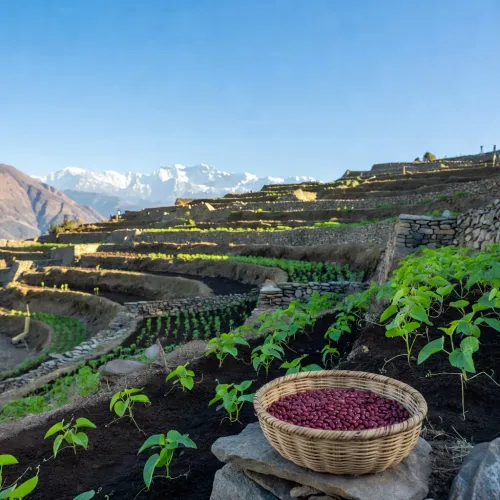
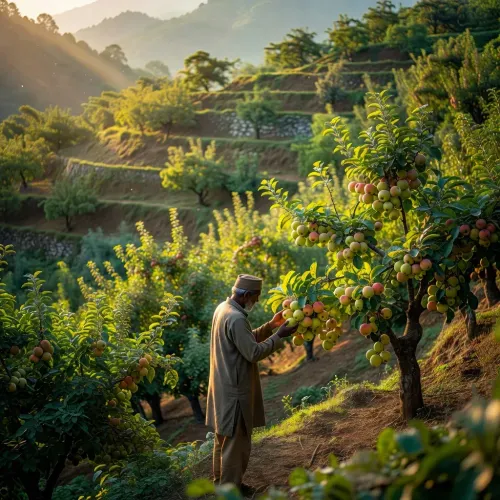
Bara Bhangal is a high-altitude, road-less settlement in Kangra district known for chemical-free, traditional kidney bean cultivation.
The commitment extends the MSP instrument — traditionally applied to major staple crops — to a niche, geographically specific organic produce.
Himachal Pradesh has promoted zero-budget natural farming since 2018 , and this announcement aligns with that policy direction.
Specific MSP rate, procurement centres, and implementation timeline have not yet been officially notified.
The policy could serve as a model for other isolated Himalayan farming communities growing traditional crops outside the formal support system.
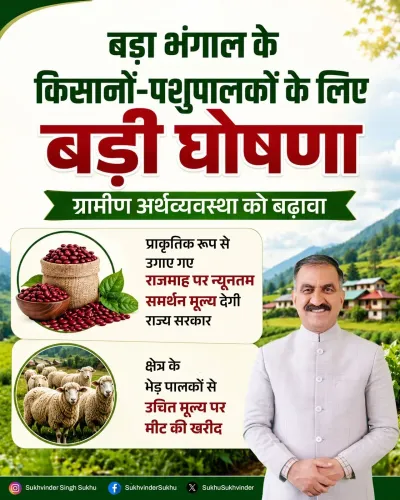
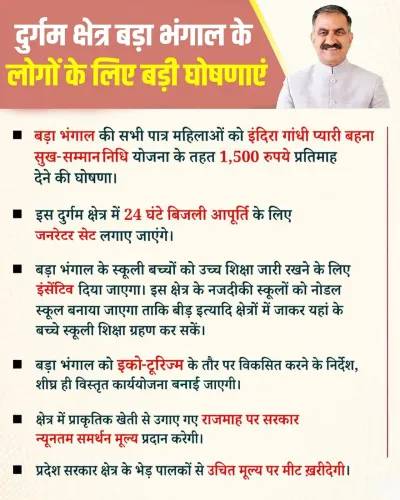
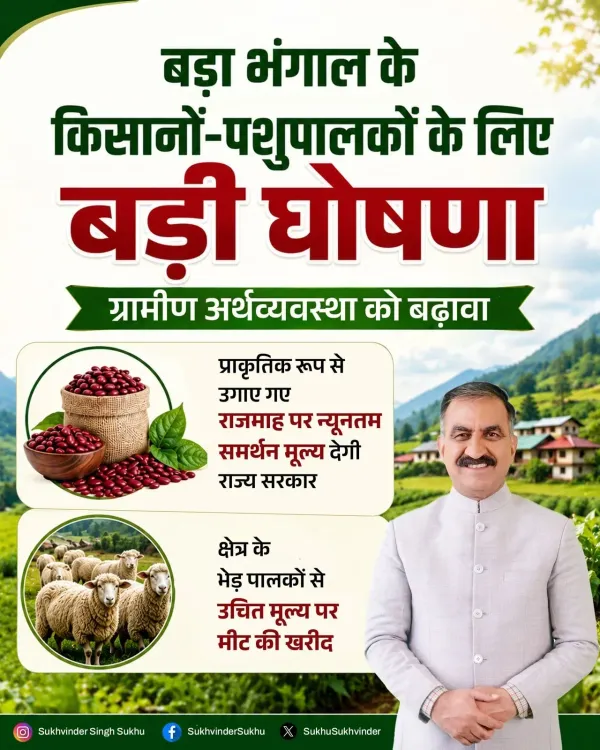
The Chief Minister's Office of Himachal Pradesh announced on Wednesday, 1 July 2026 that the state government will ensure a Minimum Support Price (MSP) for naturally grown Rajmah (kidney beans) cultivated in the remote high-altitude region of Bara Bhangal in Kangra district, recognising the community's generations-long tradition of natural farming under extreme geographical conditions.
Posting in Hindi, the office stated: 'दुर्गम क्षेत्र बड़ा भंगाल के लोगों ने कठिन भौगोलिक परिस्थितियों के बीच अपनी मेहनत, परंपरा और प्राकृतिक खेती की समृद्ध विरासत को पीढ़ी-दर-पीढ़ी सहेजकर रखा है।' ('The people of the remote area of Bara Bhangal have preserved, generation after generation, their rich heritage of hard work, tradition, and natural farming amid harsh geographical conditions.') The post added that the government 'will ensure Minimum Support Price (MSP) for naturally grown Rajmah.'
Context
Bara Bhangal is one of the most isolated settlements in Himachal Pradesh, situated at high altitude in the Kangra district. The village has no motorable road and remains cut off for large parts of the year due to snow and difficult terrain. Despite this isolation, its farming households have maintained chemical-free cultivation of Rajmah for generations, making the crop both a cultural staple and a potential premium commodity. The announcement directly addresses the income vulnerability of these hill farmers, who have historically lacked access to organised markets and price-support mechanisms available to farmers in better-connected plains regions.Policy Backdrop
Himachal Pradesh began actively promoting zero-budget natural farming from 2018 onwards as a state policy to reduce chemical inputs across its hill agriculture. The MSP mechanism — a price floor guaranteed by government agencies — has long been a central tool of Indian agricultural policy for major crops such as wheat and paddy. Extending it to niche, geographically specific produce like Bara Bhangal Rajmah marks a targeted application of this instrument to protect agro-biodiversity and farmer livelihoods in remote zones. State governments across the Himalayan belt have periodically broadened MSP coverage to traditional and organic crops in isolated areas, seeking to stabilise incomes while preserving indigenous farming knowledge. This announcement fits squarely within that pattern.Stakeholders and Impact
The primary beneficiaries are the natural farming households of Bara Bhangal — a small but symbolically significant community whose produce has gained attention for its organic credentials. A guaranteed price floor would reduce the risk these farmers bear when bringing their crop to distant markets, and could incentivise continued natural farming over a shift to chemical-intensive methods. Broader stakeholders include Farmer Producer Organisations (FPOs) and organic certification bodies that may be drawn into any procurement or marketing chain established under this commitment. Consumers of premium organic produce across India could also benefit if the policy helps formalise and scale supply.What's Next
The key details that will determine the real-world impact of this commitment are yet to be made public: the specific MSP rate for Bara Bhangal Rajmah, the location and number of procurement centres, the timeline for implementation, and any linkage with existing organic certification schemes or FPO frameworks. Observers will watch for an official government notification that translates this announcement into an administrative order with binding price and procurement provisions. If implemented effectively, the measure could serve as a replicable model for other isolated hill communities in Himachal Pradesh and neighbouring Himalayan states where traditional crops remain outside the formal support architecture.Point of View
Signalling that state support need not be confined to high-volume, plains-based agriculture. However, the announcement's value will hinge entirely on follow-through: MSP commitments without notified rates and operational procurement infrastructure have a poor track record of translating into actual farmer income. The move also implicitly positions the state as a champion of agro-biodiversity at a time when premium organic produce from Himalayan regions is gaining commercial and policy attention nationally.
NationPress
30 Sept 2026
Frequently Asked Questions
What is the MSP announced for Bara Bhangal Rajmah in Himachal Pradesh?
The Himachal Pradesh government has committed to ensuring a Minimum Support Price for naturally grown Rajmah from Bara Bhangal, but the specific rate and procurement details have not yet been officially notified as of 1 July 2026.
Where is Bara Bhangal located?
Bara Bhangal is a remote, high-altitude settlement in the Kangra district of Himachal Pradesh with no motorable road, making it one of the most geographically isolated communities in the state.
What is natural farming and why is it significant for Bara Bhangal?
Natural farming refers to chemical-free cultivation using traditional methods and locally available inputs. Bara Bhangal farmers have practised this for generations, giving their Rajmah organic credentials that could command a premium in formal markets.
How does MSP work for niche crops like Rajmah?
MSP sets a price floor below which the government commits to purchase the crop, protecting farmers from market price crashes. Extending MSP to niche crops like Bara Bhangal Rajmah requires a state-level notification specifying the rate and designated procurement agencies.
What is Himachal Pradesh's policy on natural farming?
Himachal Pradesh began actively promoting zero-budget natural farming from 2018 to reduce chemical inputs in its hill agriculture, and has since incorporated natural farming support into its broader agricultural policy framework.