CM Sukhu Visits Remote Bara Bhangal, Announces Key Welfare Measures
Synopsis
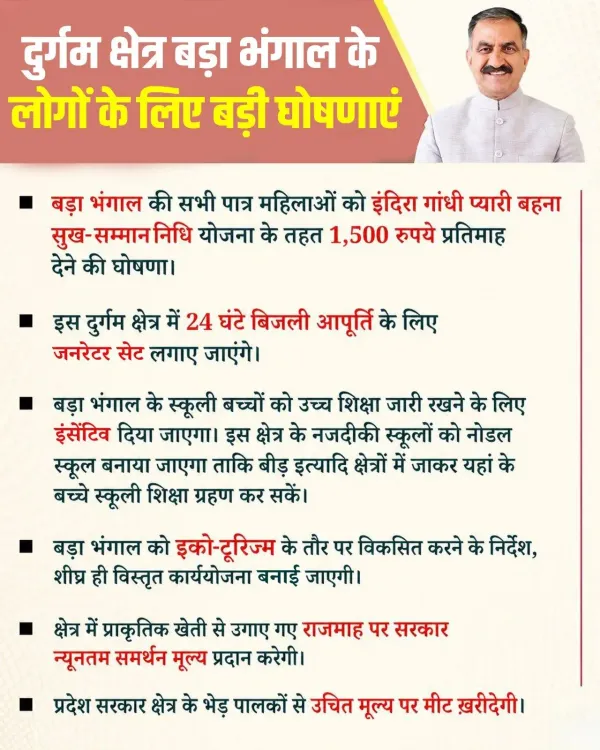
Himachal Pradesh CM Sukhvinder Singh Sukhu visited the remote Bara Bhangal region of Kangra district on June 27, 2026, announcing Rs 1,500 monthly aid for eligible women, MSP for locally grown rajma, fair-price meat procurement from sheep herders, 24-hour power via generators, higher education incentives, and eco-tourism promotion.
Key Takeaways
CM Sukhu visited Bara Bhangal , one of the most remote settlements in Kangra district, Himachal Pradesh , on June 27, 2026 .
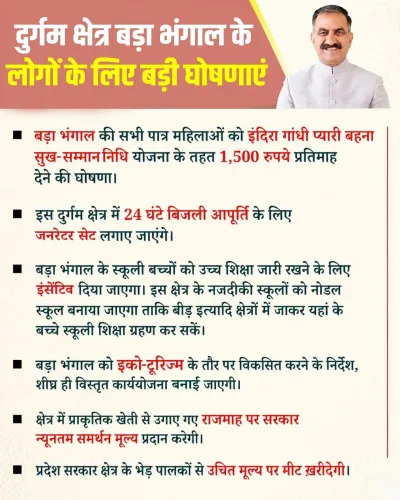
All eligible women in the region will receive Rs 1,500 per month as financial assistance.
Generators will be arranged to ensure 24-hour electricity supply in the area.
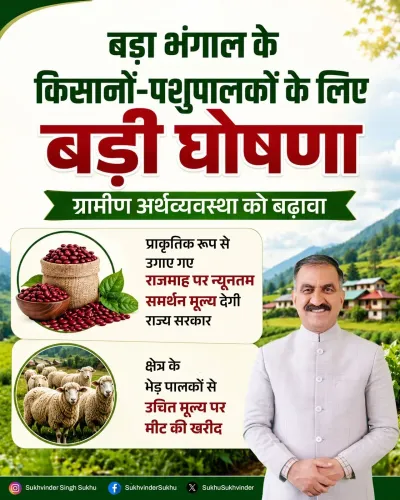
A Minimum Support Price (MSP) will be fixed for naturally grown rajma produced in Bara Bhangal.
The government will procure meat from sheep herders at fair prices , providing income security to pastoral communities.
Eco-tourism promotion and higher education incentives for children were also announced as part of the development package.
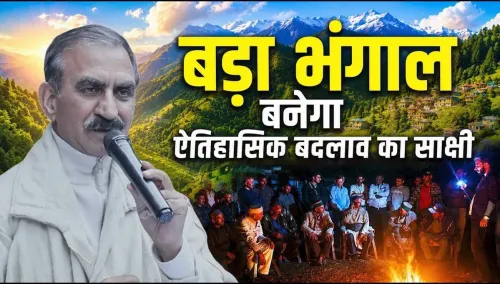
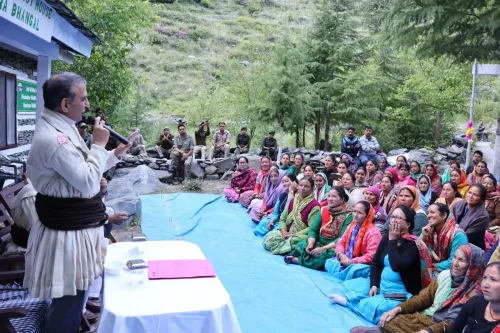
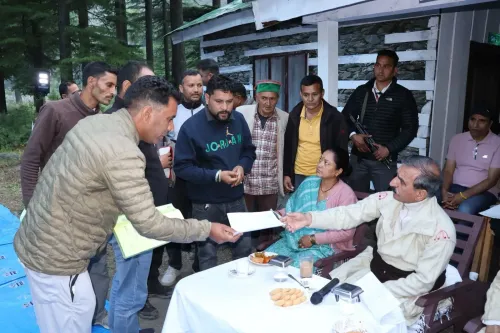
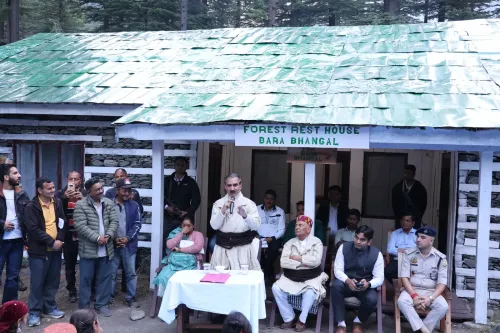
Himachal Pradesh Chief Minister Sukhvinder Singh Sukhu visited the remote and difficult-to-reach region of Bara Bhangal in Kangra district on Saturday, June 27, 2026, meeting residents to understand their needs and announcing a package of welfare and development decisions for the area.
Sharing the visit on X, CM Sukhu wrote in Hindi: 'कांगड़ा जिला के दुर्गम क्षेत्र बड़ा भंगाल में अपने भाइयों-बहनों के बीच पहुंचा हूं' — 'I have reached Bara Bhangal, a remote area of Kangra district, among my brothers and sisters.' He noted that while the journey is difficult, the warmth of the people there makes every hardship worthwhile.
Context
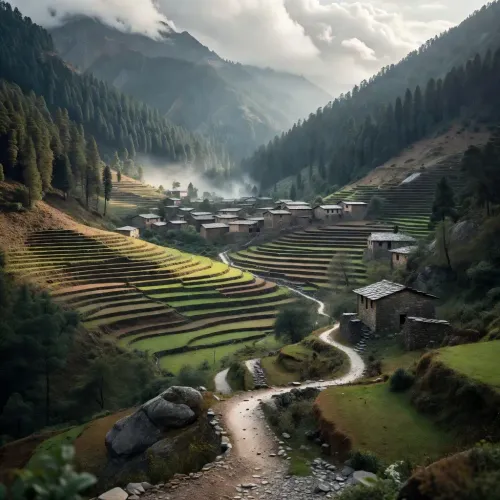
Bara Bhangal is one of the most geographically isolated settlements in Himachal Pradesh, situated deep in the Dhauladhar ranges of Kangra district. The region is accessible only through high-altitude trekking routes for much of the year, leaving its residents cut off from mainstream government services, markets, and infrastructure. The community's primary livelihoods revolve around sheep herding, subsistence agriculture, and the cultivation of locally grown produce such as rajma (kidney beans).
Chief Minister Sukhu's visit to the area is notable given its extreme inaccessibility. His post emphasised a personal connection to the region, stating: 'यह क्षेत्र जितना दूर है, उतना ही मेरे दिल के करीब है' — 'The farther this region is, the closer it is to my heart.'
Policy Backdrop
The announcements made during the visit span multiple welfare and economic categories. All eligible women in Bara Bhangal will receive a monthly financial assistance of Rs 1,500, a measure aligned with the Congress government's broader commitment to direct cash support for women across the state. The government also announced the arrangement of generators to ensure 24-hour electricity availability — a basic but critical intervention for a region where grid connectivity remains unreliable.
On the economic front, the decisions include a Minimum Support Price (MSP) for naturally grown rajma — the organically cultivated kidney beans the region is known for — and a government procurement mechanism for meat from sheep herders at fair prices. Both measures are aimed at giving local producers a guaranteed market and income floor. Additionally, the government announced incentives for children's higher education and a push to develop eco-tourism in the region, leveraging its pristine natural landscape.
Stakeholders and Impact
The residents of Bara Bhangal — including women dependent on state welfare schemes, sheep herders, rajma farmers, and students — stand to be the most direct beneficiaries of the announced measures. The Rs 1,500 monthly assistance for women mirrors similar schemes the Sukhu government has rolled out in other parts of Himachal Pradesh under its social security framework.
The eco-tourism push, if implemented, could open a new economic channel for the community. Bara Bhangal's remote trails and untouched landscape have long attracted trekkers, and formalising tourism infrastructure could generate supplementary income for local families while preserving the region's ecological character. The MSP for rajma addresses a long-standing concern of farmers who, due to the region's isolation, have historically lacked access to competitive markets.
What's Next
The announcements are at the declaration stage, and implementation timelines were not specified in the Chief Minister's post. The delivery of generators, operationalisation of the MSP mechanism for rajma, and rollout of the women's financial assistance scheme will be key benchmarks to watch. CM Sukhu framed the broader vision clearly: 'हमारा प्रयास है कि बड़ा भंगाल की पहचान इसकी दुर्गमता से नहीं, यहां के लोगों की समृद्धि, सम्मान और नए अवसरों से बने' — 'Our effort is that Bara Bhangal be known not for its remoteness, but for the prosperity, dignity, and new opportunities of its people.'
The visit signals that the state government intends to extend its welfare and economic programmes to even the most geographically challenging corners of Himachal Pradesh, with Bara Bhangal serving as a test case for remote-area development delivery.
Point of View
Commodity MSP, and eco-tourism in a single outreach visit reflects a pattern of combining social security with livelihood creation that the party has used across other Congress-governed states. The real test will be implementation in a region where logistics alone are a formidable barrier. If delivered, the package could consolidate rural and tribal support ahead of future electoral cycles in Himachal Pradesh.
NationPress
26 Sept 2026
Frequently Asked Questions
What did CM Sukhu announce for Bara Bhangal?
CM Sukhu announced six key measures for Bara Bhangal: Rs 1,500 monthly financial assistance for eligible women, 24-hour electricity through generators, higher education incentives for children, eco-tourism promotion, MSP for naturally grown rajma, and fair-price government procurement of meat from sheep herders.
Where is Bara Bhangal located?
Bara Bhangal is a remote, high-altitude settlement in Kangra district of Himachal Pradesh, situated deep in the Dhauladhar mountain ranges and accessible primarily by trekking routes.
How much monthly aid will women in Bara Bhangal receive?
All eligible women in Bara Bhangal will receive Rs 1,500 per month as direct financial assistance under the scheme announced by CM Sukhu during his June 27, 2026 visit.
Why is CM Sukhu's visit to Bara Bhangal significant?
Bara Bhangal is one of the most geographically inaccessible areas in Himachal Pradesh, rarely visited by senior officials. CM Sukhu's personal visit and the subsequent welfare announcements represent a direct government outreach to a historically underserved community.
What is the MSP for rajma in Bara Bhangal?
CM Sukhu announced that a Minimum Support Price will be set for the naturally grown rajma (kidney beans) produced in Bara Bhangal, though the specific price per kilogram was not detailed in his post.