HP CM Office Pushes GI Tag, Natural Farming Tag for Bara Bhangal
Synopsis
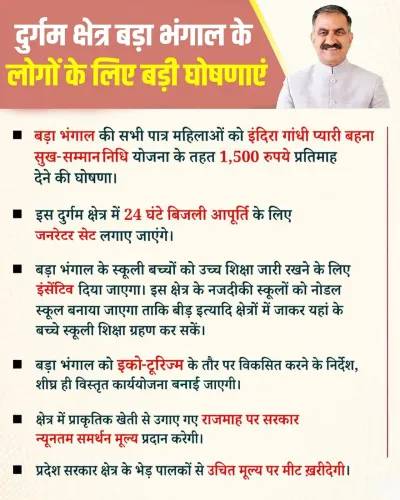
The Chief Minister's Office of Himachal Pradesh has directed officials to formalise the declaration of Bara Bhangal in Kangra as a natural farming panchayat and to launch the GI tag process for its distinctive Rajmah, in a dual push to protect and promote high-altitude mountain agriculture.
Key Takeaways
The Chief Minister's Office of Himachal Pradesh issued two directives on 4 July 2026 regarding Bara Bhangal in Kangra district .
Officials have been asked to complete all formalities for declaring Bara Bhangal a natural farming panchayat at the earliest.
A separate directive orders the initiation of the Geographical Indication (GI) tag application process for Bara Bhangal Rajmah (kidney beans).
Kangra Tea already holds a GI tag, providing an established precedent for the proposed Rajmah application.
The moves align with Himachal Pradesh's broader natural farming promotion drive that began around 2018 and central government schemes supporting chemical-free agriculture.
Smallholder farmers in the remote, high-altitude Bara Bhangal region stand to gain through formalised support and potential price premiums.
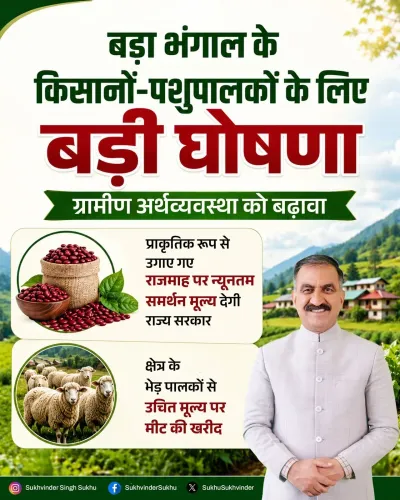
The Chief Minister's Office of Himachal Pradesh issued two firm directives on Saturday, 4 July 2026, instructing officials to complete all formalities for declaring Bara Bhangal in Kangra district a natural farming panchayat and to initiate the process of securing a Geographical Indication (GI) tag for the region's distinctive Rajmah (kidney beans).
Context
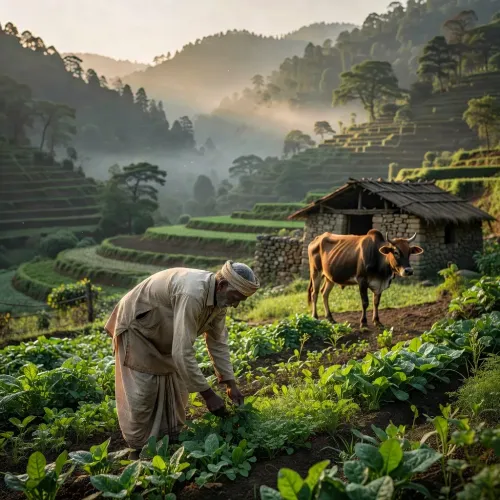
The post, shared from the official CMO Himachal Pradesh handle, carried two pointed instructions: 'कांगड़ा जिला के बड़ा भंगाल क्षेत्र को प्राकृतिक खेती पंचायत घोषित करने की सभी औपचारिकताएं शीघ्र पूरी करें' — 'Complete all formalities for declaring the Bara Bhangal area of Kangra district a natural farming panchayat at the earliest' — and a second directive to begin the GI tag application for Bara Bhangal Rajmah. Bara Bhangal is a remote, high-altitude pocket of Kangra district with limited road connectivity, where communities have long practised traditional subsistence agriculture largely free of chemical inputs.
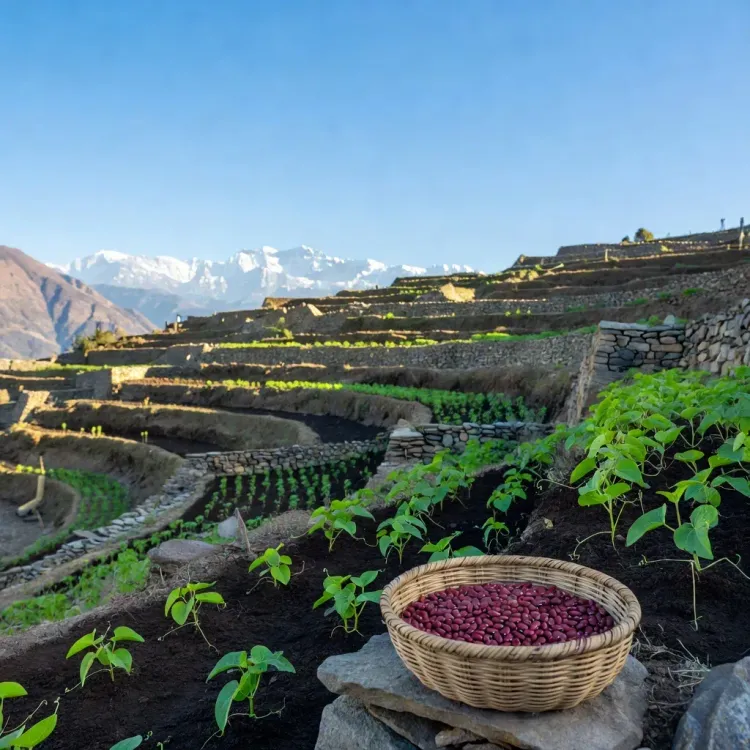
The Rajmah cultivated in Bara Bhangal is noted for its distinct taste and its adaptation to harsh mountain conditions, making it a candidate for origin-linked protection under India's Geographical Indications of Goods (Registration and Protection) Act, 1999. A GI tag would legally bind the product's identity to its place of origin and could open premium market channels for local growers.
Policy Backdrop
Himachal Pradesh began actively promoting natural and chemical-free farming across its districts from around 2018, seeking to reduce dependence on synthetic fertilisers and pesticides while positioning the state's produce as clean and mountain-origin. The state has aligned these efforts with central government schemes that incentivise chemical-free cultivation and the registration of origin-linked agricultural products.
Kangra district already has a notable precedent in GI protection: Kangra Tea received GI registration in the early 2000s, providing a template for how a Himalayan agricultural product can gain legal identity and market recognition. The proposed GI application for Bara Bhangal Rajmah would follow a similar path, requiring filing with the GI Registry and examination of the product's distinct geographical link. Across the broader Himalayan belt, state governments have pursued parallel tracks of natural farming promotion and GI protection for niche pulses and millets.
Stakeholders and Impact
The primary beneficiaries of both directives are the smallholder and subsistence farmers of Bara Bhangal, who currently have limited market access owing to the region's difficult terrain. A natural farming panchayat designation would formalise institutional support — including training, certification, and potential government procurement linkages — for farmers already practising low-input agriculture.
A successful GI tag for Bara Bhangal Rajmah would protect growers from imitation products and could command a price premium in urban and export markets, directly improving farm incomes. Pulse growers across Kangra's higher reaches could also benefit if the GI designation spurs broader interest in the region's mountain-origin legumes. Consumer interest in traceable, chemical-free produce has grown steadily across Indian urban markets, adding commercial logic to the policy push.
What's Next
Officials in Kangra district are now expected to move on two parallel tracks: completing the administrative and legal formalities for the natural farming panchayat notification, and preparing and filing a GI application with the Geographical Indications Registry in Chennai. The GI process typically involves documenting the product's specific characteristics, historical link to the geography, and production standards.
The speed with which the district administration acts will determine whether Bara Bhangal becomes a model for replication across other remote, high-altitude pockets of Himachal Pradesh — and whether its Rajmah joins a growing list of Indian mountain-origin products with formal legal and market identity.
Point of View
Chemical-light zones. The GI push for Rajmah is commercially shrewd: urban demand for traceable, origin-specific pulses is rising, and a registered GI tag converts a local crop into a legally defensible brand. Whether the administration follows through swiftly will test how effectively top-down directives translate into ground-level action in one of Himachal's most inaccessible regions.
NationPress
3 Oct 2026
Frequently Asked Questions
What is a natural farming panchayat in Himachal Pradesh?
A natural farming panchayat is a formally designated administrative unit where chemical-free, traditional farming practices are institutionally supported through training, certification, and government linkages. Himachal Pradesh has been promoting such designations since around 2018 to reduce chemical inputs in agriculture.
What is Bara Bhangal Rajmah and why is it special?
Bara Bhangal Rajmah is a variety of kidney beans cultivated in the remote high-altitude Bara Bhangal area of Kangra district, Himachal Pradesh. It is valued for its distinct taste and natural adaptation to harsh mountain conditions, making it a strong candidate for a Geographical Indication tag.
What is a GI tag and how does it help farmers?
A Geographical Indication (GI) tag is a legal registration under the Geographical Indications of Goods Act, 1999, that links a product's identity to its place of origin. It protects growers from imitation products and can help command a price premium in domestic and export markets.
Has any Kangra product received a GI tag before?
Yes. Kangra Tea received a GI tag in the early 2000s, establishing a precedent for origin-linked protection of agricultural produce from the Kangra region of Himachal Pradesh.
Where is Bara Bhangal located?
Bara Bhangal is a remote, high-altitude region in Kangra district, Himachal Pradesh, known for limited road connectivity and traditional subsistence farming practices.