CM Sukhu launches survey-backed welfare scheme for HP's poorest
Synopsis
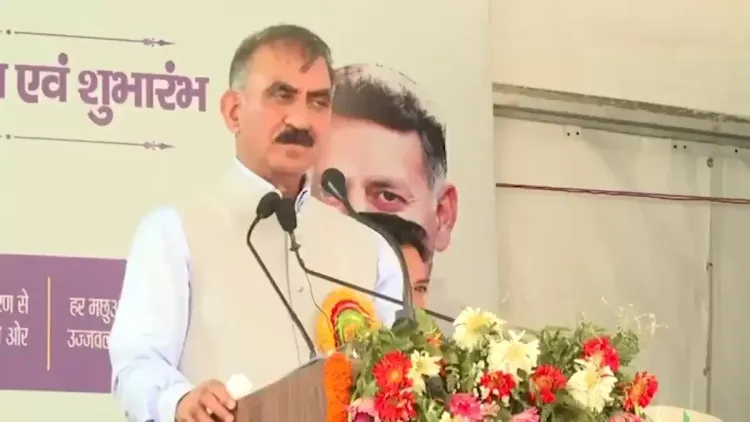
Himachal Pradesh CM Sukhvinder Singh Sukhu announced the 'Apna Parivar Sukhi Parivar Yojana' after a first-ever eight-phase state survey identified 1,73,000 families earning under Rs 75,000 annually — 90,000 of them outside existing IRDP and BPL welfare nets.
Key Takeaways
Himachal Pradesh conducted its first-ever comprehensive poverty survey of poor families, carried out in eight phases .
The survey found 1,73,000 families with annual income below Rs 75,000 .
90,000 of these families are currently excluded from both IRDP and BPL welfare schemes.
CM Sukhu announced a new state scheme — 'Apna Parivar Sukhi Parivar Yojana' — to link these families to government benefits.
The scheme's eligibility norms, rollout timeline, and budget allocation are yet to be officially detailed.
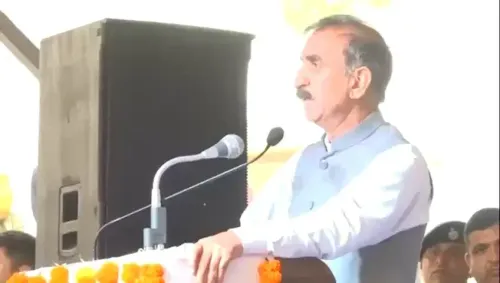
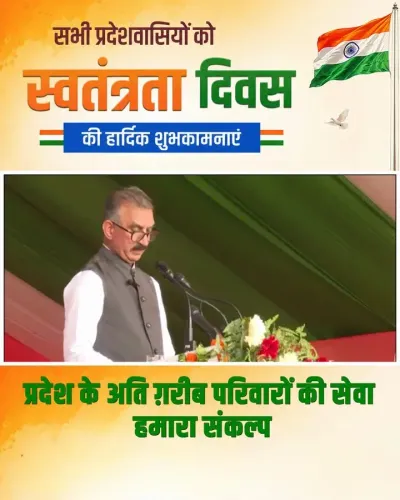
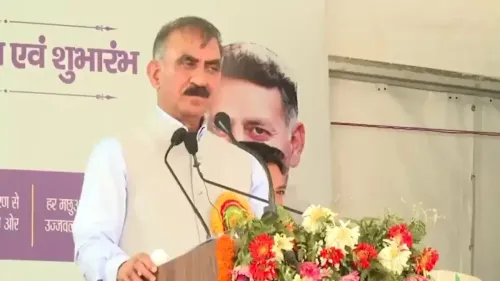
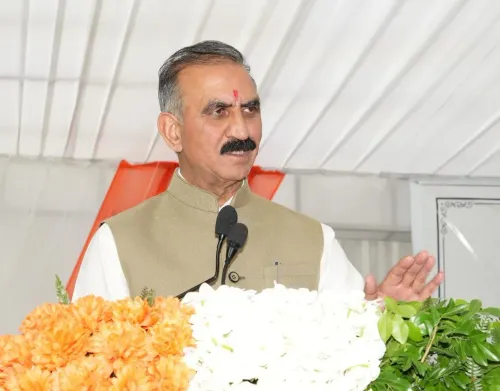
A survey that knocked on doors across Himachal Pradesh in eight phases has surfaced a stark gap: 90,000 families living below any meaningful income threshold yet falling entirely outside the state's welfare net. Himachal Pradesh Chief Minister Sukhvinder Singh Sukhu announced on Wednesday, 12 August 2026, that his government will bridge that gap with a new scheme called 'Apna Parivar Sukhi Parivar Yojana' — 'Our Family, Happy Family Scheme'.
What the eight-phase survey found
The survey — the first of its kind conducted by the state government, according to Sukhu — identified 1,73,000 families whose annual income falls below Rs 75,000. Of these, 90,000 households are not enrolled in either the Integrated Rural Development Programme (IRDP) or the Below Poverty Line (BPL) category. That means they are too poor to be self-sufficient, yet too invisible to receive state support. The survey makes that invisibility official — and actionable.The welfare gap the old lists couldn't see
India's poverty-targeting architecture has long relied on the BPL framework and legacy central programmes like the IRDP, which date back decades. The last major national attempt to refresh household-level poverty data was the Socio-Economic Caste Census of 2011 — now fifteen years old. State governments across India have periodically run their own surveys to capture families that slipped through outdated lists, and Himachal Pradesh is now doing exactly that. The 90,000 families identified here represent the classic 'last-mile' problem: people who exist in the gap between one scheme's exit criteria and another's entry criteria.'Apna Parivar Sukhi Parivar Yojana' — what comes next
Sukhu framed the scheme's purpose plainly: to ensure that government benefits reach 'prदेश के अंतिम व्यक्ति तक' — 'the last person in the state.' The Apna Parivar Sukhi Parivar Yojana is designed to act as a bridge, linking the newly surveyed families to existing central and state welfare programmes rather than creating a parallel delivery system from scratch. Specific eligibility norms, the rollout timeline, and budget allocation for the scheme have not yet been detailed publicly. A government that can name the excluded — by count, by income, by district — is a government that has made ignoring them harder. Whether the scheme delivers on that data is the question Himachal Pradesh's poorest families are now waiting to have answered.Point of View
While also implicitly critiquing the reach of legacy central programmes like IRDP. The success of this approach will hinge entirely on implementation: translating a survey number into actual enrolments is where similar state-level exercises have historically stalled. If the scheme delivers, it sets a template for last-mile welfare targeting in hill states with dispersed, hard-to-reach populations.
NationPress
27 Sept 2026
Frequently Asked Questions
What is the Apna Parivar Sukhi Parivar Yojana?
It is a new Himachal Pradesh state welfare scheme announced by CM Sukhvinder Singh Sukhu to connect families identified in the state's poverty survey — who are currently outside IRDP and BPL lists — to existing government benefit programmes.
How many families were identified in the Himachal Pradesh poverty survey?
The survey identified 1,73,000 families with annual income below Rs 75,000, of which 90,000 families are not covered under IRDP or BPL schemes.
What is the IRDP scheme?
The Integrated Rural Development Programme (IRDP) is a long-standing central government poverty alleviation initiative aimed at providing self-employment and income support to rural poor households.
Why are some poor families excluded from BPL lists?
BPL lists are based on older surveys and fixed criteria; families that became poor after a survey cutoff, or whose poverty is not captured by the specific metrics used, can be left out despite having very low incomes.
When was the HP poverty survey conducted?
CM Sukhu stated the survey was conducted in eight phases, though the exact dates of each phase have not been publicly specified beyond the announcement made on 12 August 2026 .