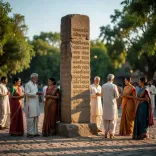
CM Sai's Sukma Connect 2.0 among 14 national picks
Synopsis
Chhattisgarh's Sukma Connect 2.0 has been selected among 14 national proposals and sanctioned ₹1.17 crore to deliver round-the-clock multilingual helpline and mobile van services to Sukma's remote tribal communities under CM Vishnu Deo Sai.
Key Takeaways
Sukma Connect 2.0 has been shortlisted among 14 proposals chosen nationally for governance innovation.
The programme has received a sanction of ₹1.17 crore for implementation.
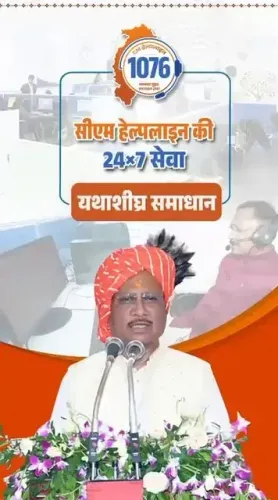
A 24-hour multilingual call centre will handle citizen grievances and service requests from Sukma's tribal population.
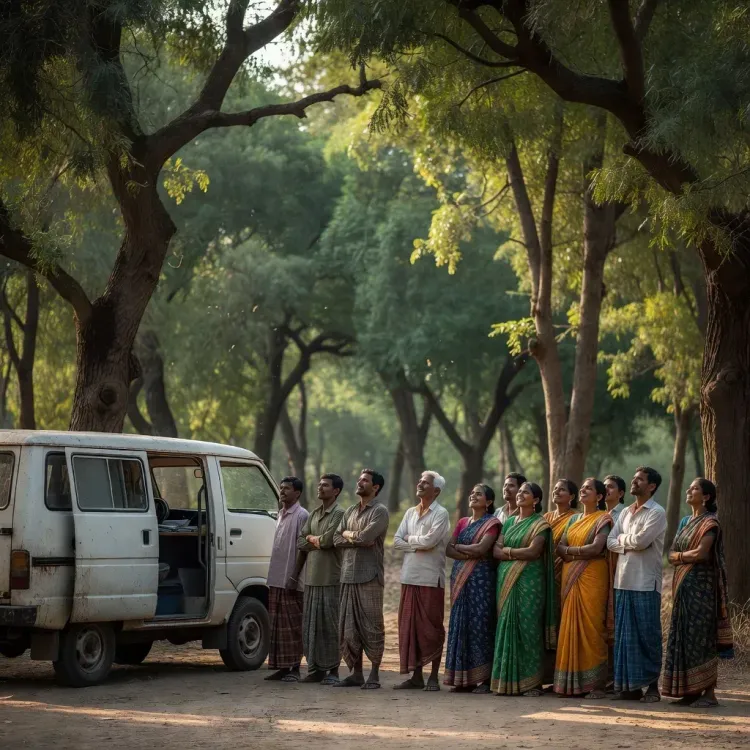
Mobile service vans will carry government services directly into remote forested areas of Sukma district .
The initiative builds on Sukma Connect 1.0 , scaling a proven pilot into a funded, structured programme.
The scheme is being driven under Chief Minister Vishnu Deo Sai , who has led Chhattisgarh since December 2023 .
A district carved out of dense forest and decades of insurgency is about to get a direct line to the government — 24 hours a day. The Chief Minister's Office of Chhattisgarh announced on Wednesday, October 14, 2026 that Sukma Connect 2.0, the state's flagship last-mile governance initiative, has been selected among 14 proposals chosen nationally, with a sanctioned outlay of ₹1.17 crore.
What Sukma Connect 2.0 will deliver on the ground
The approved plan centres on two delivery mechanisms: a multilingual call centre operating round the clock and a fleet of mobile service vans that will carry citizen services deep into Sukma's remote forested hamlets — villages where a government office can be a day's walk away. The multilingual design is deliberate: Sukma is home to a predominantly tribal population speaking Gondi and other local languages, and a Hindi-only helpline would miss the very people it is meant to reach.
Chief Minister Vishnu Deo Sai, who has led the Chhattisgarh BJP government since December 2023, has positioned the initiative as a concrete expression of 'seva, suśāsan aur jankalyāṇ' — 'service, good governance, and public welfare' — the triple pledge the post explicitly invokes. The 2.0 tag matters: this is not a fresh experiment but a scale-up of Sukma Connect 1.0, whose earlier run provided the proof-of-concept that earned national selection.
Why Sukma is the hardest test case for last-mile governance
Sukma sits at the southernmost tip of Chhattisgarh, hemmed in by the Bastar forests and historically one of the districts most affected by Left Wing Extremism. Physical government infrastructure — banks, health posts, grievance counters — is thin by design and by history. Getting a birth certificate or a ration-card correction has, for many residents, meant a multi-hour journey to the district headquarters.
That geography is precisely why Chhattisgarh and other central Indian states have turned to technology-enabled outreach: mobile vans and multilingual helplines can reach where brick-and-mortar offices cannot. The 2.0 iteration signals that the pilot phase is over and the state is ready to institutionalise the model.
National selection and what comes next
Being shortlisted among 14 proposals nationally lends the programme a competitive credibility — it was evaluated against peer submissions from other states and found worth backing. The ₹1.17 crore sanction is the immediate financial runway. What will matter next is rollout speed: how quickly the call centre goes live, how many vans are deployed, and whether utilisation data eventually shows a measurable uptick in service delivery for Sukma's tribal communities. Those metrics will determine whether Connect 2.0 becomes a replicable template for other insurgency-affected districts across central India.
For now, a district that has spent years at the sharp end of the state's governance deficit has moved, however incrementally, closer to the centre of its attention.
Point of View
Not a footnote: it signals that the administration has internalised the linguistic reality of its tribal electorate rather than treating Hindi-first delivery as neutral. Whether the ₹1.17 crore and the 2.0 branding translate into sustained utilisation — or become another well-announced scheme that quietly underperforms — will be the real test of the 'good governance' narrative the government is building.
NationPress
14 Oct 2026
Frequently Asked Questions
What is Sukma Connect 2.0?
Sukma Connect 2.0 is a Chhattisgarh government initiative that will use a 24-hour multilingual call centre and mobile service vans to deliver citizen services to remote tribal communities in Sukma district. It has been selected among 14 national proposals and sanctioned ₹1.17 crore.
How much funding has been approved for Sukma Connect 2.0?
The scheme has been sanctioned ₹1.17 crore for setting up the call centre and mobile van infrastructure.
Who is leading the Sukma Connect 2.0 initiative?
The initiative is being led under Chief Minister Vishnu Deo Sai , who has headed the Chhattisgarh BJP government since December 2023.
Why is Sukma a focus area for government outreach programmes?
Sukma is Chhattisgarh's southernmost district, with dense forests, a predominantly tribal population, and historically limited government infrastructure due to difficult terrain and a legacy of Left Wing Extremism — making last-mile service delivery uniquely challenging.
What was Sukma Connect 1.0?
Sukma Connect 1.0 was an earlier pilot initiative that tested technology-driven outreach in Sukma district. Its reported success formed the basis for the scaled-up Sukma Connect 2.0 that has now received national selection and formal funding.