India's Summer Crops Sown Area Exceeds 36.2 Lakh Hectares
Synopsis
As of March 13, India has sown over 36.22 lakh hectares in summer crops this year. This significant figure indicates robust agricultural activity, crucial for the nation’s food production. Key crops include rice, pulses, and oilseeds, with major cultivation regions spanning across several states.
Key Takeaways
India's summer crop area has reached 36.22 lakh hectares.
Rice remains the leading summer crop.
Key states for summer sowing include West Bengal , Tamil Nadu , and Telangana .
Summer season spans March to June , essential for agricultural yields.
Positive trends in crop area suggest robust agricultural growth.
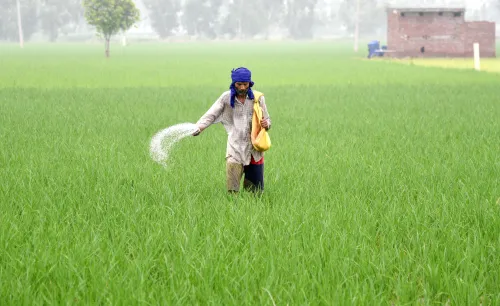
New Delhi, March 17 (NationPress) The overall area dedicated to summer crops in India has now surpassed 36.22 lakh hectares as of March 13 this year, with the sowing season actively progressing, according to data from the Ministry of Agriculture and Farmers Welfare released on Tuesday.
The typical summer area, based on average coverage from 2022-23 to 2024-25, is estimated at 75.37 lakh hectares. In contrast, the final summer area recorded in 2025 was notably higher at 83.92 lakh hectares, indicating that the current sowing pace is consistent with prior expansion trends.
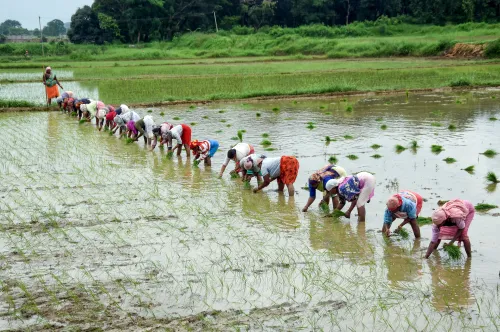
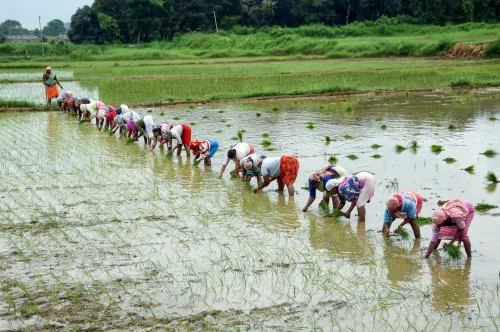
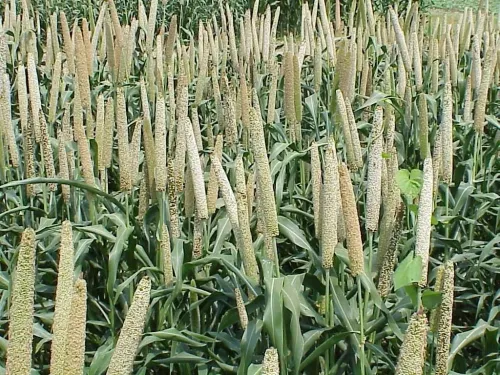
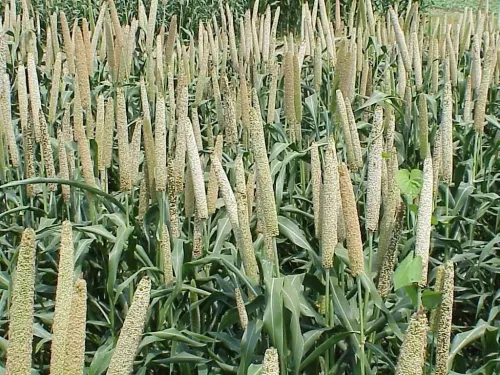
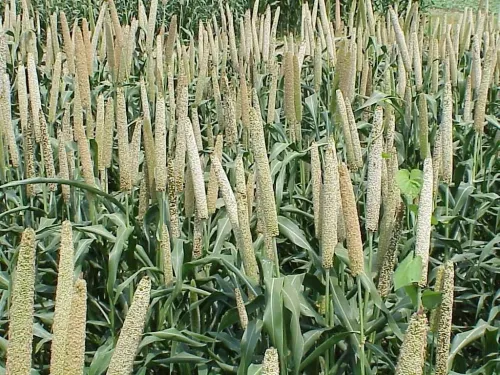
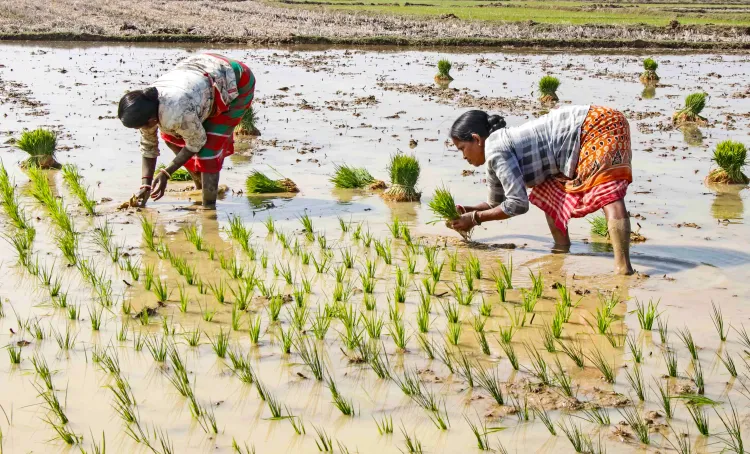
Rice continues to be the primary summer crop, followed by pulses like moong and urad, oilseeds such as groundnut, and coarse cereals like jowar, bajra, ragi, and maize.
The summer season in India occurs from March to June, situated between the rabi and kharif seasons, and is essential for enhancing overall agricultural production.
The rice cultivation area has reached 26.75 lakh hectares, while pulses have been planted in 2.25 lakh hectares. The area for coarse cereals stands at 4.14 lakh hectares, and the oilseeds area has exceeded 3 lakh hectares thus far.
Key regions for summer crop cultivation include West Bengal, Tamil Nadu, Telangana, Odisha, Bihar, and Uttar Pradesh.
The Agriculture Ministry’s second advance estimates for the kharif and rabi seasons, released last week, project kharif foodgrain production for 2025-26 at 1,741.44 lakh metric tonnes (LMT) and rabi foodgrain production at 1,745.13 LMT.
This represents an increase of approximately 46 LMT (2.8%) and 53 LMT (3.2%) respectively, compared to last year’s kharif foodgrain production of 1,694.60 LMT and rabi foodgrain production of 1,691.66 LMT.
Kharif rice production is estimated at 1,239.28 LMT, compared to 1,227.72 LMT in 2024-25, reflecting an increase of 11.56 LMT. Rabi rice production is anticipated at 167.20 LMT, while wheat production is projected at 1,202.10 LMT, which is up by 22.65 LMT from the previous year's production of 1,179.45 LMT.
While the Second Advance Estimates encompass the kharif and rabi seasons, the summer season will be included in the Third Advance Estimates.
Point of View
I view the current agricultural trends with optimism. The increase in sown area for summer crops signals a proactive approach to food security and sustainability in India. The steady rise in rice and pulse cultivation is encouraging, reflecting a commitment to enhance agricultural productivity across various regions.
NationPress
23 Sept 2026
Frequently Asked Questions
What is the total area sown for summer crops in India?
As of March 13, the total area sown for summer crops in India is 36.22 lakh hectares.
Which state leads in summer crop cultivation?
Key cultivation areas for summer crops include West Bengal, Tamil Nadu, Telangana, Odisha, Bihar, and Uttar Pradesh.
What crops are primarily grown in the summer season?
The dominant summer crop is rice, followed by pulses, oilseeds, and various coarse cereals.
What is the significance of the summer season in agriculture?
The summer season, which runs from March to June, is crucial for boosting overall agricultural production.
How does the current sowing compare to previous years?
The current pace of sowing is consistent with previous expansion trends, showing positive growth.