Sundarja mango from Rewa, MP earns global market foothold
Synopsis
A mango that grows only in one district of Madhya Pradesh is now on shelves in the US, UK, UAE, and France. The Sundarja’s hyper-local origin — tied to Govindgarh’s specific soil and monsoon timing — is its biggest export asset, and with 237 varieties cultivated in the area and a dedicated research centre tracking them, Rewa is quietly building a serious horticultural identity.
Key Takeaways
The Sundarja mango from Govindgarh, Rewa is now exported to the US, UK, UAE, and France .
The variety grows exclusively in Govindgarh due to its unique soil, climate, and temperature conditions.
It is rich in Vitamin A , Vitamin C , and iron , with low sugar content making it suitable for diabetic consumers.
The Fruit Research Centre in Kathuliya, Rewa maintains an orchard of 2,345 mango trees across multiple varieties.
Govindgarh alone cultivates nearly 237 mango varieties , highlighting the region’s horticultural depth.
The Bansagar Dam canal network has improved irrigation, enabling orchard expansion and growth of mango-based food-processing units.
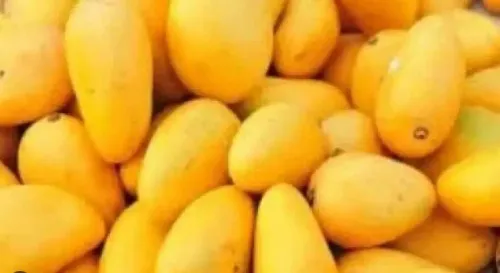
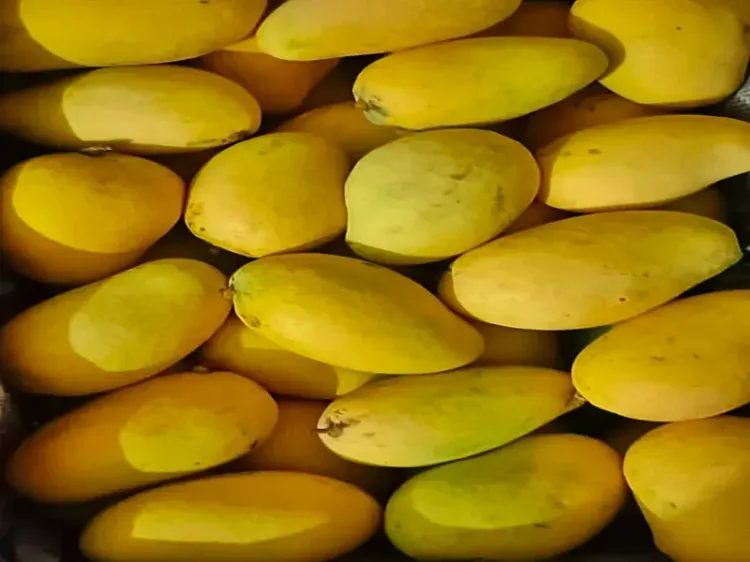
The Sundarja mango, a prized horticultural variety from Rewa district in Madhya Pradesh, is steadily carving out a presence in international markets, with exports now reaching the United States, the United Kingdom, the United Arab Emirates, and France. Long celebrated within India for its distinctive aroma and flavour, the fruit is increasingly becoming an agricultural export of note from the region.
What Makes Sundarja Unique
The Sundarja variety grows exclusively in the Govindgarh area of Rewa, where the local combination of soil composition, climate, and temperature creates conditions that cannot be replicated elsewhere. The fruit ripens naturally after the first monsoon showers, a process that lends it a flavour profile and fragrance distinct from other mango varieties cultivated across India.
According to a statement issued by the Madhya Pradesh government, “The Sundarja mango is one of the state’s unique horticultural products. Its special aroma, taste, and quality have made it popular among consumers in India and abroad.” The fruit is also nutritionally notable, being rich in Vitamin A, Vitamin C, and iron, and possessing antioxidant properties. Its comparatively low sugar content has made it a preferred option among consumers managing diabetes, according to the government note.
Beyond the Fruit: Traditional and Medicinal Uses
The utility of the Sundarja tree extends beyond the mango itself. The leaves, bark, and seeds are reportedly used for various traditional and medicinal purposes, adding to the tree’s cultural significance in the region. This broader value has helped cement the Sundarja’s identity as more than a seasonal crop — it is woven into the agricultural and cultural fabric of Govindgarh.
Research and Horticultural Development in Rewa
To support and expand mango cultivation, the Fruit Research Centre in Kathuliya, Rewa is actively conducting research on the variety. The centre maintains an orchard of 2,345 mango trees spanning multiple varieties, including Bombay Green, Dasheri, Langra, Amrapali, Mallika, Indira, and Gadhua, alongside several local cultivars. The Govindgarh area alone hosts nearly 237 mango varieties across its orchards, underscoring the region’s exceptional horticultural diversity.
Infrastructure and Economic Impact
The Bansagar Dam canal network has played a significant role in transforming horticulture in Rewa and surrounding districts. Improved irrigation access has enabled farmers to expand their orchards and has spurred the growth of small-scale food-processing units centred on mango-based products. Together, these developments have helped Rewa emerge as a key horticultural hub in Madhya Pradesh, with the Sundarja mango serving as its most recognisable export commodity.
As global demand for geographically distinctive agricultural produce grows, the Sundarja’s international trajectory will depend on sustained investment in research, cold-chain logistics, and export facilitation for local farmers.
Point of View
But its greatest vulnerability is also its defining feature: it grows nowhere else but Govindgarh. That hyper-locality, while a strong geographical indication asset, limits scalability and makes the supply chain fragile to climate variability. The Madhya Pradesh government’s investment in the Kathuliya research centre is the right instinct, but without cold-chain infrastructure and structured farmer-to-exporter linkages, the gains will remain thin and unevenly distributed. India’s GI-tagged produce routinely underperforms its export potential for exactly these reasons.
NationPress
28 Jun 2026
Frequently Asked Questions
What is the Sundarja mango and where does it come from?
The Sundarja mango is a distinctive variety grown exclusively in the Govindgarh area of Rewa district, Madhya Pradesh. Its unique flavour and aroma are attributed to the specific soil, climate, and temperature of that region, and it ripens naturally after the first monsoon showers.
Which countries is the Sundarja mango exported to?
The Sundarja mango is currently exported to the United States, the United Kingdom, the United Arab Emirates, and France. These exports are creating improved income opportunities for farmers in the Rewa region.
Why is the Sundarja mango considered healthy?
According to the Madhya Pradesh government, the Sundarja mango is rich in Vitamin A, Vitamin C, and iron, and has antioxidant properties. Its relatively low sugar content also makes it a preferred choice for many consumers managing diabetes.
What research is being done to support Sundarja mango cultivation?
The Fruit Research Centre in Kathuliya, Rewa, is conducting active research on mango cultivation and maintains an orchard of 2,345 trees representing varieties including Dasheri, Langra, Amrapali, and several local cultivars. The Govindgarh area itself hosts nearly 237 mango varieties.
How has infrastructure development helped mango farming in Rewa?
The Bansagar Dam canal network has significantly improved irrigation access in Rewa and nearby districts, enabling farmers to expand orchards and supporting the growth of small mango-based food-processing units in the region.