Supreme Court Orders Chandigarh to Make Room for Two Law Officer Candidates
Synopsis
In a landmark decision, the Supreme Court instructs the Chandigarh Municipal Corporation to create a supernumerary post for two candidates seeking the Law Officer position, as both provided valid answers to a challenging constitutional question. This ruling underscores the complexities of legal interpretation.
Key Takeaways
The Supreme Court has ruled in favor of two Law Officer candidates.
A supernumerary post will be created to accommodate both candidates.
The court acknowledged the complexity of the constitutional law question in dispute.
Both answers provided by the candidates were deemed valid.
The ruling highlights the necessity for fair evaluation in legal recruitment.
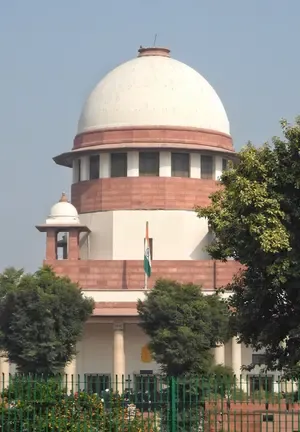
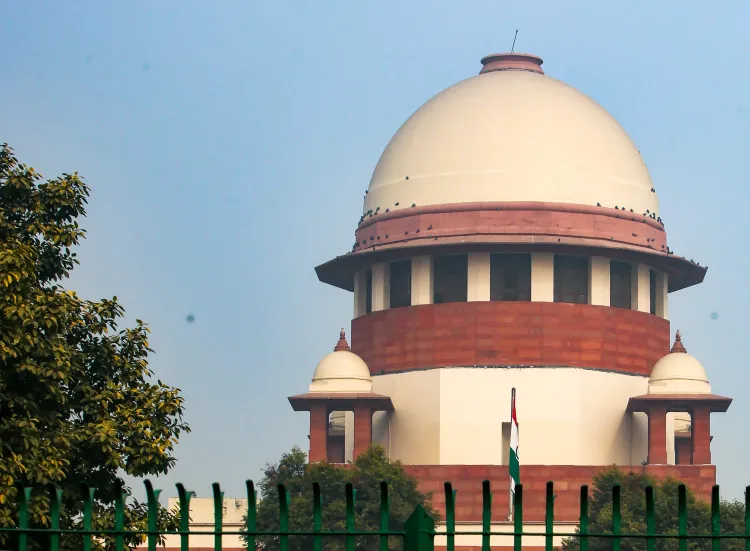
New Delhi, March 18 (NationPress) The Supreme Court has mandated the Municipal Corporation of Chandigarh to create a supernumerary position for two individuals vying for the Law Officer role. This decision came after it was determined that both candidates provided defensible answers to a contentious constitutional law question during their recruitment examination.
A panel consisting of Justices Sanjay Karol and Prashant Kumar Mishra reviewed an appeal by Charan Preet Singh, who contested a ruling by the Punjab and Haryana High Court that favored his competitor, Amit Kumar Sharma, concerning the interpretation of a multiple-choice question on the test.
The dispute revolved around Question No.73, which inquired: “Which of the following Schedules of the Constitution is immune from judicial review on the grounds of violation of fundamental rights?”
While the examination board marked “Ninth Schedule” as the correct response, Sharma, who chose “None of the above,” faced negative marking, which adversely impacted his overall score.
The apex court noted that even the judges of the P&H High Court had differing opinions on the right answer, emphasizing that it was unreasonable to expect candidates to definitively resolve such a sophisticated constitutional matter.
“When the Judges of the High Court are in disagreement regarding the correct answer… it is unreasonable to expect mere law graduates competing for a Law Officer position in the Municipal Corporation to arrive at an accurate conclusion in response to the multiple-choice question,” stated the Justice Karol-led panel.
The court further clarified that both answers could be valid based on the level of legal reasoning applied.
“From a law graduate’s perspective, both answers may be correct, although Option ‘B’ (Ninth Schedule) seems more fitting given the language of the question. However, with a more profound examination, Option ‘D’ (None of the above) can also be deemed correct,” the Supreme Court remarked.
Taking a fair stance, the bench instructed that both candidates should be accommodated. It was also noted that the appellant, who had already been appointed and was serving in the position, would retain his seniority.
Point of View
Emphasizing the importance of understanding diverse interpretations of constitutional law. The decision reflects a balanced approach to candidate evaluation in public service roles.
NationPress
25 Sept 2026
Frequently Asked Questions
What did the Supreme Court order regarding the Law Officer position?
The Supreme Court directed the Municipal Corporation of Chandigarh to create a supernumerary post to accommodate two candidates for the Law Officer position.
Why was there a dispute over the recruitment examination?
The dispute arose over a multiple-choice question regarding constitutional law, where both candidates provided answers that could be considered correct.
What was the main question that caused the controversy?
The main question asked which Schedule of the Constitution is immune from judicial review on the grounds of violation of fundamental rights.
What was the Supreme Court's view on the candidates' answers?
The Supreme Court found that both answers could be justified based on different levels of legal analysis.
Will the candidates retain their seniority?
Yes, the Supreme Court clarified that the candidate already appointed would retain his seniority.