Did the SC Refuse to Entertain the Plea Against Maha Shivratri Puja at Karnataka's Laadle Mashak Dargah?
Synopsis
The Supreme Court has refused to hear a plea against the Maha Shivaratri puja at the Laadle Mashaik Dargah in Karnataka. This decision raises questions about worship rights and the religious character of the site, historically significant for both Hindus and Muslims. Explore the implications of this ruling on communal harmony and religious practices.
Key Takeaways
The Supreme Court declined to consider a plea against the Maha Shivaratri puja.
The dargah management sought to protect the waqf status of the site.
The dispute involves both Hindu and Muslim religious practices.
The Karnataka High Court has been granting interim orders for rituals.
Historical significance of the site dates back to 14th and 15th centuries.
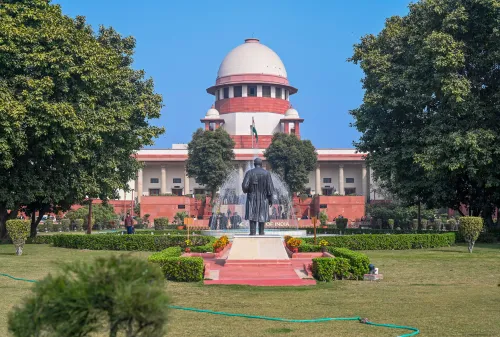
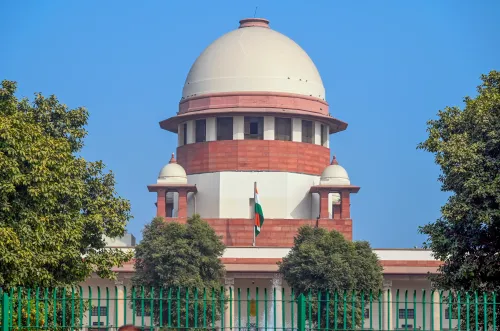
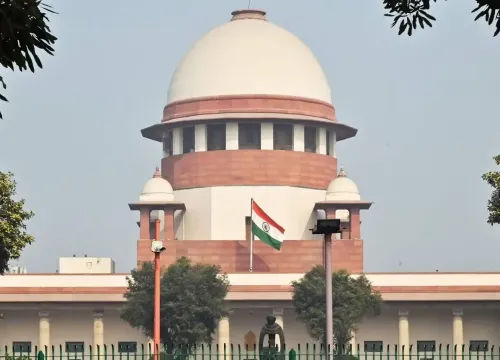
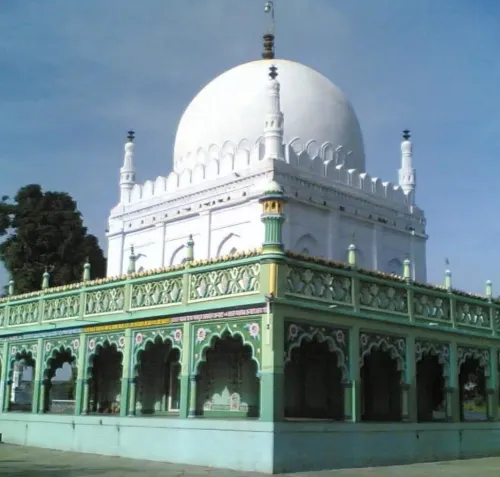
New Delhi, Feb 12 (NationPress) The Supreme Court on Thursday declined to consider a plea aimed at halting the Maha Shivaratri puja at the Raghava Chaitanya Shivling, located within the grounds of the Laadle Mashaik Dargah in Karnataka's Kalaburagi district.
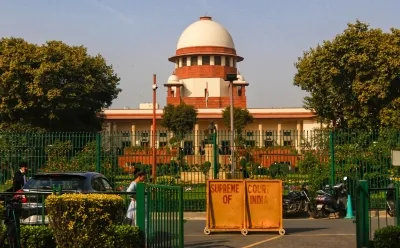
A panel of Justices Dipankar Datta and S.C. Sharma showed reluctance to review the writ petition filed under Article 32, after which the dargah management sought to retract their petition.
The apex court subsequently dismissed the case as withdrawn.
Senior advocate Vibha Datta Makhija, representing the dargah management, argued that even though the property had been officially designated as a waqf property by the Waqf Tribunal, third parties had been submitting writ petitions to the Karnataka High Court to obtain permission for conducting pujas on particular occasions.
She noted that the Karnataka High Court had been issuing interim orders sporadically to allow the performance of rituals, including for the forthcoming Maha Shivaratri on February 15, and contended that such interim orders could interfere with the religious significance of the property, violating the Places of Worship (Special Provisions) Act, 1991.
The petition from the dargah management sought instructions to safeguard the waqf status of the dargah and to prevent any interim orders that would permit entry, puja, inspection, survey, construction, installation, or alteration of the religious nature of the premises.
Makhija also cited a December 2024 ruling from the Supreme Court that prohibited lower courts from addressing new petitions challenging the religious character of places of worship.
She urged that the case be linked with other ongoing matters related to the Places of Worship Act.
However, the Justice Datta-led bench rejected the request and chose not to consider the writ petition, stating that a petition brought directly before the apex court under Article 32 was not an appropriate course of action given the circumstances.
"Unless it is a matter of national significance, this is not the way to file an Article 32 petition. Just because some orders have been issued by the Karnataka High Court, we cannot intervene directly," the apex court commented.
When the issue was raised a day prior before Chief Justice of India (CJI) Surya Kant for urgent hearing, he also voiced concerns regarding petitions being presented directly to the apex court without first consulting the jurisdictional High Court.
"Why is everything coming under Article 32? The impression is that pleas are filed for convenience, suggesting that the High Court is ineffective," the CJI remarked.
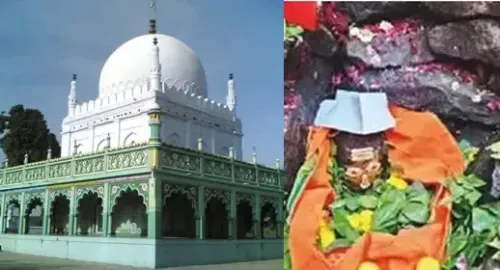
The shrine at the heart of the controversy is linked to 14th-century Sufi saint Hazrat Shaikh Alauddin Ansari, also known as Ladle Mashaik, and 15th-century Hindu saint Raghava Chaitanya.
Reports indicate that Chaitanya was the mentor of Samarth Ramadas, who was honored by Maratha king Chhatrapati Shivaji. The site contains the samadhi of Chaitanya, upon which a structure known as the Raghava Chaitanya Shivling has been constructed.
Historically, both Muslims and Hindus have prayed at this location. However, tensions have occasionally arisen in recent years over worship rights and the religious identity of the site. The dispute had re-emerged during the Maha Shivaratri celebrations last year as well.
In February 2025, the Karnataka High Court allowed a limited number of Hindu devotees to perform puja at the Raghava Chaitanya Shivling under strict regulations. The order permitted 15 individuals from the Hindu community to conduct worship during designated hours and under stringent administrative and security measures. Previously, similar permissions had been granted for worship under controlled conditions, with separate time slots allocated to both communities to minimize conflict.
Point of View
The Supreme Court's refusal to entertain the plea against the Maha Shivratri puja at the Laadle Mashaik Dargah underscores the importance of judicial protocols when addressing sensitive religious issues. This case highlights the ongoing challenges in managing communal relations and the need for respectful dialogue between faiths, especially in historically significant sites that hold meaning for diverse communities.
NationPress
9 Oct 2026
Frequently Asked Questions
What was the Supreme Court's ruling regarding the Maha Shivratri puja?
The Supreme Court declined to hear a plea aimed at restraining the Maha Shivaratri puja at the Laadle Mashaik Dargah in Karnataka.
What is the significance of the Laadle Mashaik Dargah?
The dargah is historically significant as it is associated with both a 14th-century Sufi saint and a 15th-century Hindu saint, making it a site of communal importance.
Why did the dargah management seek to withdraw the petition?
The dargah management sought to withdraw the petition after the Supreme Court expressed disinterest in entertaining it under Article 32.
What interim orders had the Karnataka High Court been issuing?
The Karnataka High Court had been issuing interim orders allowing rituals, including the Maha Shivaratri puja, which the dargah management argued interfered with the site's religious character.
What is the historical context of worship at the dargah?
Historically, both Hindus and Muslims have prayed at the site, though tensions have arisen over worship rights in recent years.