Did the SC Reject the Challenge Against VIP Darshan at Mahakaleshwar Temple?
Synopsis
The Supreme Court has dismissed a petition questioning the selective access for VIPs at the Mahakaleshwar Temple, emphasizing that such decisions should rest with the authorities rather than the judiciary. This ruling raises important questions about access and equality in religious spaces.
Key Takeaways
The Supreme Court upheld the practice of VIP darshan at Mahakaleshwar Temple.
The decision emphasizes judicial restraint in religious matters.
Access to the 'Garbhagriha' is regulated by temple authorities.
Article 14's application in religious contexts raises important legal questions.
The ruling reflects ongoing debates about equality and access in spiritual spaces.
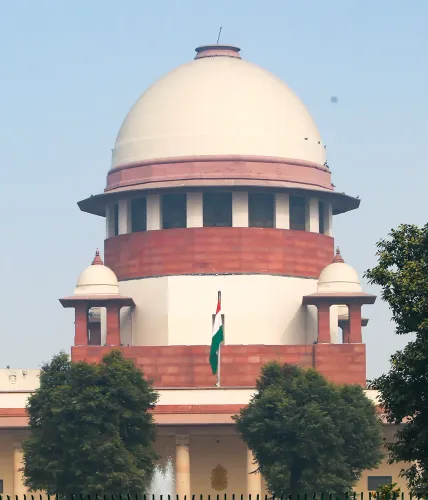
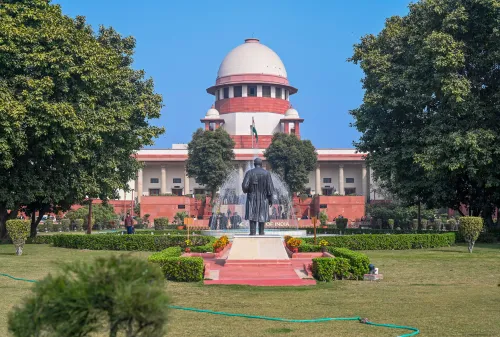
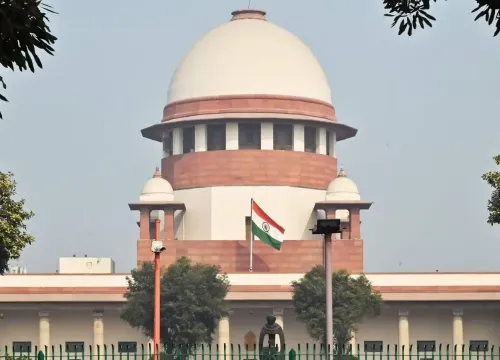
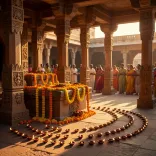
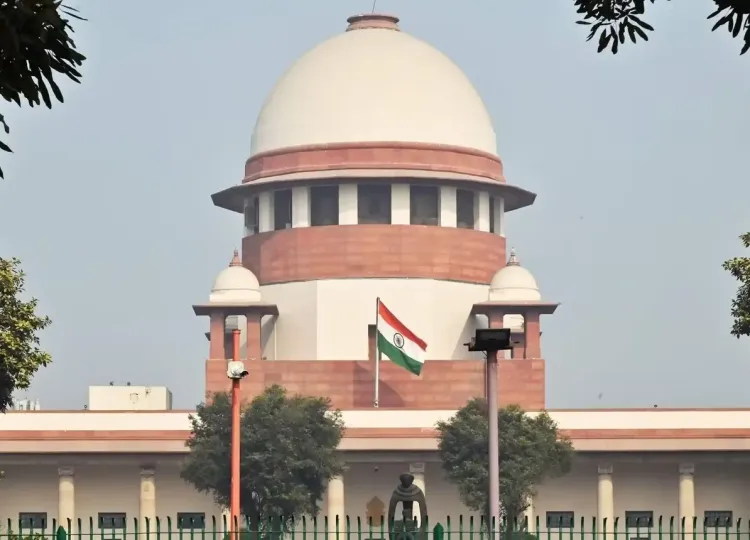
New Delhi, Jan 27 (NationPress) The Supreme Court on Tuesday dismissed a petition that sought to challenge the practice of ‘VIP darshan’ and selective access to the 'Garbhagriha' (the innermost sanctum) of the Shri Mahakaleshwar Temple located in Ujjain.
Chief Justice of India (CJI) Surya Kant, who led the bench, remarked that this matter was not suitable for judicial involvement.
Recognizing the court's reluctance to consider the petition, the attorney for the petitioner opted to withdraw the case while retaining the option to present the issue to the relevant authorities.
The bench, which included Justices R. Mahadevan and Joymalya Bagchi, stated, “It is not the apex court’s role to determine whether this practice should be permitted or not. Ideally, those in charge should make that decision, not the judiciary.”
This special leave petition (SLP) contested the ruling made by the Madhya Pradesh High Court, which had rejected a public interest litigation (PIL) aimed at addressing the alleged preferential treatment afforded to VIPs for entry into the 'Garbhagriha' to offer water to the deity, while the general public was denied access.
The petitioner argued that this selective access infringed upon Article 14 of the Constitution, constituting discrimination based on VIP status. However, the High Court, in a detailed judgment authored by Justice Vivek Rusia, declined to intervene, stating that “VIPs can enter the Garbhagriha with permission from the Collector and the Management Committee Administrator of Mahakaleshwar Mandir.” It further noted that the determination of who qualifies as a VIP is at the discretion of the competent authority and cannot be resolved through a writ petition.
The High Court also indicated that “VIP” has not been specifically defined in any statutory laws or regulations, allowing anyone permitted by the competent authority to be considered a VIP on any given day and time.
Emphasizing that the writ court cannot adjudicate who qualifies as a VIP, the High Court commented that the petitioner appeared to be “a personally aggrieved individual” and concluded that the PIL lacked maintainability.
During the proceedings at the Supreme Court, the CJI warned that if courts began enforcing fundamental rights within the sanctum sanctorum, it could lead to an influx of claims. He stated, “If courts start regulating who should be allowed to enter, it is an overreach.” The apex court added that invoking Article 14 could pave the way for claims under other fundamental rights as well.
Point of View
It is essential to support the principles of equity and access in religious practices. The Supreme Court's decision reflects the need for authorities to manage temple access rather than judicial interference. This approach aligns with the broader values of our society, which must prioritize fairness while respecting traditions.
NationPress
11 Oct 2026
Frequently Asked Questions
What was the Supreme Court's decision regarding VIP darshan?
The Supreme Court dismissed a petition challenging the practice of VIP darshan at the Mahakaleshwar Temple, stating that such decisions should be made by the authorities.
Why did the petitioner withdraw the case?
The petitioner's counsel sensed the court's reluctance to entertain the case and chose to withdraw it while retaining the option to approach the relevant authorities.
What does the term 'Garbhagriha' refer to?
The 'Garbhagriha' refers to the innermost sanctum of the temple, where the deity is housed.
What is Article 14 of the Constitution?
Article 14 ensures equality before the law and prohibits discrimination on grounds of religion, race, caste, sex, or place of birth.
Who decides who qualifies as a VIP in this context?
The determination of who qualifies as a VIP is at the discretion of the Collector and the Management Committee Administrator of the Mahakaleshwar Temple.