Supreme Court Highlights 'Endless Litigation' in MC Mehta Environmental Cases
Synopsis
The Supreme Court has raised serious concerns about ongoing litigation in the MC Mehta environmental cases, emphasizing the need for clarity and resolution to prevent misconceptions about pending cases.
Key Takeaways
The Supreme Court is addressing the issue of endless litigation in environmental cases.
Repeated applications are misleadingly keeping resolved cases open.
The Court has mandated separate hearings for major MC Mehta matters.
CAQM is tasked with implementing long-term air quality solutions.
Governments are asked to engage the public in environmental decision-making.
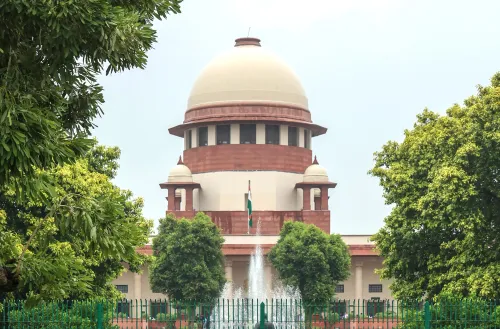
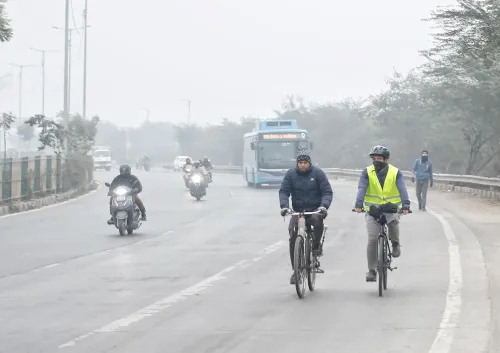
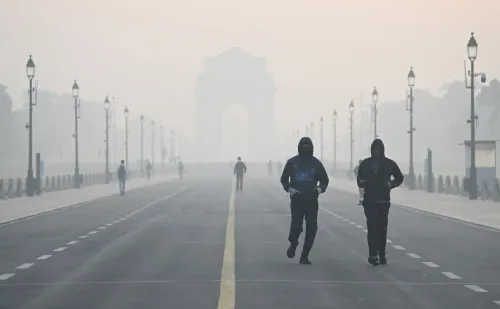
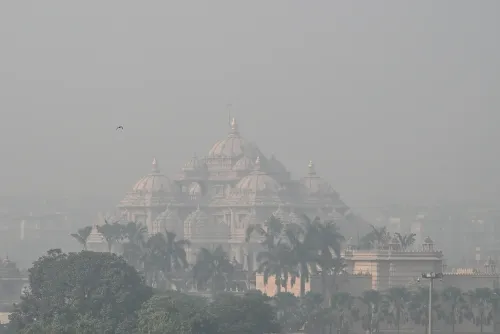
New Delhi, Feb 23 (NationPress) The Supreme Court raised significant concerns on Monday regarding the ongoing cycle of "endless litigation" in the protracted environmental lawsuits known as MC Mehta vs Union of India. These cases focus on the monitoring of air quality in Delhi and concern the environment surrounding the Taj Trapezium Zone.
A bench led by Chief Justice of India (CJI) Surya Kant noted that the repeated submission of interlocutory applications (IAs) and miscellaneous applications (MAs) is fostering a misleading perception that cases resolved years ago remain unresolved.
Observing the substantial number of outstanding applications, the Bench, which also included Justices Joymalya Bagchi and Vipul M. Pancholi, highlighted, "What is happening in this court? IA after IA is being filed. MC Mehta alone has 85 pending applications. You will ask Parliament how many cases are pending before us. We will not endure such embarrassment."
It was pointed out that various cases initiated in 1984 and 1985 have been settled for decades, yet the influx of new filings has falsely kept them listed as pending.
"It seems multiple matters are inaccurately recorded as pending under MC Mehta v. UoI. One case from 1984 was resolved long ago, yet miscellaneous applications continue to be filed, as if the 1984 petition is still active. Another case from 1985 was also resolved, but due to IAs and MAs, it appears alive," the apex court remarked in its order.
The CJI Surya Kant-led Bench instructed that three major MC Mehta cases, including the one concerning the Taj Trapezium, be scheduled for separate hearings, with all outstanding IAs tagged and addressed on the assigned dates.
In addition, the court urged officials and representatives involved in these matters to assist in renaming the cases to ensure that resolved petitions are not misrepresented as ongoing litigation.
"We seek the identification of cases so that older matters are not artificially prolonged merely by the filing of applications. This initiative should also pinpoint cases that can rightfully be transferred to the respective High Courts," the Supreme Court emphasized, mandating that no additional IAs would be accepted in the 1985 case.
In a related matter, the CJI Surya Kant-led Bench acknowledged the points raised by Additional Solicitor General Aishwarya Bhati, representing the Commission for Air Quality Management (CAQM), concerning long-term strategies to address the air quality crisis in Delhi-NCR.
The apex court noted that the CAQM has designated specific agencies accountable for executing its recommendations.
Ordering rigorous adherence, the Supreme Court mandated that the Delhi government and its agencies present a comprehensive action plan detailing the measures to implement the long-term solutions proposed by the CAQM.
"It should be noted that while making various recommendations, CAQM has also pinpointed the relevant agencies expected to take necessary actions to bring these recommendations into effect," the Bench indicated in its order.
Furthermore, the court requested the Union Ministry of Environment, Forest and Climate Change, the Ministry of Power, and the Ministry of Petroleum and Natural Gas to provide a joint proposal for relocating all coal-based industries out of the Delhi-NCR region.
The proposal must identify these industries and outline feasible alternative fuel sources, the apex court added.
The court also sought feedback on a CAQM recommendation to ban the establishment of any new coal-based thermal power plants within a 300-kilometre radius of Delhi. Additionally, the governments of Uttar Pradesh, Haryana, and Rajasthan were instructed to issue public notices inviting input from stakeholders, including coal-based industries.
The Supreme Court reiterated the necessity to implement CAQM’s long-term recommendations systematically across various sectors, including the reduction of dust pollution from construction and demolition activities, management of road dust, prevention of paddy stubble burning, afforestation efforts in NCR, and enhancement of air quality governance frameworks.
Point of View
It is crucial to note that the Supreme Court's remarks reflect a broader issue of judicial efficiency and the need for a streamlined approach to environmental litigation. The persistent filing of applications, despite many cases being resolved, not only clutters the judicial system but also obscures the real progress made in environmental governance.
NationPress
29 Sept 2026
Frequently Asked Questions
What are the MC Mehta cases about?
The MC Mehta cases are a series of long-standing environmental lawsuits focused on air pollution monitoring in Delhi and the environmental integrity of the Taj Trapezium Zone.
Why is the Supreme Court concerned about endless litigation?
The Supreme Court is concerned that repeated applications give a false impression that resolved cases are still pending, complicating judicial proceedings.
What actions did the Supreme Court take regarding these cases?
The Court directed that major MC Mehta cases be heard on separate dates and emphasized the need for a clear identification of resolved matters.
What is the CAQM's role in this context?
The Commission for Air Quality Management (CAQM) is responsible for developing long-term strategies to improve air quality in Delhi-NCR and has identified agencies to implement these recommendations.
What recommendations were made by the Supreme Court for environmental governance?
The Supreme Court called for the implementation of CAQM’s recommendations, including measures to manage dust pollution and relocate coal-based industries near Delhi.