Why Did the Supreme Court Overturn the Punjab and Haryana HC Order on Unauthorized Constructions in Gurugram's DLF?
Synopsis
In a landmark decision, the Supreme Court has provided relief to homeowners in Gurugram by nullifying the Punjab and Haryana High Court's demolition order for unauthorized constructions. This ruling emphasizes the necessity of due process in legal matters affecting property rights, allowing affected residents the chance to be heard.
Key Takeaways
Supreme Court rules against demolition of unauthorized constructions.
Emphasizes the importance of due process in legal matters.
Affected residents must be given an opportunity to be heard .
High Court's previous order had significant implications for property owners.
The ruling restores hope for homeowners in Gurugram .
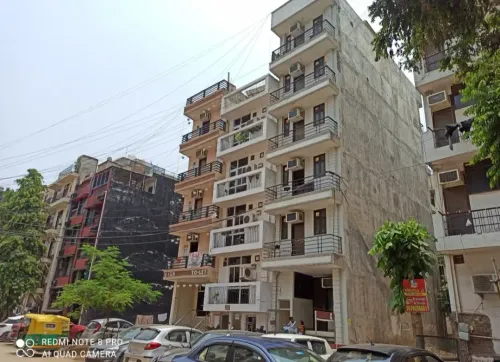
New Delhi, Nov 4 (NationPress) In a significant victory for countless homeowners in DLF Phases 1 to 5 of Gurugram, the Supreme Court has overturned a ruling from the Punjab and Haryana High Court that mandated the demolition of unauthorized structures and the sealing of commercial entities within residential areas.
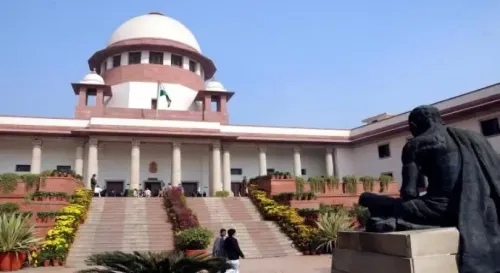
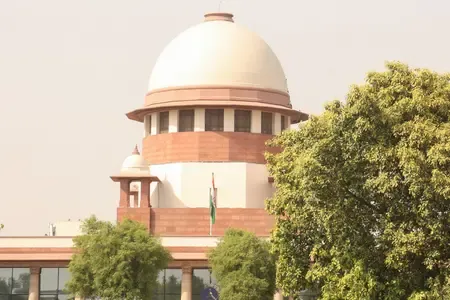
A bench comprising Justices J.K. Maheshwari and Vijay Bishnoi reinstated the writ petitions previously filed in the Punjab and Haryana High Court, stating that no punitive actions could be executed without first hearing from the individuals affected. The bench, led by Justice Maheshwari, emphasized that “the opportunity for a hearing is essential for the just administration of justice,” further asserting that the controversial order had been enacted “without including the appellants as parties in the writ petition.”
The apex court pointed out that the High Court’s commands — which called for the immediate closure of 172 ongoing civil suits and ordered demolitions within a two-month timeframe — could have dire consequences for property owners who were not consulted. This ruling emerged from a series of special leave petitions (SLPs) submitted by residents of Gurugram, contesting the February 13 order issued by the Punjab and Haryana High Court in a public interest litigation (PIL) initiated by the DLF City Resident Welfare Association (RWA) in 2021.
The SLPs contended that the High Court’s mandates were issued “without allowing for a hearing” and disregarded ongoing civil cases regarding the ownership and legality of the constructions.
While the Supreme Court acknowledged that illegal constructions cannot be overlooked, it maintained that any infractions must be handled in accordance with established legal procedures. “Unauthorized or illegal construction, along with the commercial use of residential properties contrary to the regulations, cannot be protected. However, the determination of such issues should be made by authorities after providing due opportunity to owners and occupiers,” stated the bench led by Justice Maheshwari.
The apex court directed the reinstatement of the writ petitions before the Punjab and Haryana High Court, granting a two-week window for concerned individuals to request participation in the proceedings. “It must be emphasized that the opportunity for a hearing is essential for the fair administration of justice, and the court’s observations should not adjudicate the rights of any parties without a hearing,” the order highlighted.
Additionally, the Supreme Court instructed the Haryana government to ensure “wide publicity” of its ruling so that all affected residents could seek recourse in the Punjab and Haryana High Court. It also urged the High Court to expedite the decision-making process for the petitions, ideally within six months, while ensuring all stakeholders are heard.
Previously, a February ruling from the Punjab and Haryana High Court had led the Town and Country Planning Department (DTCP) to prepare for extensive sealing and demolition actions.
Following the High Court’s order, the DTCP had pinpointed approximately 2,100 properties across DLF Phases 1-5 for perceived violations, including residential buildings repurposed for commercial activities such as paying guest accommodations, guest houses, and shops. Subsequently, the Supreme Court placed a temporary stay on the order.
Point of View
This ruling by the Supreme Court reinforces the essential principles of fairness and justice. It highlights the importance of giving a voice to all affected parties in matters of significant property rights. The court's emphasis on due process serves as a reminder that justice must be accessible and equitable for everyone.
NationPress
19 Sept 2026
Frequently Asked Questions
What was the Supreme Court's ruling regarding the Punjab and Haryana High Court order?
The Supreme Court set aside the order that mandated the demolition of unauthorized constructions and sealing of commercial establishments, emphasizing the need for a hearing for affected parties.
How does this ruling affect homeowners in Gurugram?
This ruling provides significant relief to homeowners by allowing them the opportunity to present their cases before any adverse actions are taken against them.
What implications does this ruling have on unauthorized constructions?
While the ruling acknowledges that illegal constructions cannot be protected, it mandates that any actions against such constructions must follow due legal processes.
What actions did the Supreme Court instruct the Haryana government to take?
The Supreme Court instructed the Haryana government to widely publicize its order to ensure all affected residents are aware and can join the proceedings.
What was the background of the case that led to the Supreme Court's ruling?
The case stemmed from special leave petitions filed by Gurugram residents challenging a February order from the Punjab and Haryana High Court related to unauthorized constructions.