Will the Supreme Court Intervene in Medha Patkar's Defamation Conviction?
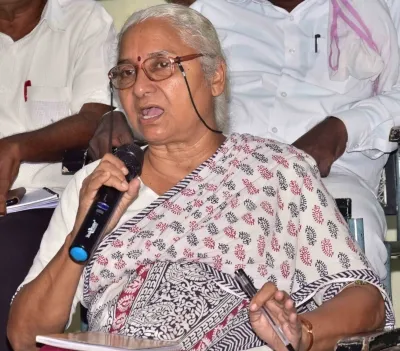
Synopsis
In a significant ruling, the Supreme Court has chosen not to intervene in Medha Patkar's conviction for defamation, stemming from a case filed by V.K. Saxena. This decision comes after a lengthy legal battle, raising questions about free speech and reputational damage. Explore the implications of this ruling on activism and defamation laws in India.
Key Takeaways
Supreme Court upheld Medha Patkar's conviction in defamation case.
Justice Kaur's ruling emphasized the importance of reputation.
Patkar's penalty was set aside, indicating a nuanced approach.
The case highlights tensions between free speech and reputational rights.
Activism faces scrutiny under defamation laws in India.
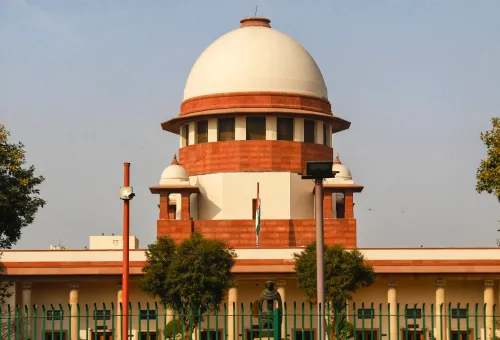
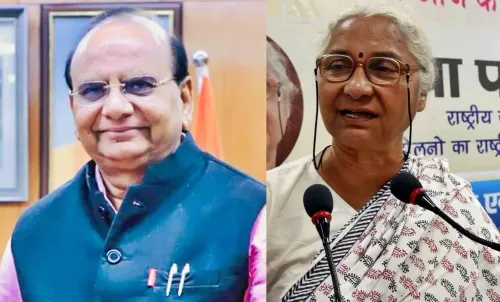
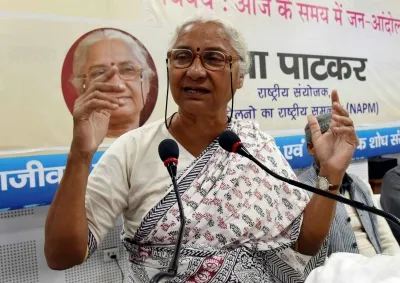
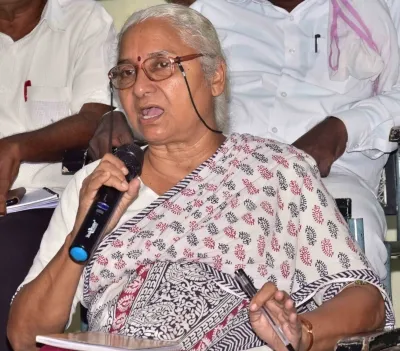
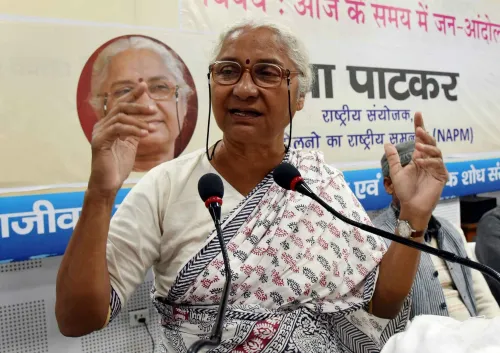
New Delhi, Aug 11 (NationPress) The Supreme Court declined to intervene in the conviction of activist Medha Patkar related to a 2021 criminal defamation case brought against her by V.K. Saxena, the current Lieutenant Governor of Delhi. A Bench comprising Justices M.M. Sundresh and N. Kotiswar Singh reviewed a special leave petition (SLP) filed by Narmada Bachao Andolan leader Medha Patkar, contesting a Delhi High Court ruling that upheld her conviction.
In a small reprieve for Patkar, the Bench, led by Justice Sundresh, abolished the imposed penalty and stated that the supervision order would not be enforced. Previously, on July 29, the Delhi High Court confirmed Medha Patkar’s conviction, dismissing her revision plea against a decision made by the Saket Court.
Justice Shalinder Kaur, presiding over a single-judge Bench, noted that Patkar could not identify any procedural flaws that would suggest a miscarriage of justice, affirming that her conviction was based on careful consideration of the evidence and legal standards.
Yet, Justice Kaur modified the probation requirement, allowing Patkar to appear virtually or be represented by an attorney instead of attending the trial court every three months.
In 2001, Saxena initiated two defamation lawsuits against Patkar, one concerning allegedly slanderous comments made during a television interview and the other regarding a press statement. Senior Advocate Gajinder Kumar represented Saxena in court.
This legal battle stemmed from a prior suit lodged by Patkar in 2000, in which she accused Saxena of disseminating defamatory advertisements targeting her and the Narmada Bachao Andolan.
In July of last year, Metropolitan Magistrate Raghav Sharma sentenced Patkar to five months in prison and mandated her to pay Rs 10 lakh as damages to Saxena.
On appeal, Additional Sessions Judge (ASJ) Vishal Singh of the Saket Court upheld Patkar’s conviction but permitted her release on probation for good conduct for a year, contingent on the prior deposit of Rs 1 lakh compensation, which would be transferred to the complainant (Saxena).
He remarked that an insensitive attitude towards the reputations of others and the abuse of the right to free speech must be addressed with criminal penalties, asserting that Patkar, as a person of stature herself, should understand the significance of reputation and the potential damage defamation can inflict on the victim’s public standing.
Point of View
It is essential to recognize the balance between protecting free speech and safeguarding individual reputations. The decision by the Supreme Court not only upholds the legal framework surrounding defamation but also highlights the ongoing struggle for activists in India to voice their opinions without fear of legal repercussions.
NationPress
19 Sept 2026
Frequently Asked Questions
What was Medha Patkar convicted of?
Medha Patkar was convicted of criminal defamation in a case filed by V.K. Saxena.
What is the significance of the Supreme Court's ruling?
The Supreme Court's ruling upholds the lower court's conviction, impacting the legal landscape of free speech and defamation in India.
What were the penalties imposed on Patkar?
Initially, Patkar was sentenced to five months in jail and ordered to pay Rs 10 lakh in damages, but the Supreme Court set aside the penalty.
Can Medha Patkar appeal the Supreme Court's decision?
As of now, there is no indication that Patkar can appeal further, as the Supreme Court has refused to intervene in her conviction.
What does this case mean for activists in India?
This case underscores the challenges activists face regarding legal repercussions for their statements, potentially chilling free speech.